
Knowledge centre
Product Development
From design intent to a specification you can repeat.
Product development is where a design intention becomes something a factory can make repeatedly and a customer can buy in three colours and five sizes. It covers the tech pack, the pattern and grade, the fabric and trim selection, the sample rounds, and the record that lets a re-order come back identical.
The reason it deserves its own discipline is that every downstream problem on this site traces back to it. A fit issue in bulk is a grade that was never tested on a body. A colour complaint is a lab dip that was approved under the wrong light. A costing surprise is a consumption figure written before the pattern existed. Development is cheap; correcting after bulk is not.
The standard sequence runs technical review, pattern and first sample, fit corrections, a pre-production sample in the bulk fabric and trim, and a sealed approval sample that becomes the reference for the run. Skipping any one of those steps does not remove the work — it moves it into production, where it costs more and delays a launch.
Start from product development for the service view, or from a category if you already know what you are making — occasionwear is the most development-heavy route we run. The guides below take the stages in order.
Topic
Product Development
From design intent to a specification you can repeat.

How to Comment on a Clothing Sample So the Factory Can Fix It
How to comment on clothing samples with clear measurements, locations, photos and approval status so a factory can make accurate revisions.

Dress Neckline Types: What Each One Costs to Make
Dress neckline types compared by construction: what each costs in operations and fabric, which hold on which fabrics, and which ones fail in bulk.
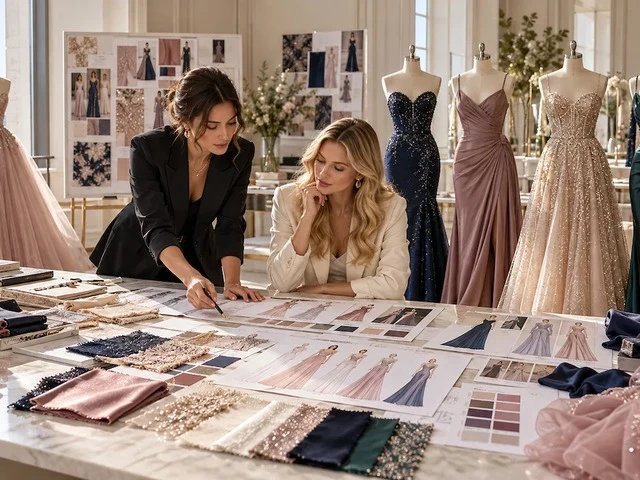
How to Build a Prom Dress Collection
Practical B2B guide for fashion brands and buyers: how to build a prom dress collection. Covers assortment architecture, silhouette families, a colour plan that can be bought, engineered price bands and a season calendar built back from the delivery date.
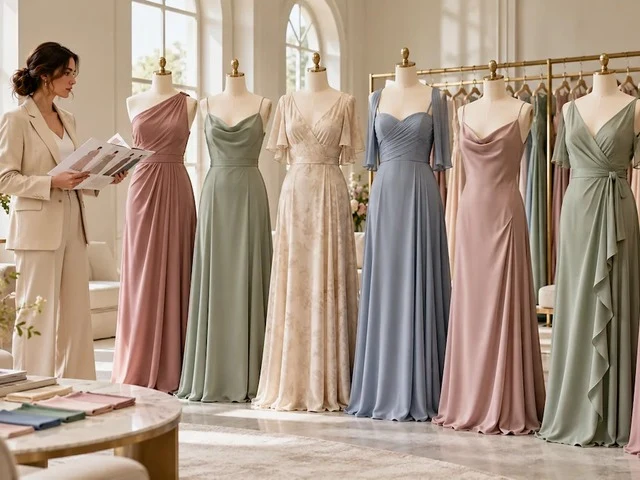
How to Launch a Bridesmaid Dress Collection
Practical B2B guide for fashion brands and buyers: how to launch a bridesmaid dress collection. Covers the coordination model, fabric for group photography, a shared fit philosophy, merchandising for real bridal behaviour and production around event deadlines.
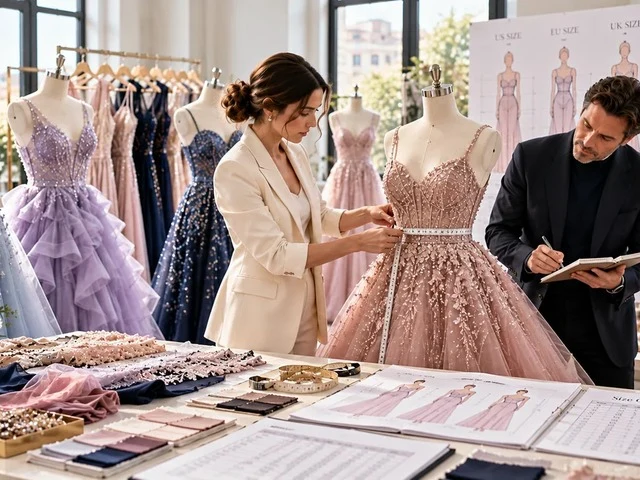
Prom Dress Size Grading Guide for Fashion Brands
A prom dress size grading guide for fashion brands: setting a base size, applying grade rules to bust, waist and hip, and re-engineering cups and corsetry.
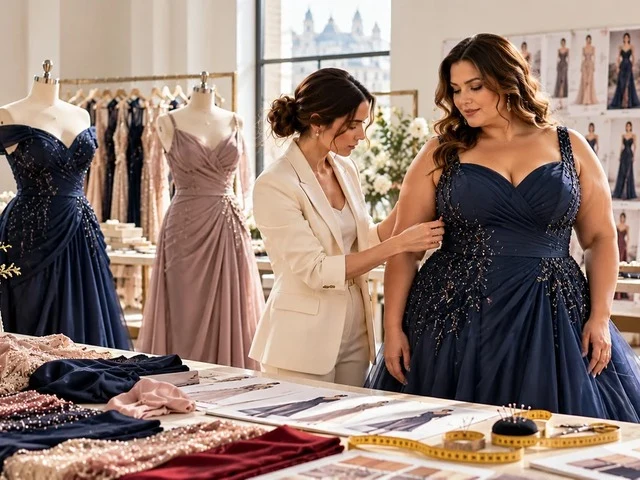
Plus Size Evening Dress Manufacturing Guide
Plus size evening dress manufacturing: drafting a real block, load-bearing support, silhouette balance, fabric behaviour under tension and movement testing.
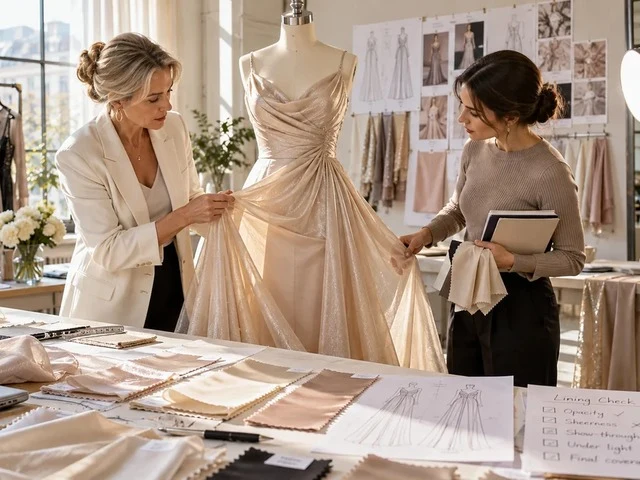
How to Prevent Lining and Sheerness Problems in Evening Dresses
An evening dress lining guide: building opacity into the stack, matching shell and lining, stopping ride-up and keeping seams from showing through.
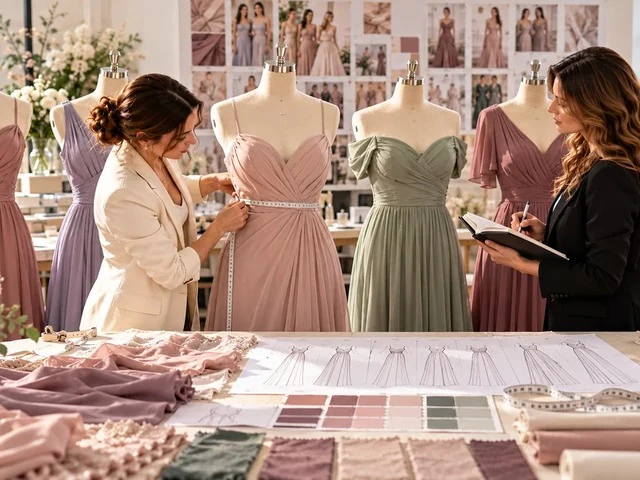
How to Grade Bridesmaid Dresses Across a Full Size Range
How to grade bridesmaid dresses across a full size range: visual anchors, separate rules for fitted and flowing zones, straps, armholes and validation.
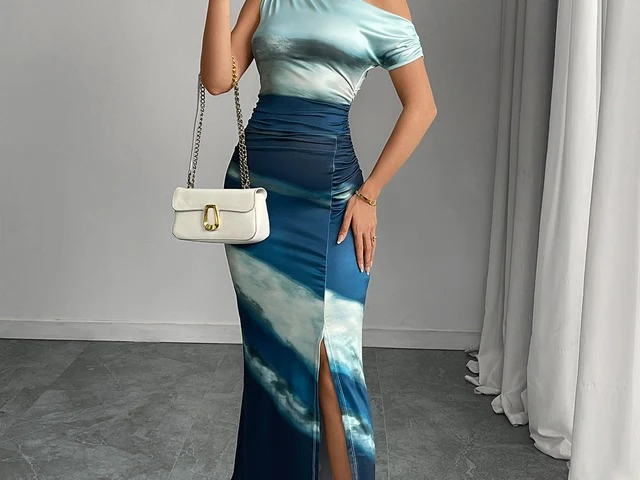
Slits Necklines and Coverage in Occasionwear Production
Occasionwear coverage construction: reinforcing slits, controlling neckline edges, re-routing support on open backs and planning sheer panels by market.
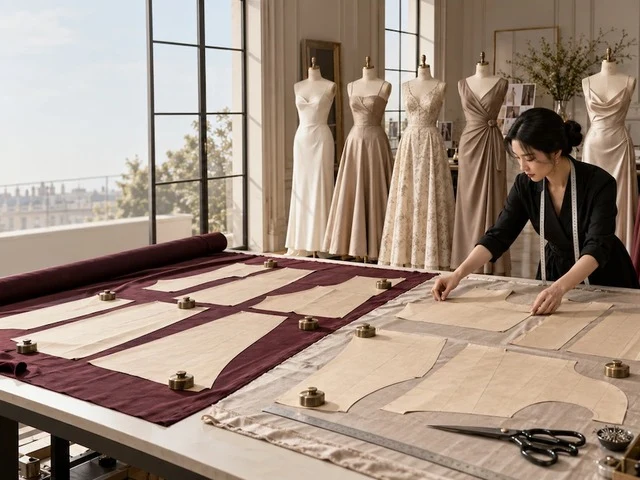
How Dress Silhouettes Affect Fabric Consumption
See how column, fishtail, A-line, swing, bias and lined dress styles consume fabric by the metre, and what it does to your quote and MOQ.
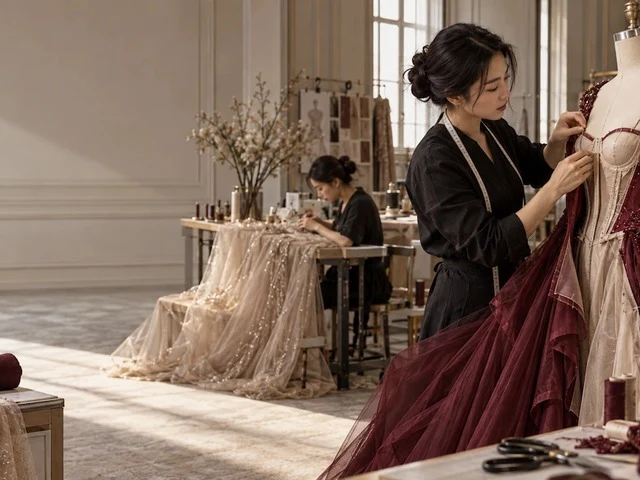
How Evening Dresses Are Made: Inside the Factory Floor
A station-by-station walk through how an evening gown is made, from pattern and toile to hand embellishment, with the lead times buyers plan against.

How Size Grading Works From One Approved Sample
Garment size grading from a single approved sample: where grade rules come from, grade breaks, petite, tall and plus ranges, and which sizes to sample.
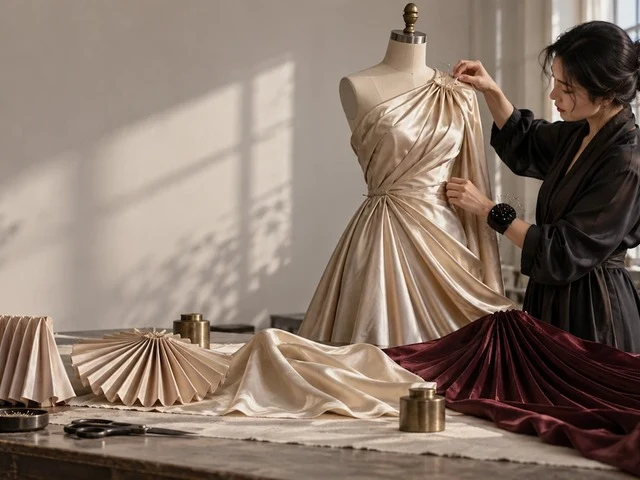
Pleats and Draping: Engineering and Cost for B2B Buyers
A factory-floor guide to pleats and draping: machine, heat-set and hand methods, how fabric decides if a pleat holds, and how to write it in a tech pack.

What is a clothing tech pack and why does it matter?
What a tech pack is for, who reads which part of it, and why the document is a costing instrument as much as a technical one.

What should a fashion tech pack include?
The sections a working tech pack needs, in the order a factory reads them, and which fields are genuinely optional on a first style.

How to create a tech pack for a dress
Building a dress tech pack step by step: the measurements that matter most, how to describe structure and drape, and what decides whether fit repeats.
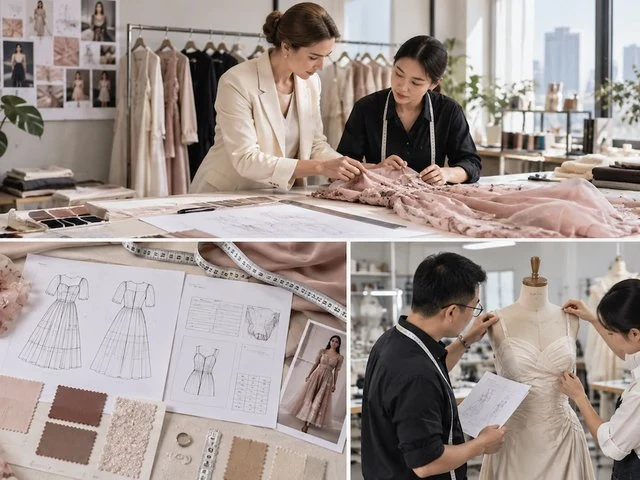
Tech pack vs reference sample: what does a factory need?
What a reference sample tells a manufacturer that a tech pack cannot, what the pack carries that a garment cannot, and why the best brief uses both.

How pattern making works in womenswear manufacturing
How a garment pattern is drafted from a block, why grading is not scaling, and why an approved pattern is a manufacturing asset rather than a drawing.

Can you manufacture clothing without a tech pack?
You can start without a finished tech pack, and many brands do. What has to be settled first, and which parts of a pack can be built during development.
Related
Where this topic leads
Services for this topic
Categories this applies to
Start a project
Need an answer now?
Ask directly. We would rather answer a real question than point you at a placeholder page.