
Knowledge centre
Sampling
What each sample round is for and how to comment usefully.
A sample round is a test, and each round tests something different. The first sample is there to prove the pattern and the proportions. The fit sample is there to be worn and corrected. The pre-production sample is there to prove that the garment can actually be made in the bulk fabric and trim, by the people and the machines that will make the run. The sealed sample is the reference everything afterwards is measured against.
Commenting well is the skill that decides how many rounds you need. “The waist is too tight” produces a guess; “the waist measures 1.5 cm under spec at the side seam, and the front panel is pulling across the hip in the size M fit model” produces a correction. Comments that name the location, the direction and the amount are what a pattern maker can act on in one pass.
The expensive mistake is to accept a sample that was made in different conditions from the bulk — a substitute fabric, a hand-finished seam, a one-off trim — because it looks right. A sample that cannot be reproduced is not an approval, it is a demonstration.
Start from sampling for the service view, or from occasionwear if you are developing a structured garment where the fitting rounds matter most. The guides below cover each stage and how to write comments that land.
Topic
Sampling
What each sample round is for and how to comment usefully.
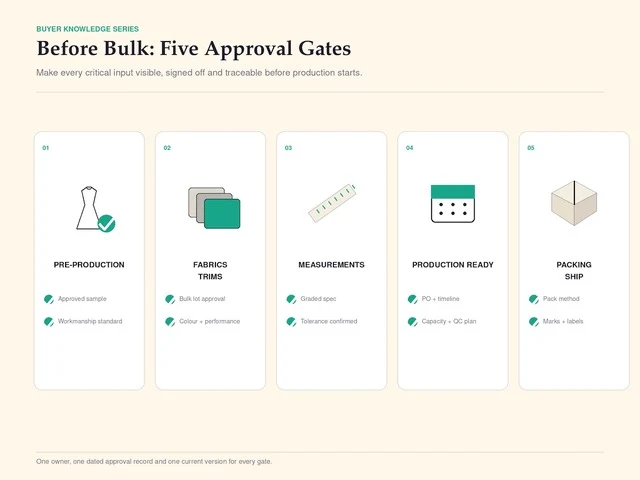
Evening Dress Sample Approval Checklist
An evening dress sample approval checklist: what fit, fabric, construction, measurement and branding sign-off each decide, and how to seal a bulk reference.
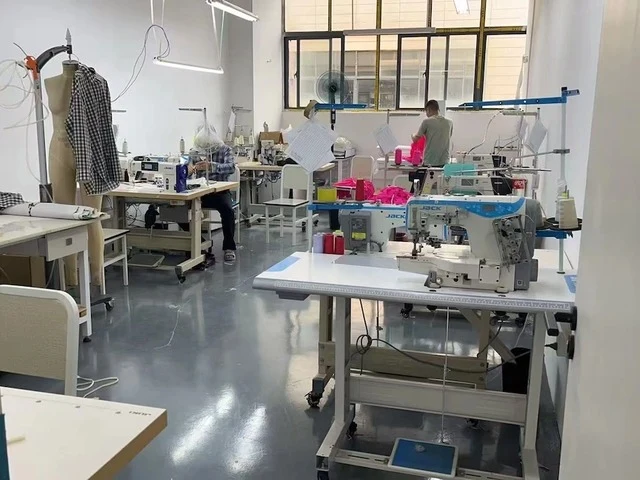
How a Factory Creates a First Garment Sample
Inside first-sample development: what is settled before the pattern is cut, which round you are in, how comments are managed, and how a sample is signed off.
Related
Where this topic leads
Services for this topic
Categories this applies to
Start with these guides
Start a project
Need an answer now?
Ask directly. We would rather answer a real question than point you at a placeholder page.