
Knowledge centre
Fashion Manufacturing
How garments are actually made, and where the risk sits in a production run.
A production run is not a design multiplied by a quantity. It is a set of decisions — fabric, interlining, seam allowance, closure, finishing — made once at development, which then have to hold on every single unit. These guides look at that second half of the job: what happens to a garment between the approved sample and the sealed carton, and where the risk actually sits.
The recurring point is that most bulk defects are not sewing errors. A wavy zip, a collar that lifts at the point, a hem that drops on one panel, a print that lands off-centre on one size — each is usually traceable to a specification that was never written down, a fabric that behaves differently at scale, or an approval given on a sample made under different conditions from the bulk. Knowing which of those three you are looking at is what turns a complaint into a correction.
If you are developing a range, the most useful habit to take from this section is a critical-point list for each style: the four or five places on that particular garment where a small error becomes a visible one. The list is different for a bias-cut slip and a boned bodice, and it is what a factory needs from you in order to inspect the right thing.
Start from a category if you want to see the principles applied to one product family — women’s dresses collects the dress-specific construction and finishing notes — or work through the guides below from wherever you are in the process.
Topic
Fashion Manufacturing
How garments are actually made, and where the risk sits in a production run.
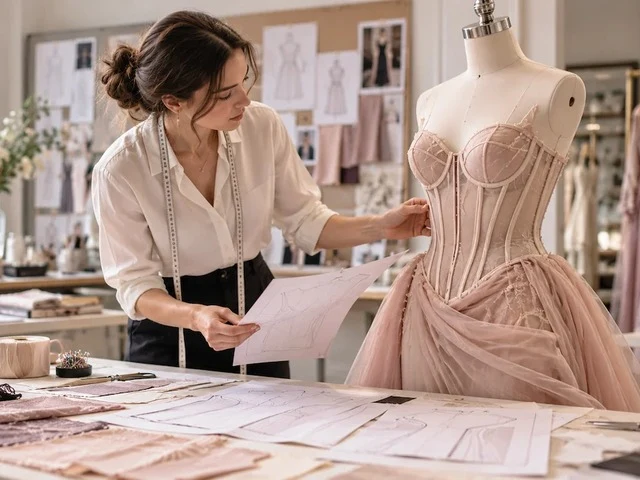
Spiral Steel vs Flat Steel vs Plastic Boning: Choosing Boning for a Corset Dress
Corset boning types compared: what spiral steel, flat steel and plastic boning each do under load, and how to specify the right one for a silhouette.
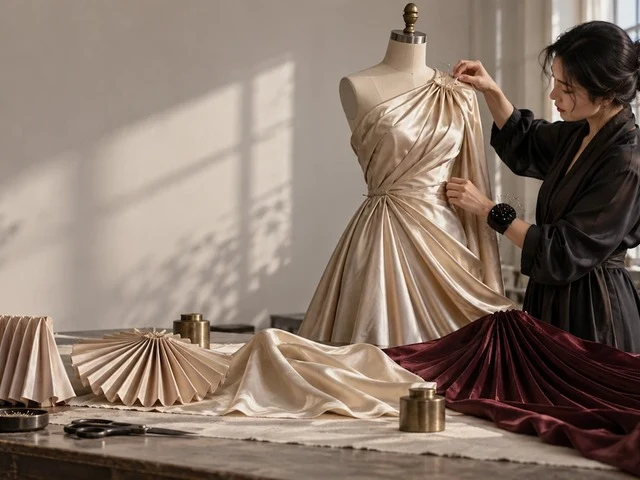
Why Invisible Zippers Wave on Satin, and How to Specify One That Doesn't
Invisible zipper satin dress problems explained: the three causes of a wavy centre-back seam, and the specification lines that stop it in bulk.
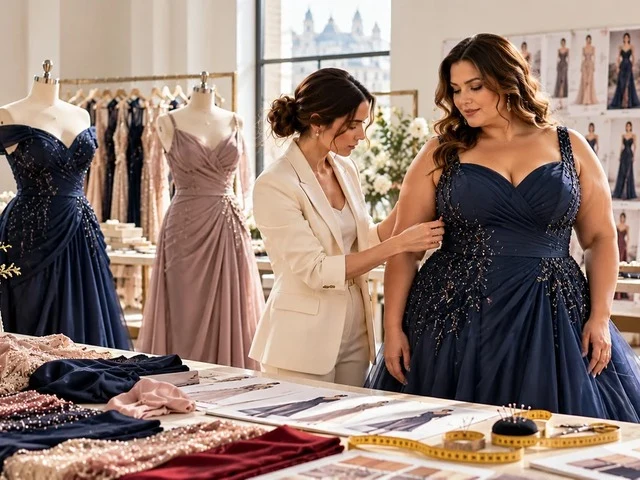
Foam, Moulded or Soft Cups: Choosing Bra Cups in Dresses
Bra cups in dresses explained: what foam, moulded and soft cups each do, where bust support really comes from, and how to specify cups that survive grading.
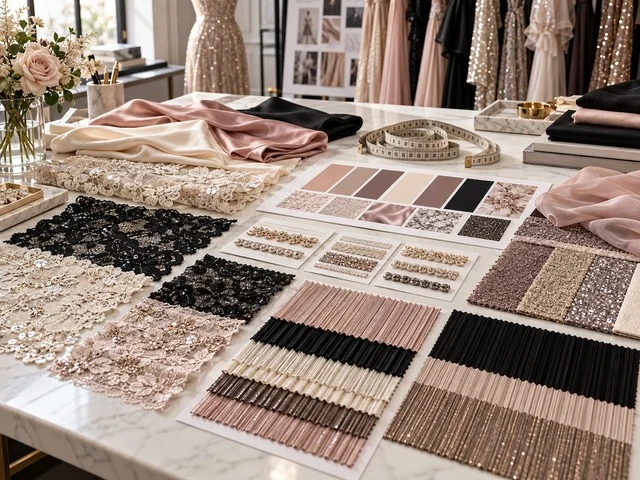
Lace in Occasionwear: Types, Application Methods, Cost and What Fails
Lace in dress manufacturing: allover, trim and motif placement compared for consumption and labour, plus how to finish an edge that lasts.

Sleeve Construction in Dresses: Types, Cost and Grading Risk
Dress sleeve types in production: set-in, raglan, kimono, cap, puff, bishop and cape, each with what it costs to make and where it fails across a size range.

Sequin Fabric vs Hand-Applied Sequins: Cost, Weight and Failure Modes
Sequin fabric compared with hand-applied sequins for dress manufacturing: where each route's cost sits, how weight changes the drape, and how each one fails.
How Corset Dresses Are Manufactured
How corset dresses are manufactured, station by station: the support zone in the pattern, cup systems, boning, the lining chassis, and the fit review that decides whether the structure is invisible.
How Beaded Dresses Are Manufactured
How beaded dresses are manufactured, starting from the five ways they fail: placement artwork, application route, seam engineering, garment weight and the repair plan.
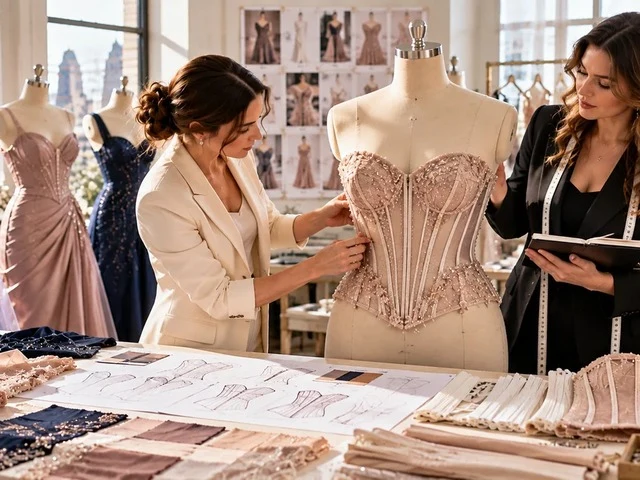
Corset Bodice Fit and Boning Guide
A corset bodice fit and boning guide: reading load paths, positioning cups, choosing boning, controlling the neckline edge and engineering the closure.
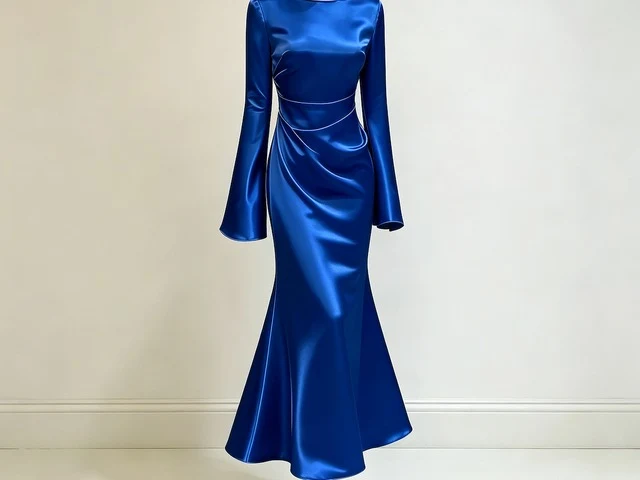
Evening Gown Hem Length and Balance Guide
An evening gown hem length guide: measurement references, fabric relaxation, front-to-back balance, trains and shell-to-lining length, with a spec sheet.
How Sequin Dresses Are Manufactured
The four production routes behind a sequin dress — pre-sequinned fabric, all-over and placement embroidery, and hand application — plus what happens at the seam.
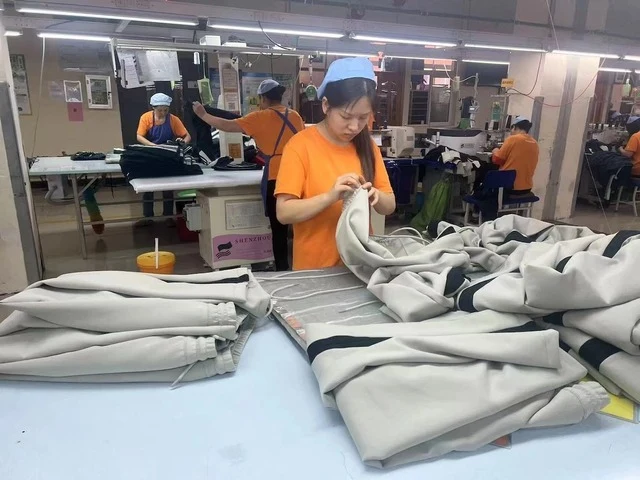
How Hand Embellishment Is Done on Womenswear
Hand embellishment as a production stage: how the techniques differ, how an artwork is specified, attachment testing, and where handwork costs most.
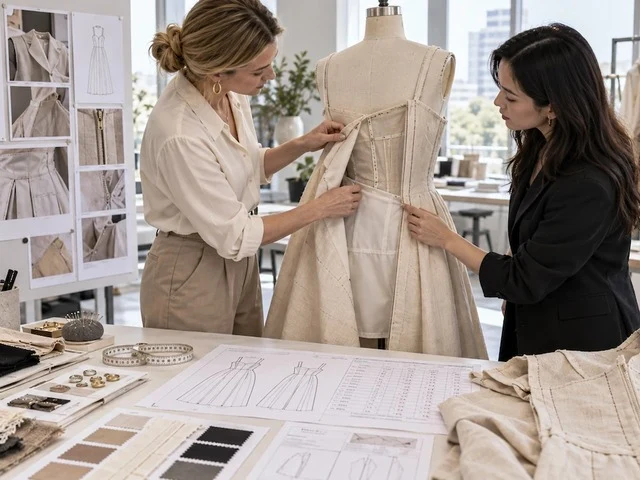
How Structured Bodices Are Made in Womenswear
Structured bodice construction explained: the layer system, underlining vs interlining, where support really comes from, and what to test on a body.
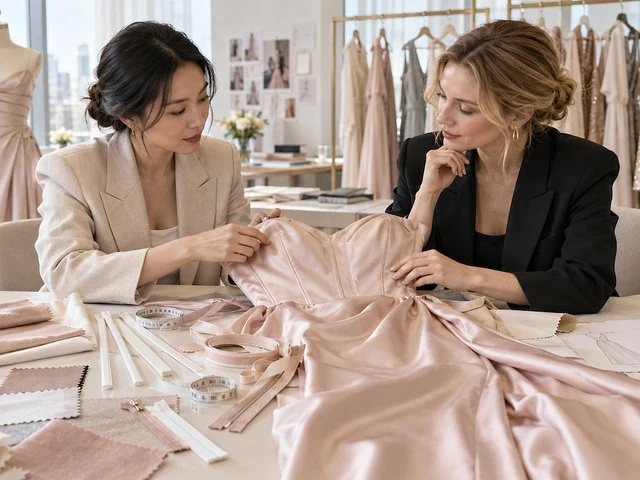
How dress construction affects fit, cost and production
Garment construction explained as four decisions rather than one: what each internal element controls, how construction problems present as fit problems, and what each choice does to cost.
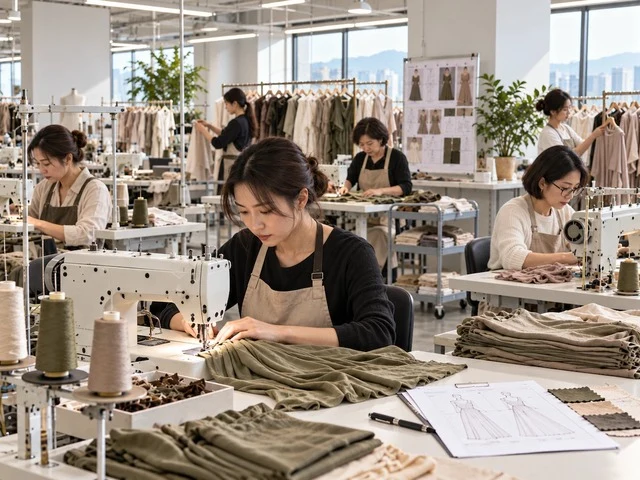
What does a womenswear manufacturer actually do?
The scope of work between your design and a packed carton, which parts you still own, and what a manufacturer is genuinely not responsible for.

How clothing manufacturing works, from design to finished garment
Every stage between your design and a packed carton, what each one actually decides, and where the calendar and the money are usually lost.
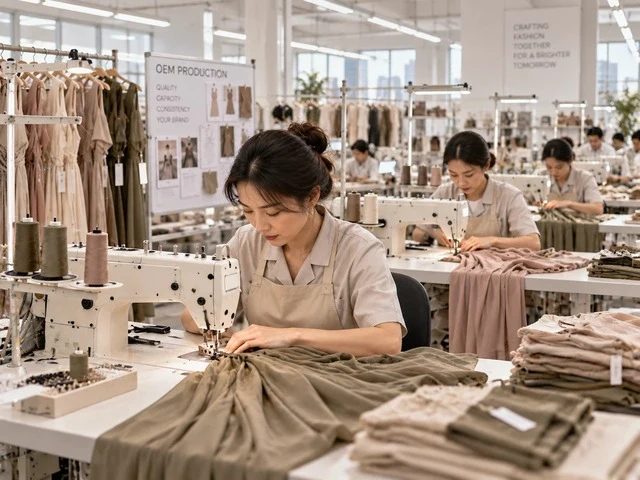
What is the difference between a garment factory and a clothing manufacturer?
The two terms describe different levels of responsibility. What each supplies, what you must supply instead, and how to tell which one you are talking to.
Related
Where this topic leads
Services for this topic
Categories this applies to
Start a project
Need an answer now?
Ask directly. We would rather answer a real question than point you at a placeholder page.