On this page
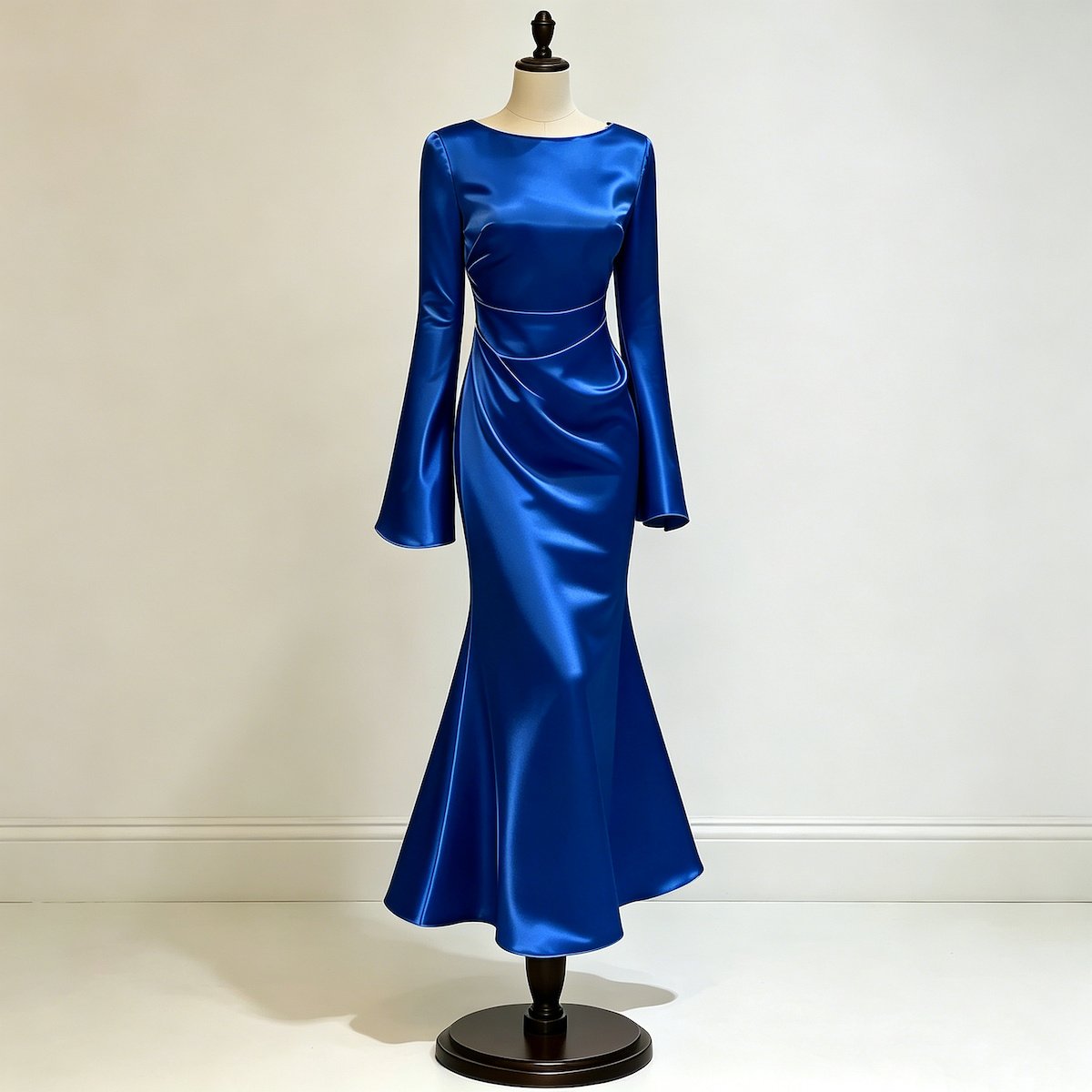
This is written for fashion brands, retailers and product developers producing evening, prom, bridesmaid and gala lengths. It assumes the grading and calendar context, which our prom dress grading guide and prom production timeline cover, and the shell-to-lining relationship covered in our lining guide. What follows is the construction treatment of length and balance. The category is on our evening dress manufacturing and gala dress pages.
A hem is a datum problem
A length is a number attached to a reference point. If the reference point is not stated, the number is not a specification, and two people can measure the same garment correctly and disagree. This is the root of most hem disputes, and it is resolved before any fabric is cut.
Three failures that look like sewing faults
| What is reported | What it usually is | Where it is actually corrected |
|---|---|---|
| The hem is uneven | The reference point was not defined, or the garment was measured before it relaxed | The specification and the levelling gate |
| The dress is too long or too short | The footwear assumption was missing, or the wearer's height was assumed from the size | The specification and the sample fit |
| The train sits wrong | The train was designed from the pattern rather than from the body's back line | The pattern and the balance check |
None of the three is a machining problem, and all three are visible at the sample stage if the specification asks the right questions. The cost of the mistake is not the hemming; it is that a levelling correction made late carries pressing, re-pressing, re-inspection and often a second fitting with it.
The cost of an undefined datum
On a short hem in a stable fabric, an undefined datum costs a few minutes. On a floor-length gown it costs the levelling operation, the press, the inspection and sometimes the packing, because a gown that has been re-hemmed has to be re-finished at the bottom. On a multi-layer tulle skirt the same mistake is repeated on every layer. The reason to write the datum down is that its absence is invisible until the most expensive possible moment.
Define the measurement reference
The specification needs three statements before any length can be agreed: the point the length is measured from, the floor relationship that is intended, and the footwear the garment was fitted with.
Choose the reference and state it
Length from the shoulder and length from the waist seam give different numbers for the same garment, and both are legitimate. What is not legitimate is a chart that does not say which. The reference should be the most stable point on the garment — a seam or a defined pattern point rather than a place on the body — so that the measurement can be repeated by a second person in a second factory without asking.
State the floor relationship
Floor-length is not a measurement. A gown can be intended to clear the floor by a defined distance, to touch it at the front and sweep at the back, or to break slightly over the shoe, and each of those produces a different number and a different fit conversation. Writing the intended relationship, plus a tolerance, is what makes it possible to accept or reject a length without a discussion about taste.
Record front, side and back targets
For a trained or asymmetric hem, one number cannot describe the garment. Recording the front, side and back targets separately — and stating which one the tolerance applies to — turns a train from an aesthetic judgement into a set of measurements that a pattern room can cut and an inspector can check. Where the targets differ, the difference is the design, and it should be visible in the chart rather than inferred from the sketch.
Measuring a hem: the practical sequence
Once the reference point exists, the measurement itself has to be repeatable by a different person in a different room. The sequence that produces that result is short: lay or hang the garment as the specification requires, confirm the reference point from the pattern rather than from memory, measure at the defined points rather than at convenient ones, and record the floor relationship at each of them. Anything measured off the reference point is a different number, however carefully it was taken.
Two habits make the difference in practice. Measure on the garment as it will be worn — hanging rather than folded, with the layers in the position they will sit — because a hem measured on a table understates the drop on a bias cut and overstates it on a layered skirt. And write the numbers down as they are taken, rather than recording whether the hem passed, because a pass or fail with no figure behind it cannot be compared with the next delivery or the next size.
Avoid 'full length'
'Full length' is an instruction that each reader interprets from their own experience, and the interpretations differ by several centimetres. It also hides the footwear assumption, which is the variable most likely to make a correctly made gown wrong for the wearer. The same applies to 'floor length' and 'ankle length' as sole descriptors. None of them is a substitute for a number, a reference and a floor relationship.
- State whether length is measured from the shoulder, the waist seam or another stable pattern point.
- Define the intended floor clearance or break, and the heel height it assumes.
- Record front, side and back targets separately for any trained or asymmetric hem.
- Replace vague instructions such as 'full length' with a number and a reference.
Allow fabrics to relax
Gravity changes a hem. Fabrics that were cut to a correct length on a table are not the same length after a day on a hanger, and the amount they change depends on the grain they were cut on, the fibre and the weight of the skirt below them.
What drops, and how much
Bias-cut satin and some knits are the most obvious cases, because the bias direction is where the fabric has the most room to move and the skirt's own weight pulls along it. Long chiffon layers relax differently from the lining beneath them, so the relationship between two layers changes even when both drop. And a heavy skirt drops more than a light one, which means the same fabric in two silhouettes does not behave the same way. None of this is a fabric fault; it is a property that has to be allowed for.
Hang before levelling
The practical control is to hang the garment, in the way it will be stored and shipped, for long enough that the movement has happened, and then measure and level. On a bias gown that means hanging it before the hem is finished rather than after, because a hem that has been pressed and finished cannot be re-levelled without taking the finish apart. Where a programme has several styles in the same fabric, the relaxation period is worth testing once and writing into the schedule as a step rather than leaving it to the sample room to notice.
Do not trim a complex hem early
A layered, gathered or curved hem is expensive to redo and cheap to leave long. The discipline is to keep the hem allowance generous until the garment has relaxed and the fit corrections are complete, and only then to trim and finish. Trimming early saves a little fabric and costs the ability to correct, which is a poor trade on any style where the hem is not a straight line.
Balance the skirt around the body
A skirt that is cut correctly can still hang unevenly on a body, because front and back length are governed by the shape of the wearer rather than by the pattern's symmetry.
What a length query usually turns out to be
When a length problem is reported, it almost always resolves into one of four causes, and separating them is what stops a correction from being applied at the wrong stage. The garment was measured from an unstated reference, so it is not actually wrong against the chart the factory holds. It was levelled before the fabric had relaxed, so it grew afterwards. It was balanced on a form rather than on a body, so the front and back relationship is correct by the numbers and wrong on the wearer. Or the footwear assumption was absent, and the dress is correctly made for a heel nobody has.
Each of the four has a different remedy, and three of them are specification changes rather than garment changes. That is why the length specification sheet is worth more than any single measurement: it makes the cause identifiable. A claim that the hem is short, answered by a chart that states the reference point, the floor relationship, the relaxation step and the footwear, takes one comparison instead of an exchange of photographs.
Why front and back differ
Front length is affected by bust and abdomen projection, both of which push the fabric forward and consume length. Back length is affected by the seat and by the design of the train, and a garment fitted on a form with a symmetrical profile will not show the difference. This is why a gown can measure level front and back on a table and sit visibly higher at the front on the wearer — and why the balance question has to be answered on the body or on a form that matches the intended block.
An equal radius does not guarantee an equal hem
A circular or gored skirt with an even radius all the way round produces an even hem only on a perfectly cylindrical body. On a real body the hem's distance from the floor varies with the body's circumference at each point, and it varies more as the skirt gets closer to the body. The correction is not to force an equal measurement but to set the hem's floor relationship at each of the front, side and back reference points, which is what the front-side-back targets in the specification are for.
Fit on the intended block
Balance is decided against the body the range is developed for. Where a brand develops on one fitter and sells to a range of heights, the length that reads correctly on the fitter will read long on a shorter wearer and short on a taller one — which is not a defect but a standard that has to be stated. Recording the fitter's height and footwear alongside the length targets makes the intended standard reproducible, and makes a later length query answerable.
Design trains for use, not only photographs
A train is the clearest case of a design decision that has to be made twice: once for how it looks and once for how it is worn. The two answers are sometimes the same and often not.
Different train lengths, different problems
| Train | What it does for the image | What it demands of the wearer and the order |
|---|---|---|
| Sweep or brush train | Adds length at the back without dominating the silhouette | Almost nothing — it walks and photographs without management |
| Short train | Gives a defined back line in a still image | The wearer has to be aware of it when reversing; a loop is enough |
| Long train | The image-making option, and the most photographed | Handling, a bustle or loop for dancing, more fabric, more pressing, more packing volume |
| Detachable train | Two garments from one style, and two use cases | An attachment that has to be secure and invisible, plus a fastening the wearer can manage alone |
Add a handling solution when movement matters
Where the wearer is expected to move — dancing, walking outdoors, using stairs — a long train needs a way to be carried, and the options are a wrist loop, an internal bustle tie, or a removable train. Each is a small construction cost and a large usability difference, and the decision belongs at the design stage because retro-fitting a bustle to a finished gown means opening the lining. A train designed for photographs only is a legitimate choice, as long as it is a stated choice rather than an oversight.
The logistics of a long train
A long train increases fabric consumption, and it also increases the garment's packed volume and the difficulty of pressing it, which affects freight cost and the packing method rather than only the material cost. On a beaded or heavily constructed train, packing also has to protect the surface across a larger area. Those consequences belong in the costing model, because a train added at the sampling stage can change the shipping profile of the whole order.
Coordinate shell and lining
The lining's length relative to the shell is a deliberate relationship rather than a default, and on a gown it is visible in exactly the situations the customer cares about.
The lining must not show in movement
A lining that appears below the shell when the wearer moves is a defect, and it appears in the specific movements of wearing the garment: walking, sitting, lifting a skirt, and turning. The relationship that prevents it depends on the style — often the lining is slightly shorter, sometimes it is cut to follow the shell's grain, and on a garment with a slit it may need to be positioned so it cannot pass through the opening. What matters is that the relationship is chosen and recorded rather than left to the hemming operation.
Staggered lengths on sheer layers
Where a gown has sheer layers, the lengths are design decisions and each one needs its own target. A tulle that ends at the same place as the shell disappears into the hem; a layer that ends a defined distance above it produces a visible band of depth. Because each layer relaxes differently, staggered lengths have to be checked after hanging rather than at the cutting stage — and the stagger should be specified as a distance from the shell's finished hem rather than as an absolute length, so that it survives a later levelling correction.
Recheck after final pressing
Pressing changes a hem, particularly on a bias cut or a curved edge, where steam and weight can move the fabric slightly. The final check is therefore after the last press and before packing, and it is a short check: the shell-to-lining relationship, the front-side-back floor relationship against the targets, and the finished length against the chart. Where a garment is shipped hanging, the check is repeated in the packed state, because hanging transport can move a hem that was correct on the table.
The length specification sheet
This is the document that makes a length repeatable, and it is short enough to sit on one page of the tech pack. Each line exists because leaving it out has produced one of the failures above.
| Line | What it fixes | What its absence produces |
|---|---|---|
| Reference point for length | Which measurement the chart is talking about | Two correct measurements that disagree |
| Front, side and back targets | Balance on a body with projection and a seat | A gown that measures level and hangs unevenly |
| Floor relationship and tolerance | Whether the hem should clear, touch or break | A length that is right by the number and wrong on the wearer |
| Footwear and heel height assumed | The variable that decides real floor clearance | A correctly made gown that is the wrong length for the wearer |
| Fit block height and footwear | The body standard the balance was set against | A standard nobody can reproduce |
| Relaxation: how long, and how hung | Bias and knit drop before levelling | A hem that moves after the sample was approved |
| Lining finished length relative to the shell | Show-through in movement | Lining visible below the hem, or at a slit |
| Staggered layer lengths | Depth on sheer layers | Layers that merge, or a stagger that shifts after levelling |
| Train type and handling solution | Whether the garment can be worn as well as photographed | A train the customer has to carry in her hand all evening |
| Levelling gate | When the hem is finished and cannot be re-cut | A trimmed hem that had to be corrected |
When to level the hem: the four gates
Levelling is a one-way operation on most hems: once the allowance is trimmed and finished, correcting the length means redoing the finish. The four gates below are the order in which the preconditions are satisfied.
| Gate | What has to be true | Why it comes here |
|---|---|---|
| Fit and pattern corrections complete | No change is pending that would move the waist, the hip or the bodice | A waist change moves the hem by the same amount |
| Fabric relaxed | The garment has hung, in its storage method, for the period the fabric needs | Bias and knit hems drop, and a hem levelled before that is levelled twice |
| Balance set on the body or the intended block | Front, side and back targets measured against the floor relationship | Balance cannot be set on a table |
| Final construction and press | Layers attached, lining positioned, any train handling fitted | Pressing and construction both move a hem slightly |
The one correction that has to happen early
Everything above can happen late except a length error that is large enough to change the design: a gown that is meant to touch the floor and is ten centimetres short is not a hem correction but a recut, and it has to be caught at the first sample rather than at the levelling gate. That is the reason the length chart belongs in the first fit comment, even though the hem itself will not be settled until much later.
Practical buyer worksheet
Fill this in before the first sample is commented on. For a length problem the tenth line is the one that decides cost: a stated latest acceptable delivery date is what makes a levelling gate a scheduled step rather than a last-minute compromise.
- Target customer and use occasion
- Target retail and wholesale price
- Target ex-factory or landed cost
- Core fabric and backup fabric
- Size range and base fit size
- Colour count and continuity colours
- Critical construction risks
- Approval sample required
- Inspection checkpoints
- Latest acceptable delivery date
FAQ
How long should a floor-length gown be?
It depends on the footwear, the silhouette and the brand's standard, and the useful answer is that the number matters less than the three statements that produce it: the reference point, the intended floor relationship at the front, side and back, and the heel height the sample was fitted with. Once those are fixed, the number is reproducible and a length can be approved or rejected without a discussion about taste. Without them, the same gown can be correctly made and still be the wrong length for the wearer it was made for.
Why do bias dresses get longer after hanging?
Because the bias grain is the direction in which the fabric has the most room to move, and gravity pulls along it. The skirt's own weight extends the panels a little at a time, so the garment is measurably longer after a period on a hanger than it was when it was cut — and the effect is larger on a long skirt, on a heavier fabric, and on a cut where the bias runs closest to the vertical. That is why bias garments are hung before the hem is finished rather than after, and why the relaxation step belongs in the schedule.
Should the lining be the same length?
Often it should be slightly shorter, and the relationship depends on the design rather than on a rule. What the relationship has to achieve is that the lining never appears below the shell during wear or movement, and that is affected by the grain the lining is cut on, the shell's weight, whether there is a slit or a vent, and how much the two fabrics relax. On a bias shell the lining may need to be cut to follow the grain; on a garment with a slit the lining may need to be positioned rather than merely shortened. Either way, the relationship belongs in the specification as a stated distance.
When should final hemming happen?
After the fabric has relaxed and after the major fit corrections are complete, which is usually later than a first programme expects. Levelling before those two conditions are met means levelling twice, and the second time carries a re-press, a re-inspection and often a second fitting with it. The sequence worth writing into the schedule is: fit and pattern frozen, then the garment hung in its storage method, then balance set against the floor relationship, then final construction and press, then the hem. A large length error is the exception and has to be caught at the first sample, not at the gate.
Next step
We develop and produce evening, prom, bridesmaid and gala lengths at our production facilities in Guangzhou and Dongguan, with named reference points on every length, front-side-back balance targets, relaxation steps built into the schedule, train handling options, and the shell-to-lining relationship recorded in the specification. Send the silhouette, the fabric and the footwear assumption, and we will come back with a length specification sheet and a levelling sequence rather than a measurement. Request a quote, or see the constructions we run on our evening dress manufacturing page.
Our lining guide covers the shell-to-lining relationship in more detail, and our tulle construction guide covers what staggered lengths do on a layered skirt. Silhouettes already in production are on our style library and ready stock pages, and the wider category is on the women's dresses page.