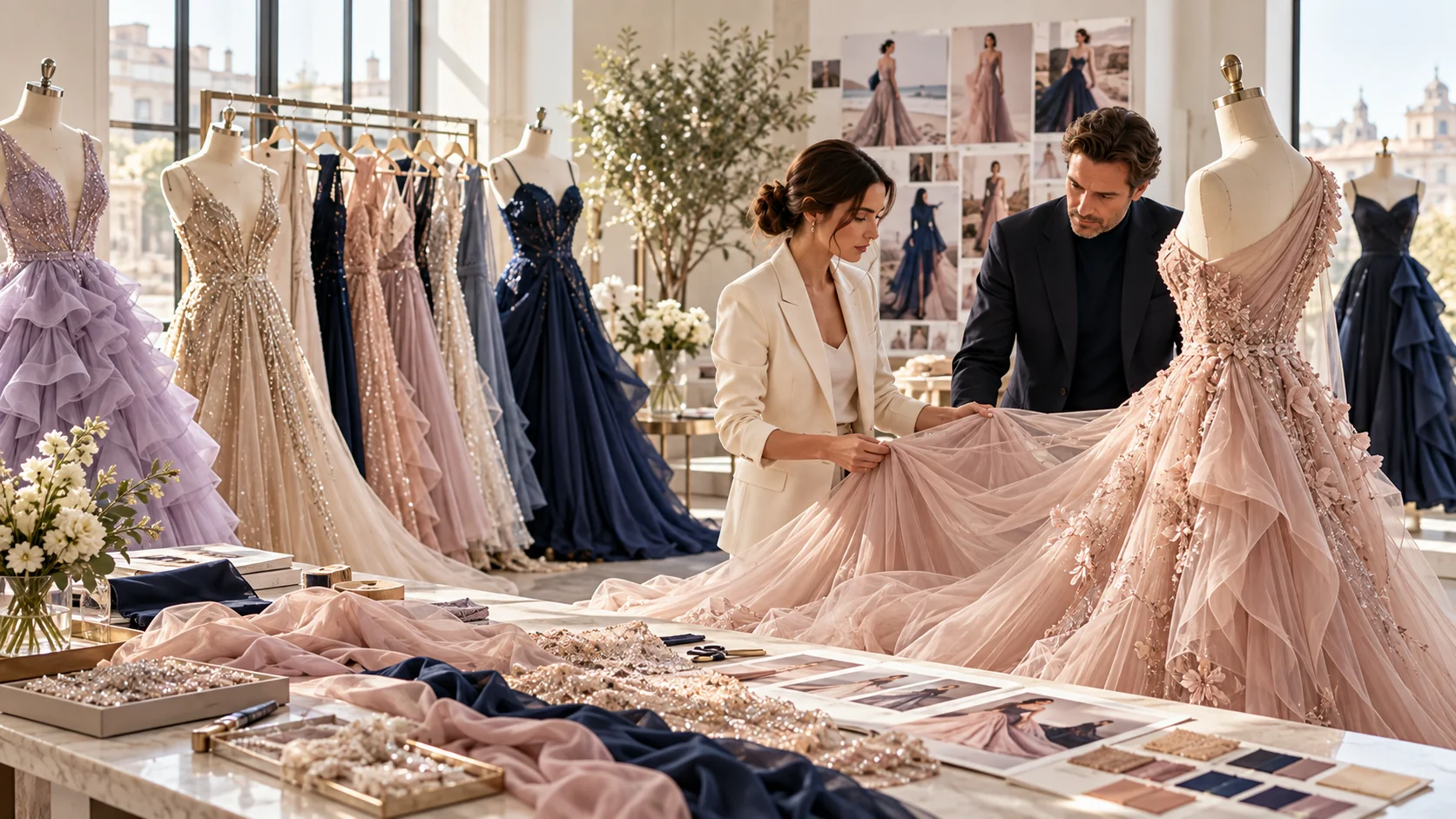
Occasionwear cluster
Evening Dress Manufacturer
Evening dress production for labels, boutiques and retailers — bias-cut slips, column gowns, mermaid silhouettes and embellished formalwear — developed from your reference and built to an approved sample.
Capabilities
What we make
Evening Dress manufacturing capabilities
Evening dresses are bought on silhouette and paid for on construction. The difference between a mid-market gown and a premium one is usually invisible in a photograph: it is the lining weight, the interlining, the boning and the hem finish that decide whether the dress drapes or simply hangs.
- Bias-cut and slip evening gowns
- Column, sheath and straight-cut gowns
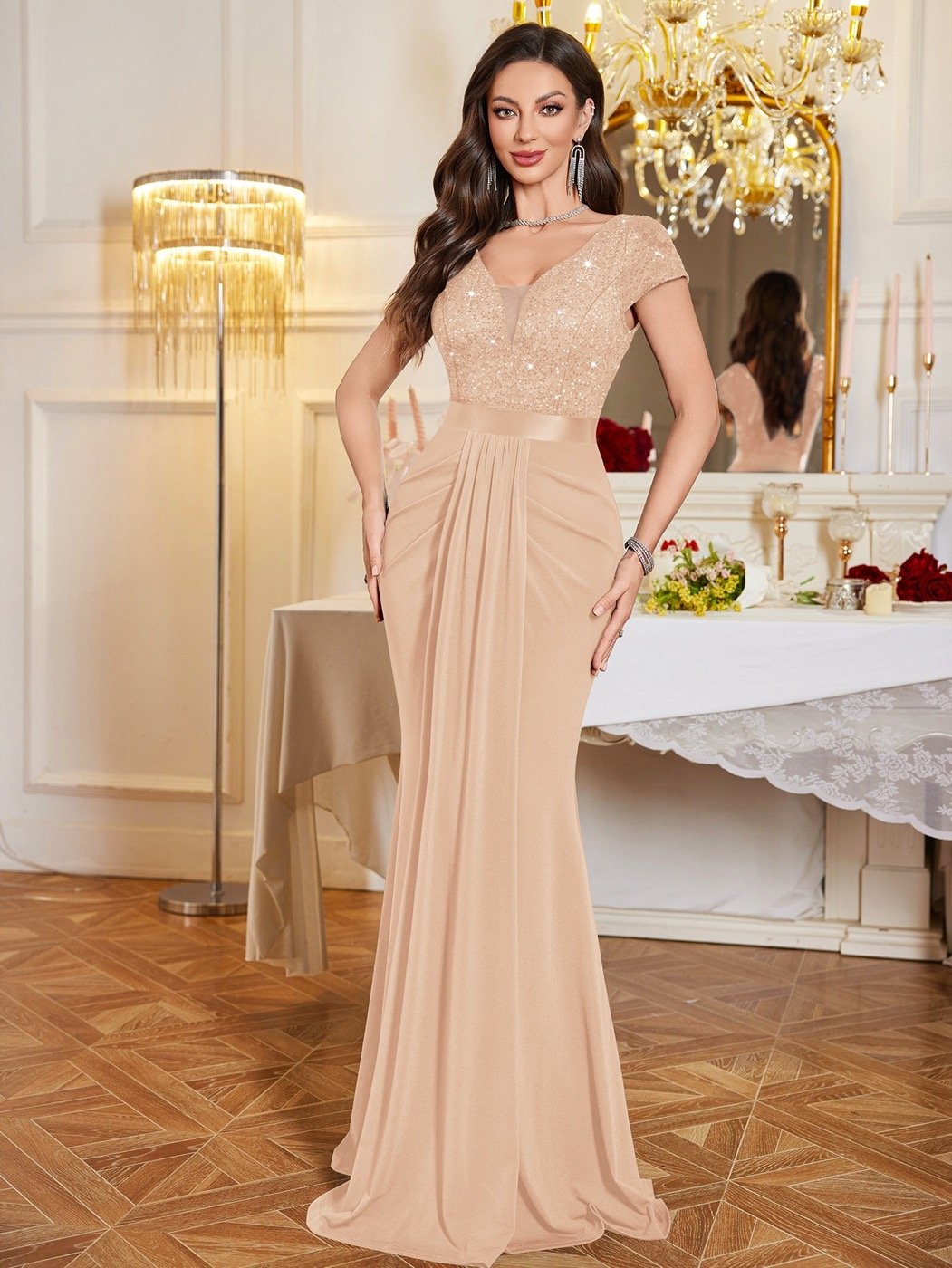
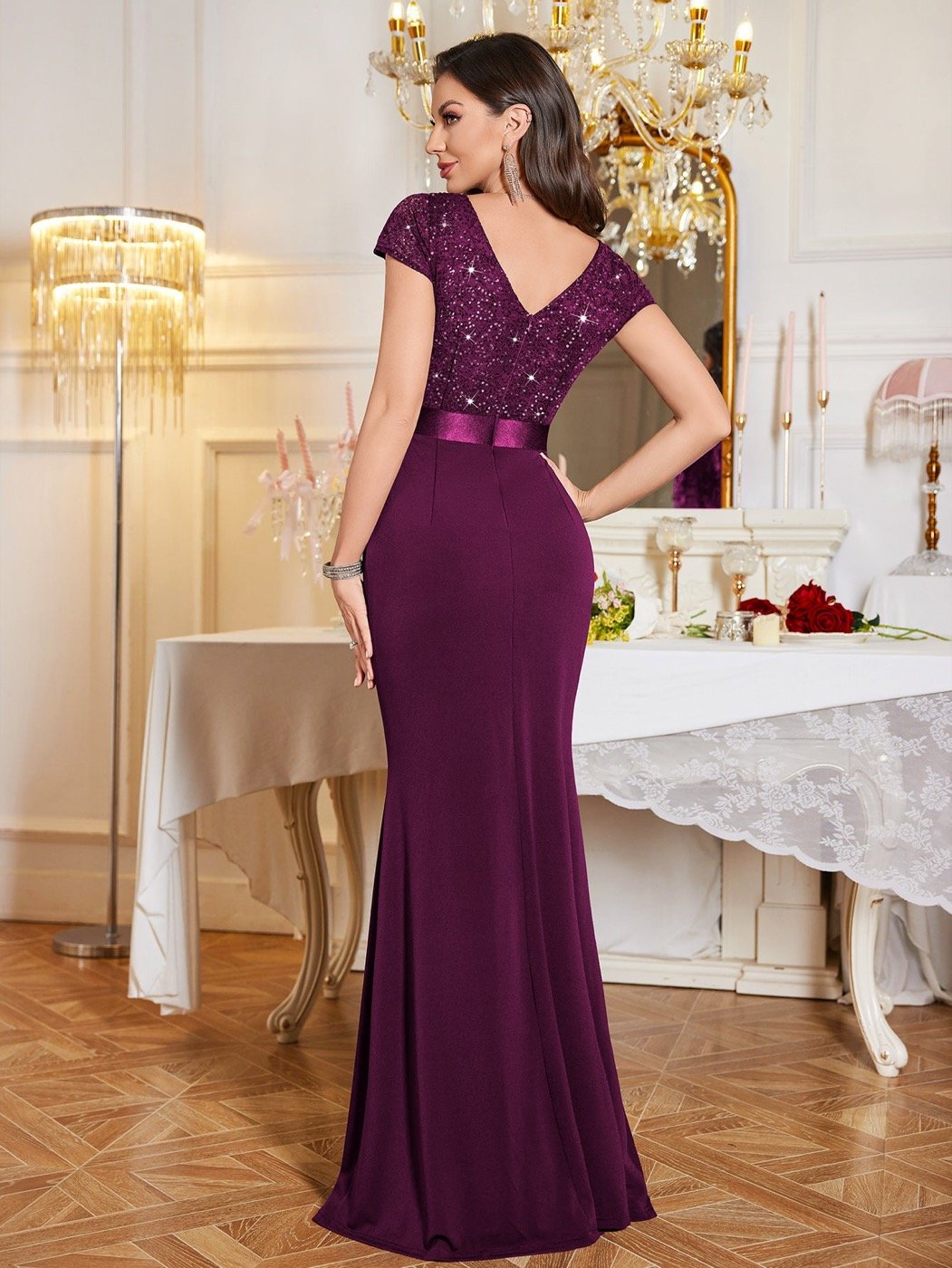
- Mermaid and fishtail silhouettes
- Chiffon and georgette styles with ruching or draping
- Lace and sequin-embroidered shells over a lined bodice
- Lined, interlined and boned bodice construction
Constructions
What we build in this category
Each of these is developed as its own programme: its own block, its own interlining and its own sample round.
Lining weight decides the drape
A stiff lining under a fluid crepe makes a gown hang like a curtain. Lining weight and stretch are matched to the shell and confirmed on the first sample, not decided at the fit meeting.
Bias cutting carries a real cost
A true bias-cut slip wastes more cloth than a straight-cut one and cannot be packed straight. The layout and the metre yield are set before the quote, so the number quoted is the number invoiced.
Hem weight and length move together
Adding a train or dropping the hem changes how the skirt swings. Hem finish, interlining and length are set as one decision.
Inside the work
How these garments get made here
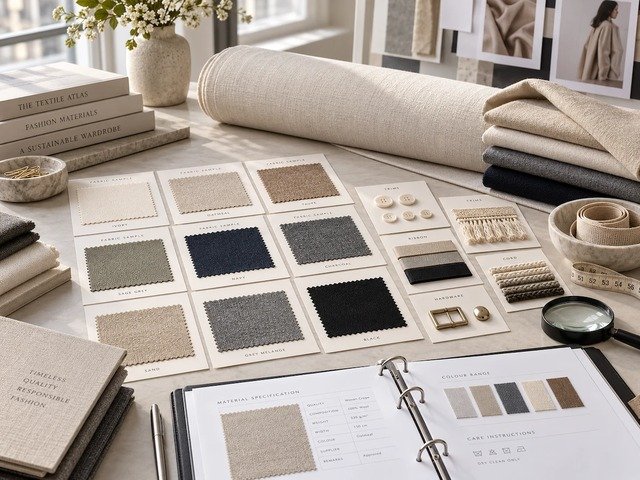
Pattern, sample, construction and material — the four stages that decide whether the finished garment matches the one you approved.

Development process
From reference to bulk in five steps
- 1
Silhouette and wear case
Silhouette, length and wear case first: an evening gown sold online and one sold through a bridal fitting room are developed differently.
- 2
Shell and lining sourcing
Shell, lining and interlining are sourced together, because the combination decides the drape. Fabric you supply is worked to your lot.
- 3
Pattern and first sample
Drafted from your reference or cut from your block, then corrected on a body. Structured and beaded bodices usually take a second sample.
- 4
Approved sample and grading
The approved sample is the production reference. Grading is verified against its fit points before cutting starts.
- 5
Bulk, finishing and inspection
Cutting, sewing, embellishment, pressing and packing against the approved sample, with in-line and final inspection.
Technical & buyer information
What we can tell you now
Verified facts are published. Anything that depends on the construction is confirmed against your specification rather than quoted as a headline number.
| Facility | Factory-direct OEM & ODM |
|---|---|
| Facility certifications | ISO 9001 · OEKO-TEX STANDARD 100 · amfori BSCI-audited · SGS-inspected |
| Quotation response | within 24 hours |
| Minimum order quantity | Confirmed per style, colour, fabric and construction — corsetry, hand beading, sequins and special dyeing each carry their own minimum. |
| Sample lead time | 7–10 days |
| Sample fee | Confirmed at quotation |
| Bulk production lead time | Confirmed after sample and material review — corsetry, hand beading, sequins and special dyeing each change the production window. |
| Inspection standard | Six-step inspection (material → cutting → sewing → finishing → pressing → final AQL) |
Typical questions we ask
- Which silhouettes carry the season — and are they repeats or new blocks?
- Does the range need a train option, or one length across the board?
- Is the embellishment decorative or brand-signature? That decides how much of it is hand work.
Develop in this category
Send a reference, a sketch or a tech pack. We reply with a quotation and a sample plan, within 24 hours.
The cluster
Other occasionwear categories
Occasionwear is split by occasion on purpose: a prom buyer and a rental buyer need different constructions, different grading and different finishing. The pages below each own one of those briefs.
Occasionwear Manufacturer
Special-occasion manufacturing across evening, prom, bridesmaid, gala and cocktail constructions.
Prom Dress Manufacturer
Prom and ball-gown production with corseted and boned bodices in full size runs.
Bridesmaid Dress Manufacturer
Coordinated bridesmaid ranges in matched colourways and graded size runs.
Private Label Occasionwear Manufacturer
Your label on occasionwear — development, production, labelling and packaging.
Reading
Related guides
Where the construction detail behind this page is written out in full.
How Evening Dresses Are Made
A station-by-station walk through how an evening gown is made, from pattern and toile to hand embellishment and final inspection, with the lead times buyers plan against.
How Structured Bodices Are Made
Structured bodice construction explained: the layer system, underlining vs interlining vs interfacing, where support really comes from, closure engineering, and what to test on a body.
Satin vs Crepe vs Chiffon
How satin, crepe and chiffon actually differ in weave, drape, opacity and pressing behaviour, and what each one does to lining, sampling and production cost.
How Dress Silhouettes Affect Fabric Consumption
See how column, fishtail, A-line, swing, bias and lined dress styles consume fabric by the metre, and what it does to your quote and MOQ.
How Fabric Weight Affects Fit and Drape
Learn how fabric weight and GSM affect garment fit, drape, sampling and bulk production, with practical guidance for womenswear buyers and fashion brands.
Start a project
Have a style, a reference or just a category?
Send whichever you have. We will tell you which route fits it, what the sampling looks like and what the minimum is for that construction.