
Knowledge centre
OEM & ODM
The two engagement models, what each one shifts onto whom, and how to choose.
OEM and ODM are not quality tiers or price tiers. They are two different answers to one question: who owns the design, and therefore who carries which risk. Under OEM the product is yours — your pattern, your specification, your artwork — and the manufacturer executes it. Under ODM the manufacturer starts from a design they already hold and adapts it to your brand, which moves a large part of the development cost and timeline onto their side.
The decision is rarely made on cost alone. OEM gives you exclusivity and exact control, and asks you to arrive with a complete technical package, or to pay for one to be built. ODM shortens the path to a first sellable range and is often the better way to test a market, at the cost of sharing a starting point with whoever else buys the same base style.
Most established brands end up running both, on different styles, at the same time. A core carried line is worth the OEM investment; a seasonal experiment is often better served by ODM. The practical work is knowing which of your styles falls into which group, and writing the brief accordingly.
This hub is the route-selection view. The two engagement models each have their own page with their own detail — OEM manufacturing and ODM development — and the guides below work through the commercial and technical differences.
Topic
OEM & ODM
The two engagement models, what each one shifts onto whom, and how to choose.

OEM vs ODM Clothing Manufacturing: What Is the Difference?
OEM and ODM explained properly: what you provide, what the factory provides, who owns the pattern, how each route affects cost, MOQ and lead time, and how to choose between them.

What is OEM clothing manufacturing?
OEM clothing manufacturing explained: what the factory is responsible for, what you must supply, where the model fails, and how to tell whether you are ready to work this way.

What is ODM clothing manufacturing?
ODM clothing manufacturing explained: how it shortens development, how much customisation a base design really takes, how exclusivity works, and when the model is the right call.

OEM clothing manufacturing for fashion brands: a practical guide
Running OEM production as an operating discipline rather than a one-off purchase: building the calendar backwards, the four standards to retain, and how to survive season three without drift.
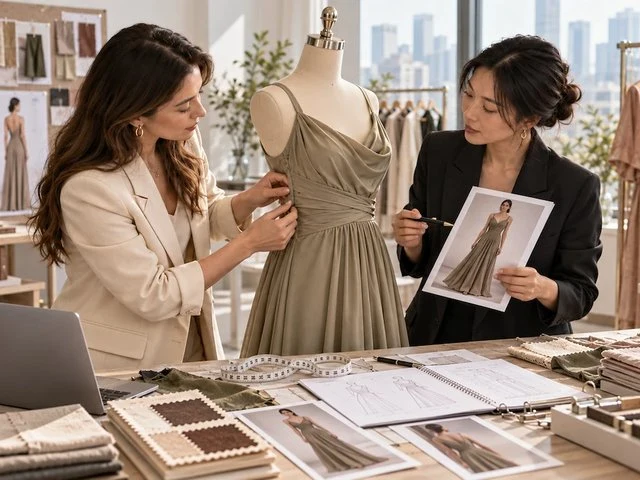
Can a clothing manufacturer work from a reference photo?
What a manufacturer can and cannot read from a reference image, how much of a garment is genuinely visible in a photograph, and what to send alongside it.
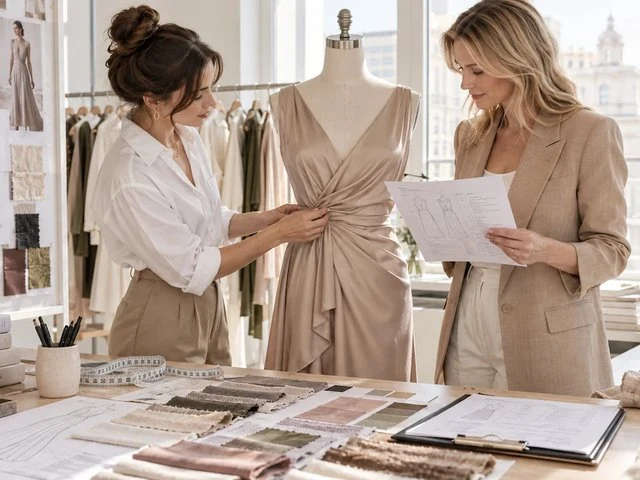
What information should you send to an OEM clothing manufacturer?
The information a manufacturer needs to quote and develop your style properly, in the order it is needed, plus what to do when you do not have all of it yet.
Related
Where this topic leads
Services for this topic
Categories this applies to
Start a project
Need an answer now?
Ask directly. We would rather answer a real question than point you at a placeholder page.