
Knowledge centre
Private Label
Putting your brand on a proven construction, and what to specify.
Private label means your brand on an established construction: the garment already exists in a form that has been made, fitted and corrected, and the work is in putting your label, your trim and your packaging on it rather than in inventing it. It is the fastest legitimate route from a brand idea to a sellable range, and it is not the same thing as ordering unbranded stock.
What separates a good private-label programme from a disappointing one is almost entirely in the specification. A style can be produced to your label with the house buttons and the stock care label, or with your hardware, your woven labels, your hang tag and a size chart that matches your own grade. The garment is the same shape either way; the customer experience is not, and the price difference is a fraction of what a full development would cost.
The areas that need deciding early are labelling compliance (the fibre, care and origin content differs by market), the size range you intend to sell, and whether a stock colour is acceptable or the fabric has to be dyed to your shade. Each of those is a lead-time decision as much as a cost decision.
Read this section alongside the guides on sampling and on cost structure, and start from private-label manufacturing if you want the service view. The articles below take the specification decisions one at a time.
Topic
Private Label
Putting your brand on a proven construction, and what to specify.
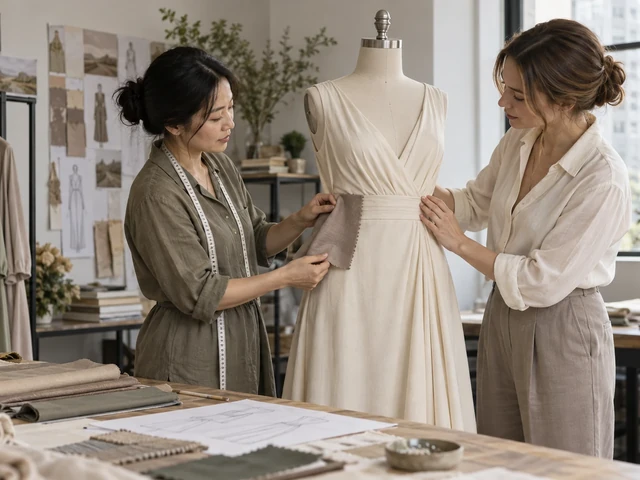
How private label clothing manufacturing works
Private label manufacturing explained: how a proven construction becomes your own product through fabric, finish and branding, and when to develop instead.

Private label vs OEM clothing: which is right for your brand?
A decision framework for choosing between private label and OEM, based on differentiation needs, development capability, speed and technical risk.

How to start a private label womenswear brand
A practical sequence for launching a private label womenswear brand: choosing a lane, specifying the product, finding a manufacturer and planning the reorder.
Related
Where this topic leads
Services for this topic
Categories this applies to
Start a project
Need an answer now?
Ask directly. We would rather answer a real question than point you at a placeholder page.