On this page
- Why the prom calendar is different
- The 2027 calendar, counted backwards
- Stage 1: range definition and costing
- Stage 2: first samples
- The photo sample and the production sample are two deadlines
- Stage 3: fit approval and grading
- Stage 4: material and colour lock
- Stage 5: bulk QC and freight
- Capacity is the constraint nobody quotes
- What to do when a stage slips
- Practical buyer worksheet
- FAQ
- Next step
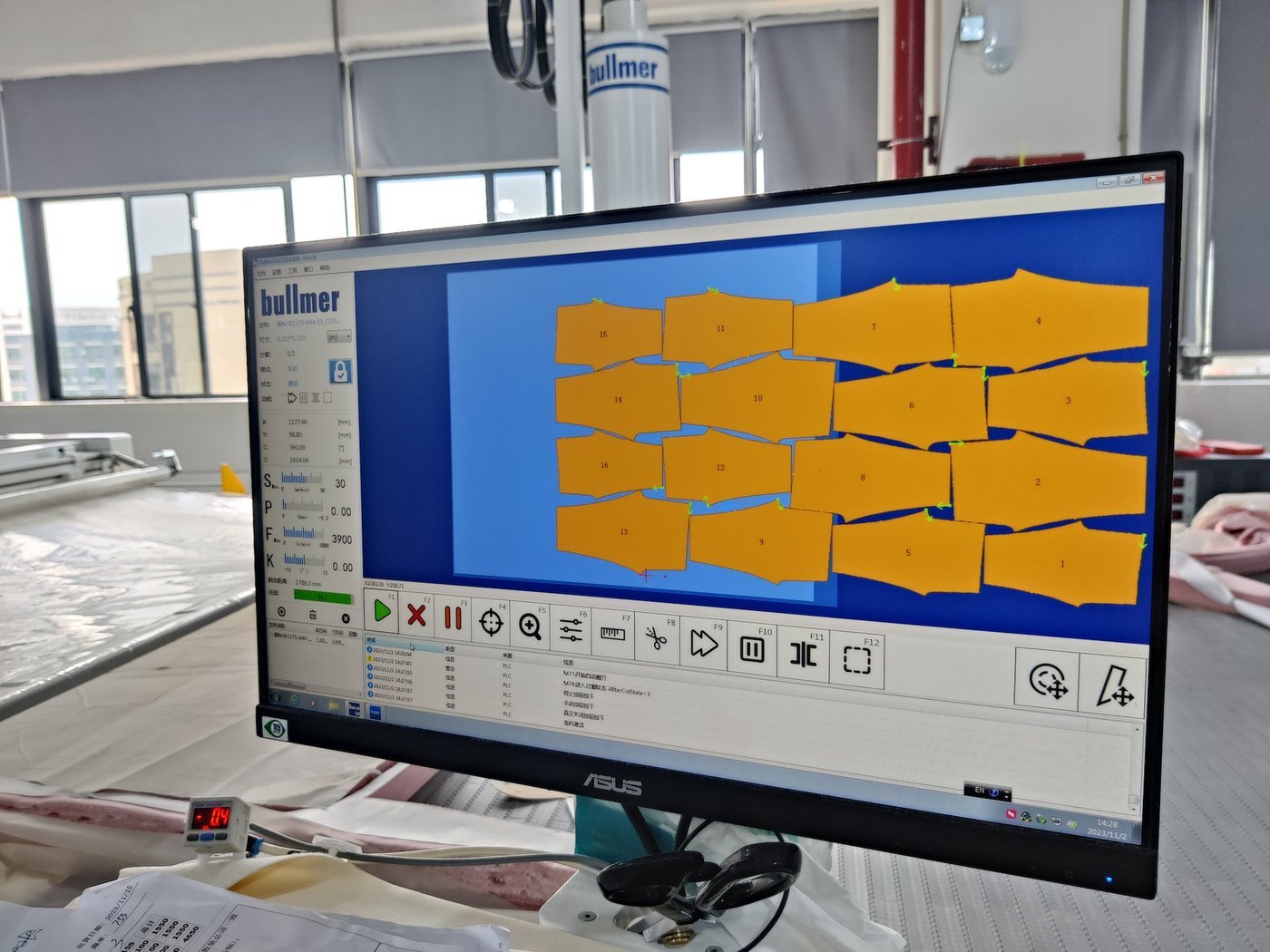
That single fact changes how the calendar has to be built. It cannot be built forwards from a start date and hoped at the end. It has to be built backwards from the evening the dresses have to be in a customer's hands, with every approval deadline placed early enough that a failure still leaves a route to recovery.
This is written for fashion brands, retailers, product developers and sourcing teams placing prom and occasionwear production. It assumes the general mechanics of a manufacturing calendar, which our womenswear production calendar guide covers — stage sequence, why float is not the same as slack, and how a first order differs from a repeat. What follows assumes that reading and covers the three things prom does differently: a public, immovable date, a marketing deadline that runs ahead of the production deadline, and a production window that the entire market needs at the same time. The category itself is on our prom dress manufacturing page.
Why the prom calendar is different
Three properties separate a prom programme from any other seasonal order, and each one takes a decision away from the brand.
The date is public
A prom date is fixed by the school, published months ahead, and known to every customer before the brand has placed a single order. That removes the option that normally absorbs a late delivery. In a general spring range, a late arrival still sells, because the customer is choosing a dress for a season rather than an evening. Around a prom, the customer is choosing a dress for one night, and after that night the garment's value to her is zero even though the garment is unchanged.
The practical consequence is that the prom calendar needs a stated latest acceptable delivery date and a working date that sits well before it. A brand that plans to the latest acceptable date and then absorbs a two-week slip is not running late by two weeks; it is running one week past its commercial purpose.
The marketing deadline runs first
Prom retail is decided on imagery earlier than almost any other category. Look books are shot, web listings are built and paid social starts running weeks before the first box ships, which means the brand needs a photographable garment — a photo sample — on a date that has nothing to do with production. That is a second deadline on the same style, and it is usually earlier than the approval deadline. Treating photo samples as a copy of the production sample is the most common structural mistake in a prom calendar, and it is covered separately below.
The window is congested
Prom demand is concentrated into a narrow band of the year, and so is prom production. Every brand sourcing prom dresses wants the same weeks in the same factories, which means the constraint that decides whether a delivery lands is not labour hours but booked capacity. This is the reason a prom order placed a month later does not merely arrive a month later: it arrives after the capacity is gone.
The 2027 calendar, counted backwards
The table below is a working shape rather than a promise, because the real numbers depend on construction, fabric lead time and how many sample rounds a style needs. What it shows is the order of the deadlines and how much room sits between them. Start from the date the dress has to be with the customer and read upwards.
| Backwards from the selling window | What has to be finished | Why it sits here |
|---|---|---|
| Delivery to the customer | Goods received, counted and in stock | The date the event calendar sets, not a date the brand chooses |
| Freight and customs | Bulk shipped, documents issued | Wide variance: air, sea and express are not interchangeable and the choice is a cost decision, not a planning one |
| Final inspection and packing | Every unit measured, checked, pressed and bagged | Packing cannot start before inspection passes, so it is never parallel to it |
| Bulk production | Cutting, sewing, finishing complete | Driven by quantity, operation count and how many colour lots the order is split into |
| Material and colour lock | Bulk fabric, lining, trims and stones approved physically | Anything sourced to order needs its own lead time in front of the production slot |
| Fit approval and grading | Base size signed off, size set released | Grade changes after bulk markers are made are the most expensive changes in the programme |
| Production sample approval | Pre-production sample approved against the specification | This is the last gate before cutting, and the last place a change is still cheap |
| Photo sample approval | Photographable garment approved, imagery scheduled | Deliberately earlier than production, because the marketing calendar is not movable either |
| First sample rounds | Construction, proportion and volume resolved | Two rounds is normal for a structured prom dress; one is optimistic |
| Range definition and costing | Silhouettes, price architecture and costing briefs fixed | Everything downstream is priced on decisions taken here |
Two things are worth noticing in that order. The first is that the two approval gates — photo sample and production sample — sit several stages apart, which means a brand running both from one garment is either late to market or early into production. The second is that the fabric and trim lock sits only one stage ahead of bulk. It feels like a late step on paper; in practice it is the step most likely to decide the date, because a custom-dyed fabric or an ordered stone colour cannot be compressed the way internal sewing days can.
What the order of the table does not show
A calendar drawn as a list implies the stages wait for each other. They do not. Range definition and first sampling can overlap for different styles; material sourcing for the winners can start while a third style is still in its second sample round. What genuinely cannot overlap is anything that creates a change downstream of a cut. Once bulk markers are made, a pattern change is not a schedule change, it is a rework charge.
Stage 1: range definition and costing
This stage produces three decisions and no garments, and it is the stage most often compressed because it does not look like work. Compressing it does not save the time; it moves the time to a later stage where it costs more.
Lock the architecture before the details
The target customer, the price architecture and the core silhouettes should be fixed before the first sample is requested, because every later stage is priced against them. A prom programme with three price tiers needs to know which tier each silhouette belongs to at this stage, not at the point of quoting, or the range will be developed at one cost level and sold at another.
Cost early, even if the number is a range
An early costing brief is not a quote and is not meant to be accurate to the cent. It is meant to tell the brand whether a silhouette is developable at the tier it is intended for before three weeks of sampling are spent on it. The useful version names the shell fabric, the lining, whether the bodice is structured, whether there is handwork, and the quantity band. A brief without those five items returns a number that cannot be relied on and cannot be compared.
Find the long-lead items now
Long-lead fabrics, custom dye lots and embellishment are the items that decide a prom calendar, and they are decided here because they have to be ordered before the production slot exists. A custom colour on a specific ground fabric can carry a lead time longer than the sewing of the whole order. Identify those items in stage one, list them in the development tracker, and book them against the intended production window rather than the intended delivery window.
Decide which styles need a photo sample
Not every style in a prom range needs its own photo sample, but the decision about which ones do belongs here rather than later. The styles that carry the campaign, the ones a buyer will ask to see in person, and the ones with a construction feature that photographs badly all need an earlier garment. Styles that will be sold from a look book already shot on another silhouette can wait.
- Lock target customer, price architecture and core silhouettes.
- Send early costing briefs before over-developing expensive details.
- Identify long-lead fabrics, custom colours and embellishment.
- Decide which styles need photo samples earlier than production samples.
Stage 2: first samples
The first round exists to answer construction and proportion questions. It is not a presentation garment and it should not be treated as one, because a sample styled and finished for photography hides exactly the faults the first round is meant to expose.
What the first round answers
Three questions, and they are worth stating separately because a comment sheet that mixes them produces a second sample that fixes none of them. Does the bodice structure carry the skirt under its own weight? Does the neckline stay where it was drawn when the wearer moves? Does the skirt volume read at the intended scale once it is in fabric rather than in a sketch?
Do not wait for labels and packaging
Branding, care labels and packaging are real requirements, and none of them should hold a fit decision. A first sample with the wrong label but the right neckline is a usable fit sample. A first sample held back three days for a woven label is three days removed from a calendar that cannot afford them.
One comment sheet per style
Consolidated comments are the single cheapest piece of discipline in prom development. Comments that arrive in an email thread, a chat message and a marked-up photograph are three statements of the same intent that will be interpreted differently by the pattern room, the sample room and quality control. One sheet, one version number, and an explicit note of which comments supersede earlier ones.

The photo sample and the production sample are two deadlines
This is the section that most prom programmes skip, and skipping it is what turns a workable calendar into a late one. The garment that is photographed and the garment that is cut in bulk are two deliverables with two approval dates, and they are frequently not the same garment.
Why they are not interchangeable
A photo sample has to be perfect in the places a camera looks: surface, shade under studio light, the fall of the skirt at the hem, the finish of a neckline in close-up. A production sample has to represent what a bulk line can actually make, at the tolerance a factory will hold, in the fabric that is available for the whole order. A garment that satisfies the first requirement and not the second is a picture of a dress nobody can buy. A garment that satisfies the second and not the first sells nothing.
The two routes, and what each costs
| Route | What it does | What it costs |
|---|---|---|
| One garment, approved twice | The production sample is also photographed, once it is approved | Cheapest, and the safest on specification, but the imagery lands late and the campaign is compressed |
| Two garments from one development | A photo sample is made first to the same spec; the production sample follows | One extra garment per style, and a real risk that the two diverge unless the difference is documented |
| Photo sample only, then bulk | The photo sample becomes the production standard without a separate pre-production check | Fastest to market, and the route that produces bulk that does not match the imagery |
The middle route is the one most prom brands actually need, and it is only safe if the differences between the two garments are written down. If the photo sample uses a heavier lining, a better-matched shade or a hand-finished hem, that has to appear as a documented deviation with the bulk specification attached, not as a fact discovered at the inspection.
What to send with any photo sample
The sample itself, the approved specification for it, and a short statement of which parts of the garment are illustrative rather than production-representative. That third document is the one that saves the argument. Without it, a photograph becomes the de facto specification, and the brand and the factory spend the pre-production meeting disagreeing about a garment neither of them is going to make.
Stage 3: fit approval and grading
Fit approval is where a prom programme either becomes repeatable or becomes a set of individually fitted problems. It is also the last stage where a change is a matter of days rather than a matter of money.
Approve the base size first
Grade rules are derived from the approved base, so approving a range before the base exists means grading against a moving target. Approve one size properly — the size the range is bought in most and the size the fit was developed on — and release the grade afterwards. Our size grading guide covers how the rules and the increments work; the prom-specific version of the same problem, including what boned waist and bought-in cups do to a grade, is in our prom dress grading guide.
Check more than the base size
At least one additional size should be checked on any structured or closely fitted style, and the choice of which one is not arbitrary. For a boned bodice, check a size where the ratio of ribcage to waist has changed rather than a size that is simply larger; for a long skirt over a petticoat, check a size near the top of the marketed range, because that is where the skirt's weight and the hem sweep move furthest from the sampled standard.
Fix length and heel before cutting
Prom length is a specification decision that has to be written down as an assumption, because it is not reproducible from the garment alone. The same pattern cut from the same marker produces a dress that clears the floor by a different amount depending on the heel it is worn with. State the heel height the sample was fitted at, state the tolerance, and note whether the hem is finished flat or on the bias, since a bias hem that is hung before finishing will drop.
Freeze before markers are made
Pattern changes are normally free before a marker is cut and charged after it. That asymmetry is the reason the freeze point belongs in the calendar as a dated gate rather than as an understanding. Write the freeze date into the schedule, and treat any comment that arrives after it as a new development decision with a cost and a date attached, not as an amendment.
- Approve the base size before generating the full grade.
- Check at least one further size on structured or fitted styles.
- Confirm length standards and the heel assumption behind them.
- Freeze pattern changes before bulk markers are made.
Stage 4: material and colour lock
Material lock is usually shown on a calendar as one line, and it is the line most likely to move. Everything in this stage is bought rather than made, which means its lead time is not compressible by working longer days.
Approve the physical thing
Bulk shell, lining, trims, zippers and embellishment should be approved as objects, not as descriptions. A shade approved from a screen is not approved; a trim approved from a supplier code is approved to a code that may be substituted. Physical swatch approval with a retained reference copy is what makes the difference detectable later.
Compare colour under more than one light
Prom dresses are chosen indoors and worn indoors, usually under artificial light, and photographed under studio light. A shade that reads correctly in daylight can shift visibly under warm interior lighting, and a two-piece construction in two different fabrics will shift differently in each. Approve the shade in the light the customer will buy in, and check at least one pair of adjacent panels together rather than each fabric in isolation.
Book for rejects and samples
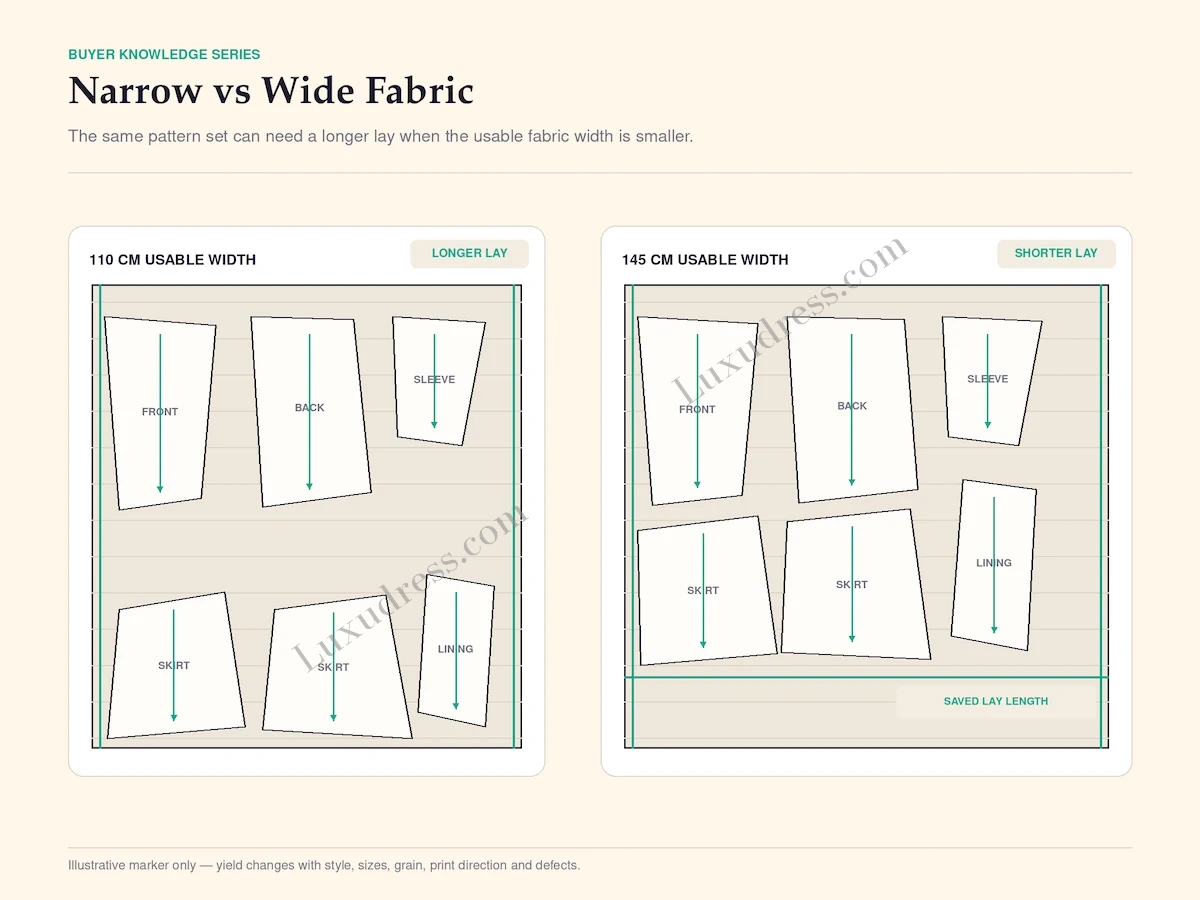
A material booking that covers exactly the order quantity is short, because some of it will be consumed by sample making, by cutting waste, by rejects found at inspection and by replacement of damaged pieces. On a prom order with an engineered lace placement or a large bias-cut skirt, the correct allowance is not a small percentage — and the quantities that matter should be agreed at booking rather than discovered at the cutting table.
Do not assume development fabric is still there
Development fabric is often a stock length bought for sampling. Stock positions move, and a fabric that was available in the sampling month can be gone or materially changed by the time bulk is booked. Either secure the bulk length against the production window at the development stage or qualify a named backup with its own approved swatch. A backup fabric that has never been seen is not a backup.
Stage 5: bulk QC and freight
Everything before this stage was a decision. This stage is where a decision that was never written down becomes visible, and where the only remaining lever is time.
Confirm technically before cutting
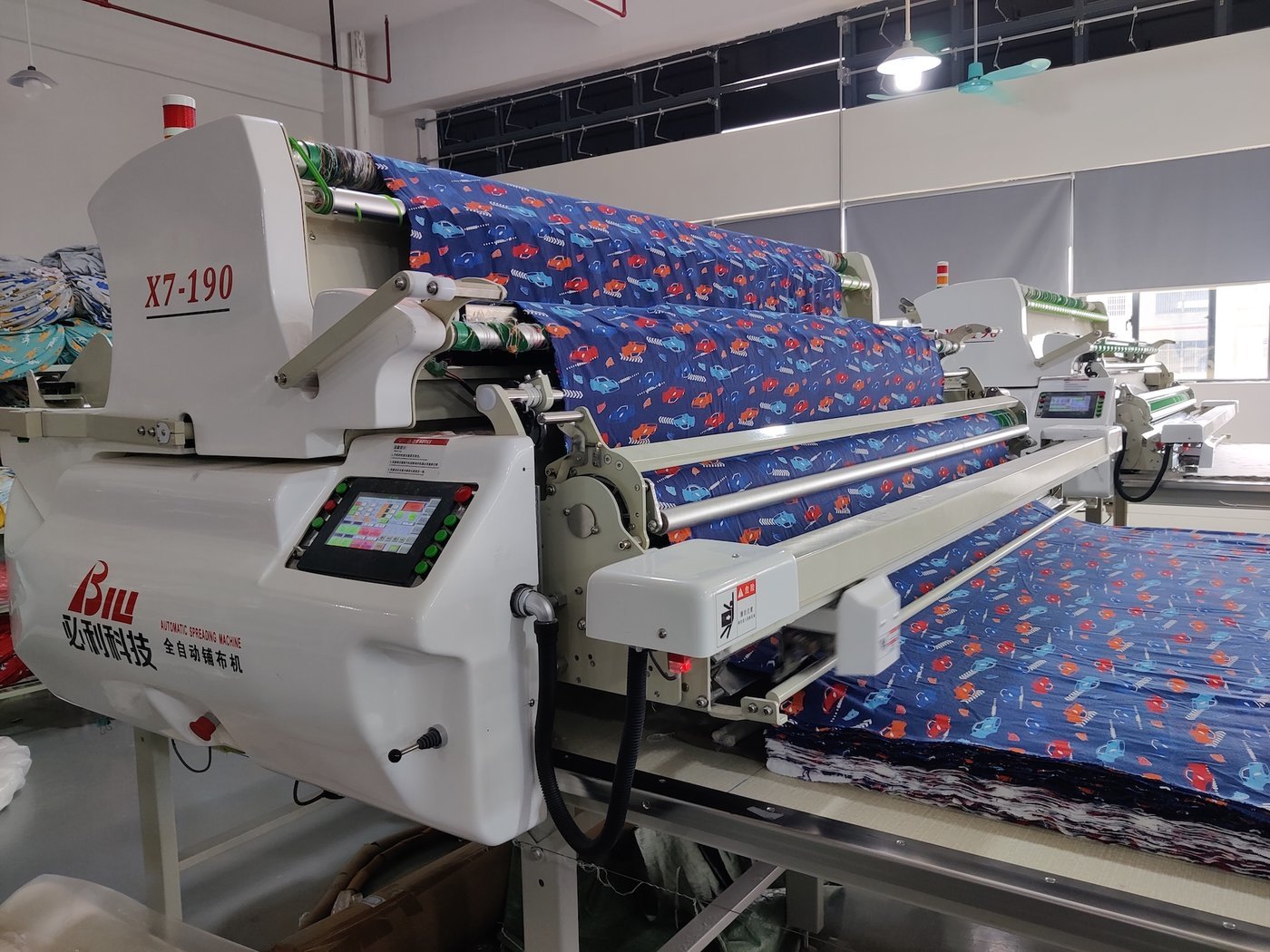
A short technical confirmation before the lay is cut is the cheapest control in the whole programme. It covers the approved fabric and trim against what was delivered, the marker against the approved pattern, and the measurement specification against the size set. On an order of several hundred pieces, removing one wrong roll or one stale marker at that point is worth more than any amount of inspection afterwards.
Inspect where the risk is
Inline inspection should be aimed at the constructions that actually fail: the bodice-to-skirt join under a heavy skirt, the zipper in a bias-cut panel, the top of a slit, and any place where handwork sits next to a seam. Measuring everything and checking nothing structural is a common way to pass an inspection and still ship a problem, and our pre-bulk checklist sets out the gates that lead into this stage.
Final inspection, then packing
Final measurement and workmanship inspection has to be complete before packing begins, because a garment bagged and folded cannot be measured without being re-pressed and re-packed. This is also the point at which the packing method matters for prom specifically: a beaded or heavily constructed dress packed under a flat fold will arrive with a crease the retailer has to steam out, and a dress on a hanger needs a box that is dimensioned for it.
Protect a buffer that is real
The buffer at the end of a prom calendar covers customs clearance, local delivery and warehouse processing — three things the factory does not control and cannot accelerate. It should be sized as a range rather than a hope, because the same shipment can clear in two days or ten depending on the destination and the time of year, and it should be tracked as a named date in the plan so that a slip is visible while there is still something to do about it.
- Use technical confirmation before cutting.
- Perform inline checks on high-risk constructions.
- Complete final measurement and workmanship inspection before shipping.
- Protect a buffer for customs, local delivery and warehouse processing.
Capacity is the constraint nobody quotes
A prom order is placed into a window that the whole market wants, and a quoted lead time is only meaningful if the capacity behind it is booked. Two orders with identical specifications placed two weeks apart can land six weeks apart, and neither the specification nor the supplier explains the difference.
How to tell whether capacity exists
Ask two questions rather than one. What is the production window, in dates, and when does the fabric have to be booked for that window to hold? A supplier who can answer the second question is working from a capacity plan. A supplier who can only answer the first is quoting a duration, which is not the same thing as a slot.
Splitting the order to protect the date
If the volume is large relative to the window, consider shipping in two waves: the styles that carry the selling period first, the continuity and late-season styles second. This is a merchandising decision as much as a production one, because it means accepting that not the whole range is available on one date. For prom it is often the right trade, since a brand with sixty per cent of a range on time sells more than a brand with a hundred per cent of it three weeks late.
Shipping method is a schedule decision
Air, sea and express freight are not interchangeable and the difference between them is measured in weeks. Choosing the method late turns a schedule problem into an unbudgeted cost problem, because the only remaining way to hold a delivery date is to buy time. Decide the method in stage one, against the price architecture, and let the costing reflect it rather than discovering it at the port.
What to do when a stage slips
A prom calendar will have at least one slip. The question is whether the slip is absorbed by the schedule or passed to the customer, and that depends entirely on which stage it happens in.
| If this slips | The calendar can usually absorb it by | The limit |
|---|---|---|
| Range definition or costing | Reducing the number of styles carried forward to sampling | One round of overlap, and only before sampling starts |
| First samples | Consolidating two comment rounds into one decisive round | A second sample round is not compressible if the first was inconclusive |
| Photo sample | Shooting from a production sample and moving the campaign later | Only if the imagery date was built with float in the first place |
| Fit approval or grading | Nothing. Anything downstream of approval is arithmetic | This is the gate to protect, not the gate to compress |
| Material and colour lock | Substituting an approved backup fabric or dropping a colour | A substitution the customer can see is worse than a date |
| Bulk production | Adding capacity, splitting the order, or shortening finishing | Reached only by paying for it |
| Freight | Upgrading the method | A cost, not a schedule, decision at this point |
The two gates worth defending
If something has to give, it should not be the fit approval or the material lock, because both are points where a late decision multiplies rather than adds. A pattern change after approval redraws the grade, the marker and the size chart. A fabric change after the material lock invalidates the sample the brand approved and the shade the customer is expecting. Taking four days out of range definition is a schedule decision. Taking four days out of approval is a rework.
Practical buyer worksheet
Fill this in before the first development meeting. Every line is a date or a decision the calendar depends on, and any line left blank becomes a slip later.
- Target customer and use occasion
- Target retail and wholesale price
- Target ex-factory or landed cost
- Core fabric and backup fabric
- Size range and base fit size
- Colour count and continuity colours
- Critical construction risks
- Approval sample required
- Inspection checkpoints
- Latest acceptable delivery date
FAQ
How early should brands begin development?
Early enough that every stage in the table above completes before the selling window opens, with float left over rather than assumed. Working backwards, that means development starts far enough ahead of the ship date to cover two sample rounds, an approval, a grade, a material lead time on anything sourced to order, the bulk run, final inspection, packing and freight — plus the buffer for customs and local delivery. The exact number of weeks depends on the fabric and the construction, which is why the calendar should be built from the stages rather than from a remembered total.
What is the most common timing mistake?
Treating sample approval as the end of development. Approval is the middle, and the largest remaining lead times — material booking, grading, bulk and freight — sit after it. A brand that relaxes once the sample is signed lets three of the calendar's most expensive stages run without float, and the first sign of trouble arrives when the fabric is late, at which point nothing down the chain can be recovered.
Should photo samples be separate?
They can be, and often should be, when the marketing deadline genuinely lands earlier than the production deadline — which is normal in prom because imagery is commissioned before the first bulk shipment. The condition is that any difference between the photographed garment and the production garment is documented and approved as a deviation rather than discovered. If the two cannot be kept identical or reconciled in writing, one garment approved once is the safer route even though the campaign has less time.
How should reorders be planned?
A reorder is a second pass through the same material problem, so the capacity and the continuity materials for the styles most likely to sell through should be reserved at the time of the first order, not requested after sell-through data arrives. On prom the window is short enough that a reorder needs to be decided on early signals rather than exhausted stock, and the styles worth protecting are usually the middle of the range: the silhouettes that clear fastest tend to be the ones with the least construction risk to repeat.
Next step
We develop and produce prom, evening and occasionwear at our production facilities in Guangzhou and Dongguan, including structured bodices, boned and corset constructions, engineered skirt volume, fabric and trim booking against a production window, and inspection against an approved specification. Send the delivery date you have to hit, the silhouettes you intend to carry and the price architecture behind them, and we will come back with a development plan and a staged calendar rather than a lead time with no dates in it. Request a quote, or see the constructions we run on our prom dress manufacturing page.
If the range is still being shaped, our prom dress trends report for 2027 and our guide to building a prom dress collection both sit upstream of the calendar described here. Silhouettes already in production are on our style library and ready stock pages, and a small first order is usually the cheapest way to test a construction before committing a season to it. The wider category we work across is on the women's dresses page.