On this page

This report is written for product teams rather than shoppers. Each direction below is carried through four steps — what the signal actually is, the manufacturing decision it forces, what that decision costs, and what would make the reading wrong. A trend report that only lists directions leaves a buyer with a mood board; the four steps are what turn it into styles, samples and a calendar.
Two things about trend reading are worth stating at the start. The first is that a direction is not a style: corsetry being visible in 2027 does not mean every style has a corset, and a range that reads one direction literally will look dated by the second delivery. The second is that the useful output of trend work is not a list, it is a set of decisions with dates attached — which is why this report ends with a calendar rather than a summary. The development constraints behind those decisions are set out in our guides to corset dress manufacturing and prom dress size grading.
Visible corsetry becomes a design language
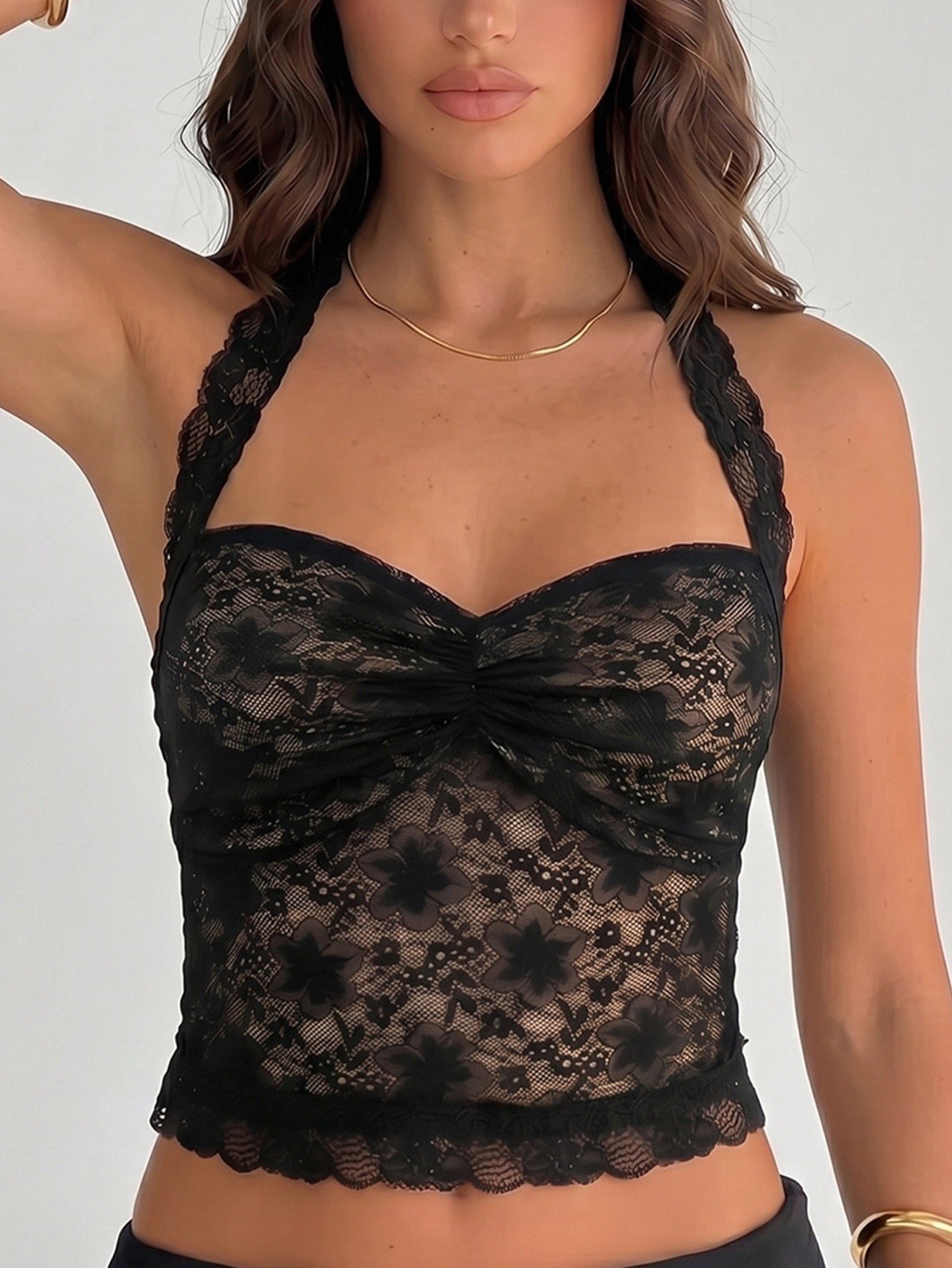
The strongest and best-corroborated signal for 2027 is structure that is meant to be seen. Corset bodices have moved from a fitted shape under a dress to a visible element of the design, and the Spring/Summer 2027 show cycle carried the same idea through formalwear: exposed inner construction, bodice lines drawn on the outside of the garment, and lingerie-derived detailing treated as the main event rather than as what holds the dress up.
What the signal actually is
It is a shift in what the customer believes she is paying for. A dress with a plain bodice and an embellished skirt sells embellishment; a dress with visible boning sells construction, and the customer can see where the money went. That is commercially useful in a season where embellishment costs have risen, because structure delivers visual value without covering the whole garment in beadwork.
It also changes the photograph. A visible corset bodice produces a strong, legible silhouette on a phone screen at thumbnail size, which matters more in prom than in almost any other category, because the first purchase decision is usually made on a social feed.
The manufacturing decision
The decision is not to add corsetry — it is to make one bodice block do the work of several styles. A proven structured bodice, approved once on a fit model with its cup, boning layout and closure signed off, can carry four or five different skirts. That converts a visible-corsetry range from a series of one-off developments into a platform with variations.
| Element | Where the risk sits | How to de-risk it |
|---|---|---|
| Cup | Fit across the size run; a cup is a bought component, not a graded measurement | Step the cup with the size band and name the construction |
| Boning | Length, count and spacing; support that cannot be worn for four hours has failed | Specify the channel count and its layout, not just the bone |
| Neckline stability | The edge lifting away from the body under movement | Interface the neckline and anchor it to the channel above the cup |
| Grading | Structure does not scale by rule at the top of a range | Re-draft the layout per size band rather than grading it |
| Closure | Lateral tension rising with the size | Rate the closure to the tension, or change its type above a band |
The re-use point is the commercial one. Five styles from one bodice block means one fit approval, one sealed sample and one set of corrections instead of five, and it is the single largest saving available in a structured prom range. The cost is that a fault in the block propagates into every style built on it, which is why the block is worth more development time than any individual dress.
The test before committing a style to the platform is whether removing the structure would change the garment. If the bodice falls apart without the boning, the structure is doing a job and its visibility is honest. If the dress would hang perfectly well as a bias panel with no channels in it, the corsetry is a cost line that has been styled rather than engineered, and it will also be the line that generates the fitting corrections, because there is nothing for the corrections to achieve.
What would make this wrong
Visible corsetry is a design idea that becomes expensive fast if it is applied to silhouettes that do not need structure. A soft bias column with a corset bodice is two ideas fighting, and the customer will read it as neither. The check is whether the structure has a job: if the boning is holding weight or shaping a panel, it earns its visibility; if it is decoration on a garment that would drape perfectly well on its own, it is cost without function.
Ball-gown volume returns with lighter engineering
Full skirts are back, reported consistently across retail prom coverage and visible in the Spring/Summer 2027 cycle as volume handled through construction rather than through weight. The 2027 version is not the princess dress of a previous decade; it is architectural, with a controlled bodice and a skirt whose movement comes from how it is built.
The engineering is the movement system
In a ball gown the skirt is a mechanism. Its stiffness, its layer count, its support and its length together decide whether it moves like a dress or stands like a table. That mechanism is specified, not chosen: tulle stiffness, horsehair or crin at the hem, the underskirt's own structure and the number of layers all do different jobs, and swapping one for another changes the movement without changing the silhouette.
| Element | What it does to movement | The cost it carries |
|---|---|---|
| Tulle stiffness | Sets how much the layers stand away from the body | Fabric quality and layer count |
| Horsehair or crin at the hem | Holds the hem out and makes it swing | Adds a construction operation and weight |
| Underskirt or crinoline | Creates the volume so the outer layers can stay light | Its own pattern, materials and assembly time |
| Layer count | Multiplies drape, opacity and visual density at once | Fabric consumption per layer, and packing volume |
| Hem circumference | Sets how the skirt moves in a turn | Cutting, seaming and finishing length |
The design advantage of building volume in a separate underskirt is that the visible layers can be light while the structure does the work — the reason a well-made 2027 ball gown looks substantial and feels far lighter than it appears. The commercial consequence is that the skirt is where the fabric budget goes, and its cost rises faster than its circumference: a skirt's fabric quantity grows with the radius at a constant flare, so the widest option in a range is disproportionately expensive to make and to ship.
Volumetric freight also makes ball gowns the styles most worth shipping flat-packed and pressing at destination where that is feasible, and the styles least suited to a high-mix, low-quantity first order. Volume is a commitment to a quantity, which is why it belongs in the range deliberately rather than as a response to a trend.
The packing consequence
Volume is a logistics decision made at design stage. A full skirt occupies space in a way a column does not, and freight is charged on the greater of weight and volumetric measure — so a light, bulky gown can cost more to land than a heavy, compact one. Two things follow. Cartonisation should be sketched while the style is being designed rather than after it is approved, and the assortment should carry volume in a planned proportion rather than in every style.
This is also where a ball gown and a column differ most in reorder economics. Reserving continuity fabric for a full skirt means reserving a large quantity of a low-cost cloth and a smaller quantity of the more expensive layers; getting that split wrong is what turns a sell-through into a missed reorder.
Mermaid and trumpet remain image-heavy shapes
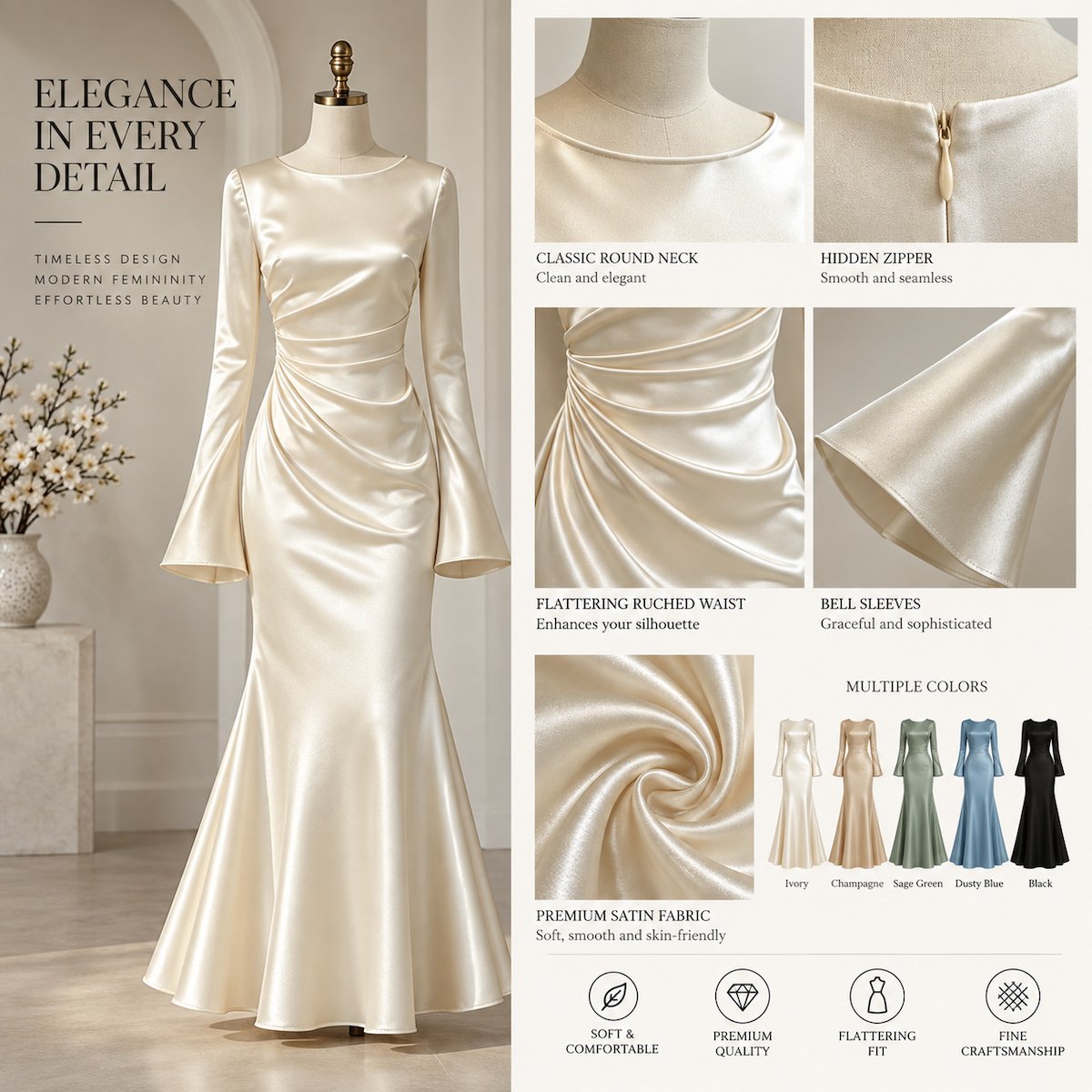
The fitted silhouettes have not gone anywhere, and 2027 reporting places the mermaid silhouette alongside the classic ball gown rather than in opposition to it. They earn their place for a specific reason: they photograph as a shape rather than as a garment, which is exactly what a customer is looking for when she is deciding between two dresses on a screen.
Why they are worth the difficulty
A mermaid or trumpet style concentrates its visual effect at the knee and below, so the photograph is driven by line rather than by surface. That makes them efficient in a range: they deliver a strong image without consuming an embellishment budget, which is the opposite of the ball gown's economics. In a ten-style prom range they are also the styles most likely to be the one a customer screenshots and brings into a shop.
The two failure points to engineer for
| Failure | The mechanism | What to specify |
|---|---|---|
| Fit through hip and knee | The flare begins low, so the fitted section has to work across a body with less room to absorb error | Re-position the knee break per size band rather than scaling it |
| Horizontal strain | The garment is under tension along its length where it is narrowest | A fabric with stated recovery, tested on a hung panel |
| Closure strain | The zip sits where the body is under the most lateral tension | A closure rated to the tension, and a check made in a seated position |
| Seam shadow | A thin, reflective face shows every internal line under tension | Enough face weight, or a matte finish, or flat-finished seams |
| Sitting behaviour | The narrow section has the least allowance over the thigh | Movement testing seated, not only standing |
The recovery point deserves emphasis because it is invisible until it fails. A stretch fabric with good stretch and poor recovery looks correct on a form and grows through an evening; the customer experiences that as the dress losing its shape, and there is no alteration that fixes it. Ask for a recovery figure and test a hung panel in the largest size before the fabric is booked.
Balance matters as much as construction. A range built only on fitted silhouettes is a range that excludes the customer who wants comfort, and fitted styles carry a higher return rate because they are the least forgiving across bodies. Putting a structured gown and a clean column either side of every mermaid style gives the customer somewhere to go when the fitted version is not right, and it protects the sell-through of the range as a whole rather than of one style.
Columns and slips give the range breathing room
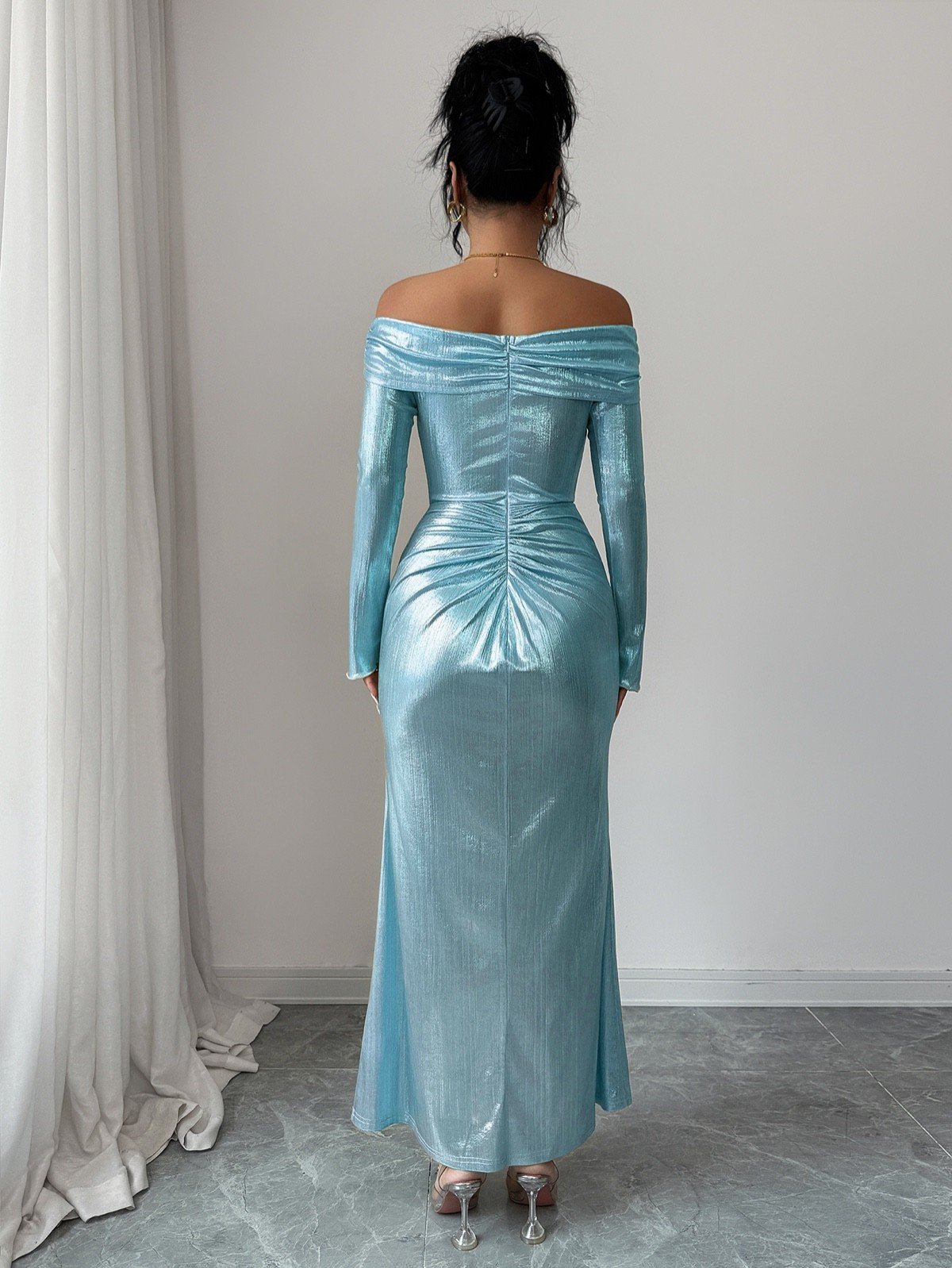
Clean shapes are the half of the 2027 picture that gets less attention and does more commercial work. A column, a slip or a bias-cut dress costs substantially less to construct than a structured gown, photographs as premium when the fabric and the fit are right, and — critically — gives a range somewhere to go for the customer who does not want volume.
Why they lower cost without looking cheap
The saving is operations rather than fabric. A column has no boning channels, no underskirt assembly, no lining engineering to hide structure and very little embellishment. What it has instead is a demand for accuracy: with no volume and no decoration to distract the eye, everything the customer sees is the cut, the drape and the finish. Minimal is not the same as simple to make, and a bias-cut satin column with a poor pressing protocol looks worse than a mediocre ball gown.
| Where the money moves | Ball gown | Column or slip |
|---|---|---|
| Fabric consumed | High, and rising faster than the circumference | Moderate and predictable |
| Construction operations | High: layers, underskirt, hem structure | Low: fewer seams, simpler finishing |
| Embellishment | Optional, expensive where used | Usually none |
| Press and finish | Moderate, structure hides some faults | High: every fault is visible |
| Freight volume | High, and volumetric | Low |
| Alteration risk | Lower through the waist, higher at the hem | Depends entirely on the fabric's recovery |
Design difference into a clean shape through the parts a customer can see without adding cost: necklines, backs, straps and colour. A range of six columns in six colours with three neckline options is six styles' worth of shelf presence from one block, and it is the cheapest breadth available to a prom brand.
What would make this wrong
The risk in a minimal range is not boredom, it is uniformity. If every column is the same neckline in a different colour, the range reads as one product and the customer who does not suit that neckline leaves. Two or three neckline options across the same block, plus a strap variation, buys real choice for almost no development cost — and it is the same platform logic as the bodice block.
Texture joins sparkle as a hero tool
The fifth direction is a change in how visual impact is produced. Where sequins once did most of the work, 2027 reporting puts dimensional surface next to them: floral appliqué, three-dimensional petals and rosettes, bows, smocking, layered tulle and fabric manipulated into relief. Sparkle has not left, but it is no longer the only route to a premium look.
What texture buys, and what it costs
Texture reads as craft, and craft justifies a price in a way that shine alone struggles to. It also behaves better commercially in one specific respect: a textured surface does not depend on a light source to look expensive, so it photographs consistently indoors, which is where most prom decisions are actually made.
- Snagging. Raised surfaces catch on everything, from the wearer's own jewellery to the next garment on the rail.
- Packing. Dimensional work needs interleaving or individual bags, which adds a packing operation and a cost line.
- Repair. A crushed appliqué or a lost petal cannot be pressed out and often cannot be replaced invisibly.
- Inspection. Texture hides small faults and then reveals large ones, so the inspection standard has to name what is checked.
- Hand time. Appliqué and rosettes are priced by time, which is the least predictable cost in a sample room.
The mitigation is placement rather than restraint. Put an expensive technique where it has the greatest visual impact — the bodice front, one shoulder, the waist — and stop. A single well-placed dimensional element reads as a considered design; the same technique spread thinly over a whole garment reads as cost and looks busier for it.

The one-trend-per-style test
The most common failure in a trend-led range is putting every direction into every style: a corset bodice, a ball-gown skirt, appliqué across the bodice, a slit and a train, in one dress. Each element is defensible and the combination has no hierarchy, so the garment reads as expensive without reading as designed — and its cost is the sum of five decisions while its price is set by the market.
A simple filter before any style is briefed: name the one thing this style is about. If the answer is not immediate, the style is carrying too much. The remaining directions can appear at low cost elsewhere in the range — texture on one hero, volume on two gowns, corsetry on the platform — which is how a range absorbs five directions without any single garment paying for all of them.
Turning the reading into a calendar
Where this reading comes from
This report was compiled in September 2026, during the Spring/Summer 2027 show cycle. The directions above are drawn from three kinds of source, and it is worth knowing which because they carry different weight. The most reliable is the runway cycle itself, where the same idea appears independently across several cities. The second is retail prom trend coverage published by the labels that set the category's pricing, which is closer to the customer but also promotional. The third is sell-through, which only your own accounts can provide.
Treat the first as a direction, the second as a confirmation and the third as the decision. A direction that appears in runway reporting and is confirmed by retail coverage is a reasonable basis for a silhouette decision; it is never a basis for a quantity decision, which comes from your own previous season.
The calendar, worked backward from the selling window
Prom is a hard-date business, which makes it the easiest category in the cluster to plan and the least forgiving when planning slips. Work backward from the month the goods have to be on a shop floor, and give each decision an owner. The right-hand column is the reason each date matters: every decision that slips does not delay itself, it delays the thing below it.
| When | Decision | Who owns it | What a delay blocks |
|---|---|---|---|
| 12 months out | Trend position and how many silhouette families the range will carry | Design and buying | Every decision below it |
| 10 months out | Fabric platform, colour count, continuity fabric booked | Sourcing | The dye-lot count and any chance of a clean reorder |
| 9 months out | Bodice block approved on a fit model | Technical | Every structured style in the range |
| 8 months out | First samples and fit rounds complete | Product development | The photography date and the wholesale appointments |
| 7 months out | Sealed samples confirmed per size band | Quality control | The bulk inspection standard |
| 6 months out | Bulk cut and sewing | Production | The delivery window |
| 5 months out | Inline inspection, with a rework buffer for embellishment | Quality control | The completion date |
| 4 months out | Final inspection and packing | Quality control and logistics | The vessel, and therefore the season |
| 3 months out | Goods at the retailer | Logistics | Selling time |
| Selling window | Sell-through read and reorder decision | Buying | The following season's range |
Two lines in that table carry more weight than the rest. Continuity fabric at ten months is the point at which a reorder becomes possible or impossible, because a reorder without reserved cloth is a new dye lot and a shade risk the customer will see. And the sealed sample at seven months is what makes the inspection standard mean anything; without it, bulk is being judged against somebody's memory of the base sample.
One further date belongs in the calendar even though it produces no goods: the point at which the trend position is reviewed against what actually sold. Reading sell-through at the end of a season and comparing it to the position the range was built on is what turns the next season's trend reading from a guess into a judgement with a record behind it.
How to keep the reading current
A trend position has a shelf life of roughly one season, and its inputs refresh on a schedule worth diarising. The show cycle runs twice a year, with the Spring/Summer season reported from September into October, so the window in which a prom range can respond to a new direction closes around the same time each year. Retail prom coverage from the labels that set the category's pricing tends to appear a little later and closer to the customer, and it is the confirmation rather than the direction.
The discipline that makes the reading useful is the one most brands skip: re-read it against your own numbers at the end of the season. Which direction did the customer actually buy, which did she admire and not buy, and which of the five carried the price you hoped? Two seasons of that comparison is worth more than any trend report, including this one, because it is specific to your customer, your price band and your accounts.
Practical buyer worksheet
Take these ten items into the range meeting. The size range and base fit size line decides how many blocks you are developing, and the critical construction risks line is where the trend decisions get priced.
- Target customer and use occasion
- Target retail and wholesale price
- Target ex-factory or landed cost
- Core fabric and backup fabric
- Size range and base fit size
- Colour count and continuity colours
- Critical construction risks
- Approval sample required
- QC checkpoints
- Latest acceptable delivery date
FAQ
Will corset bodices still sell in 2027?
Yes, and the more useful question is which of your styles genuinely needs one. Visible corsetry works when the structure has a job — shaping a panel or carrying weight — and it moves from structured bodices to full skirts to columns while a visible corset on soft draping reads as two ideas in conflict. The practical answer is to invest in one excellent structured block and use it where the construction earns its visibility, rather than putting boning into every style.
Is ball-gown volume coming back?
Full skirts are a clear 2027 direction, with the emphasis on engineered volume rather than on weight. The version that sells is architectural: a controlled bodice over a skirt whose shape comes from tulle stiffness, hem structure and an underskirt, so the outer layers can stay light. Plan the skirt's packing volume at design stage, because the fabric cost and the freight cost both rise faster than the circumference does.
Should a prom range still carry sequins?
Yes, but sequins no longer have the field to themselves. Dimensional surface — appliqué, three-dimensional florals, bows, smocking, layered tulle — now delivers a comparable premium impression, and it photographs more consistently indoors, which is where most prom decisions get made. A range that carries one heavily embellished hero alongside textured pieces and clean columns covers more customers than one that puts shine on everything.
How many silhouette families should a prom range carry?
Three is usually right, and the number matters less than what they are. One structured family built on a shared bodice block, one fitted family such as mermaid or trumpet, and one clean family of columns or slips gives a range that covers volume, line and simplicity without duplicating development. Everything else in a range can be a variation within a family — which is how ten or twelve styles get built from three blocks rather than from ten separate developments.
Next step
We develop and produce prom, evening and occasionwear at our production facilities in Guangzhou and Dongguan, including bodice block development, skirt engineering, cup and boning sourcing, sampling and bulk. Send the directions you intend to carry, the number of silhouette families you are planning and your delivery window, and we will come back with a block and development plan rather than a price on an unspecified garment. Request a quote, or see the constructions we run on our prom dress manufacturing page.
If you want a starting point before that, our style library and ready stock both show silhouettes already in production, and a small first order is usually the cheapest way to test a trend position against real customers before committing a range to a block. The wider category we work across is on the women's dresses page.