On this page
- Wedding guest is its own category
- High necklines and open backs create contrast
- Satin and silk-like surfaces remain important
- Drop waists refresh familiar shapes
- Cocktail length expands the use case
- Build the assortment by dress code
- Where this reading comes from
- Length, value and rewear
- Practical buyer worksheet
- FAQ
- Next step
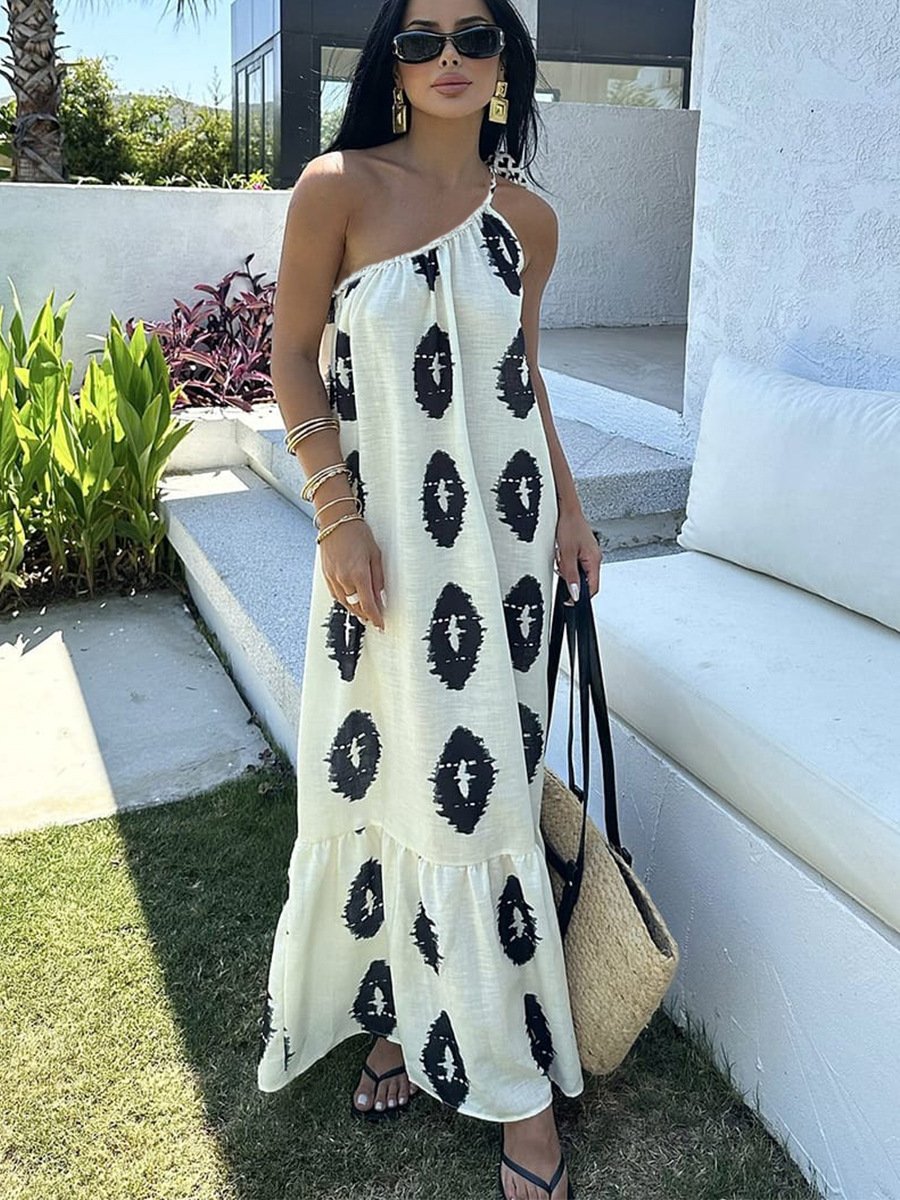
This is written for fashion brands, retailers and buyers planning a wedding-guest assortment. It sits inside the 2027 trend cycle our prom report, bridesmaid report and eveningwear report also read, and it answers a different question from all three: what does a customer who did not choose the occasion need from the range? The category is on our cocktail dress manufacturing and occasionwear pages.
Wedding guest is its own category
A guest dress is bought under two constraints that do not apply to the party it is bought for. The dress code is given rather than chosen, and the dress will be worn in front of people who know what the code means. That produces a customer who is unusually risk-averse about the wrongness of the garment and unusually open about its precise form.
Why the category has grown
Guest dressing has grown because the occasions have multiplied rather than because the dresses have changed. A wedding now frequently comes with a welcome event, a rehearsal dinner, a ceremony and a reception, each with its own register, and the same guest may attend four weddings in a season. That produces a customer who buys more than once and who is conscious of being seen in the same dress twice, which is exactly the buying behaviour a range can plan for and exactly why rewear has become a stated requirement rather than a marketing claim.
The second reason is photographic. Guest dressing is seen on social channels as well as in the room, which raises the value of a dress that photographs distinctly: a defined silhouette, a considered surface and a back or shoulder detail all read better in a set of images than a plain shape does. That is a design consequence rather than a commercial one, and it is part of why a direction such as a high neckline with back interest performs better in this category than in adjacent ones.
What the code actually decides
| Code | What it constrains | What the customer is actually looking for |
|---|---|---|
| Cocktail | Length and polish — not a gown, not casual | A dress that reads as considered and can be worn again to a dinner |
| Formal or black-tie optional | Length, fabric weight and finish | A floor-length or near-floor-length option that is not a bridal silhouette |
| Black tie | Weight, drape and a restrained palette | Something clearly formal that does not compete with the party |
| Destination or daytime | Layer, breathability and a relaxed construction | A lighter fabric and a length that works on grass and in heat |
The commercial consequence is that the same trend has different value in different groups. A high neckline with an open back is a strong direction in cocktail and formal and close to irrelevant for a destination wedding on a beach. A range built from trends without the codes attached will contain the right dresses in the wrong proportions, which is a buying problem rather than a design one.
The rewear argument
Guest dressing is the one part of occasionwear where rewear is a stated customer wish rather than a merchandising nicety, because the same customer has several weddings and does not want to buy four dresses. That pushes the range towards silhouettes that survive a second occasion: a midi rather than a floor-length, a matte rather than a high-shine surface, a palette that is not tied to one season, and a construction that can be worn with different shoes and a different layer. Each of those is a small design decision with a large effect on how many times the dress is worn.
High necklines and open backs create contrast
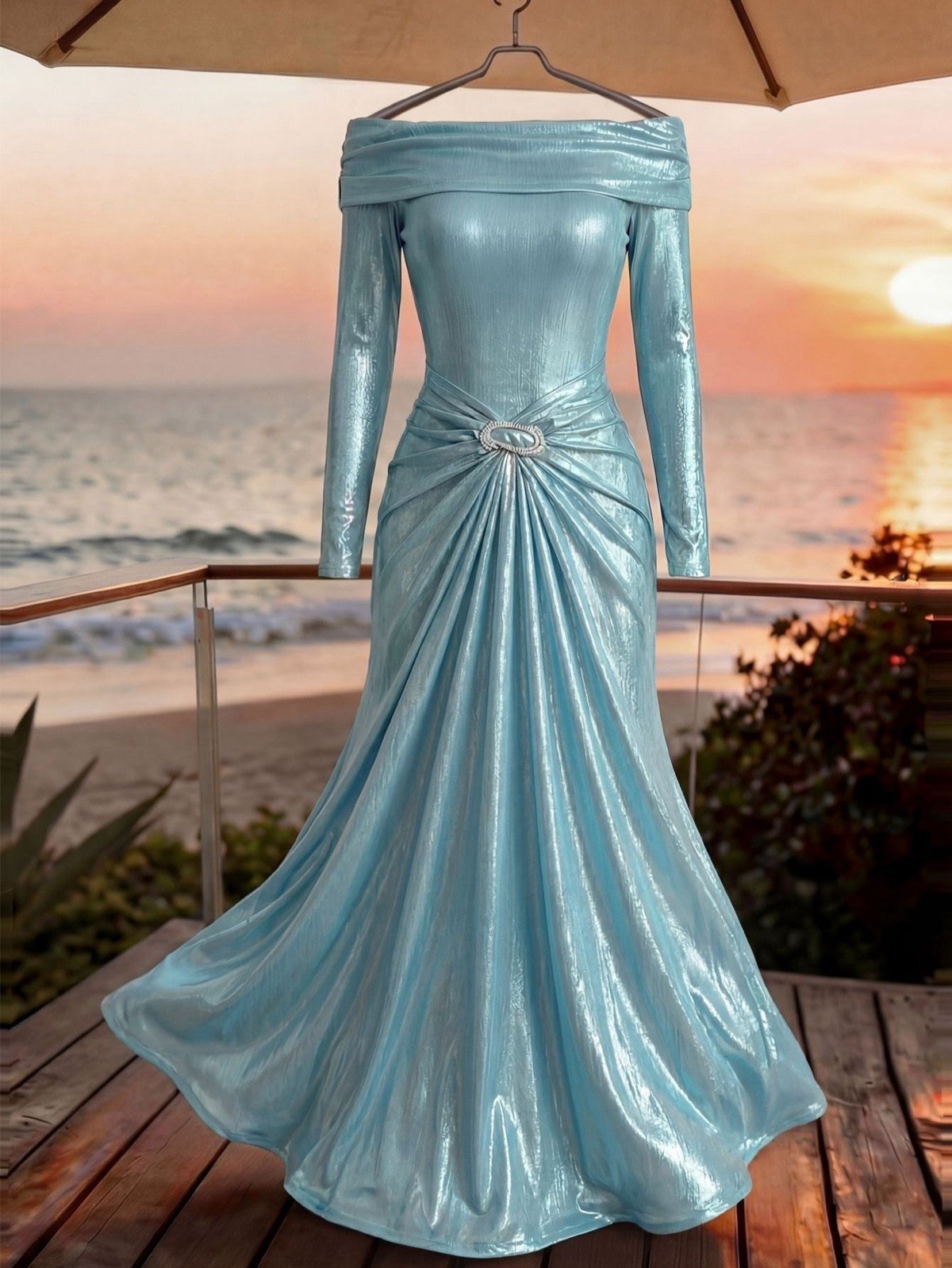
Current retail coverage of wedding guest dressing highlights high necklines as a strong direction, and the commercial reason is easy to see: it moves the interest from the front of the garment to the back, the shoulder or the drape, which is a less crowded place to compete and a more wearable one.
What the direction is
A high neckline read as a direction is not simply a closed neck. It is the transfer of drama upward and backward: a high or draped neck with an open or detailed back, a defined shoulder line, a halter that wraps the neck, or a plain front with the entire design statement made behind. It suits the category well because it is formal-adjacent without being bridal, and because it photographs distinctly from both the front and the back, which is what guest imagery needs.
The manufacturing decision
The direction concentrates risk in three places. A high neck has to hold its shape without compressing the throat, which is an edge and a stay decision. An open back removes support, so the load has to be re-routed to the sides and to a waist anchor. And the join between a high front and a low back runs diagonally across the shoulder, which is where a garment is most likely to twist or gape. Our coverage construction guide treats each of those as an engineering point rather than a stylistic one.
What would make this wrong
The direction fails if the high neck is used to make the dress safe. A range of high-necked, closed, fully covered dresses addresses no part of what the customer is looking for and abandons the contrast the silhouette exists for. It also fails if the back opening is not backed by construction: an open back that slides or that exposes an undergarment the brand did not intend is not a direction, it is a defect with a trend name.
Satin and silk-like surfaces remain important
Glossy surfaces are a persistent feature of guest dressing because they photograph as occasionwear immediately, without the customer having to do anything. In this category that property is worth more than it is elsewhere, because the customer is buying a dress to be seen in once.
Why satin keeps working commercially
A satin or silk-like surface reads as dressy at a glance, works across the four dress codes in different weights, and is available across a wide price architecture without changing its apparent category. From a selling point of view that combination is hard to replace. The range decision is not whether to carry satin but which weights to carry: a lighter satin for slips and draped shapes, a mid-weight for structured bodices, and a heavier one for a floor-length formal group.

What gloss makes visible
| Check | What gloss does with a fault | Where it is caught |
|---|---|---|
| Pressing | A sheen mark or a press line does not come out and shows under any light | Final press and the inspection that follows it |
| Seam show-through | An internal ridge prints through a smooth surface | Raking light on the sample and the finished garment |
| Shade and dye lot | Surface reflection exaggerates a shade difference between panels | Shade approval across adjacent panels, not swatches in isolation |
| Opacity under flash | A pale satin transmits more than indoor light suggests | A direct flash test on the palest shade in the range |
| Stretch marks | Any area under tension becomes a highlight | Fit testing in movement, seated and standing |
Offer a matte counterpart
Not every guest wants gloss, and the customers who do not are frequently the ones buying for a daytime or destination event where shine is the wrong register. A matte group covering a similar set of silhouettes is not duplication: it serves a different code, it photographs differently, and it widens the range without changing the design language. Where carrying both is not possible, the useful compromise is a satin group whose finishes vary — a matte-side construction, a crepe and a satin in the same palette — so the range still reads as one collection.
Drop waists refresh familiar shapes
Drop-waist and Basque-inspired proportions are among the directions current guest dressing coverage reports, and they are valuable commercially for an unusual reason: they change the silhouette without needing heavy decoration.
Why the shape is efficient
A shape that carries its interest in the proportion rather than the surface does the work that beading or pleating would otherwise do, at a fraction of the cost and the weight. For a guest dress that has to be rewearable and packable, that is a strong combination: the dress reads as designed without carrying a large surface investment, and it does not date through its decoration because it has none. It also sits naturally in woven and structured-stretch constructions, which keeps it inside the fabric range a guest range already carries.
Where the pattern work is
The drop waist puts its entire design risk into two places: the pattern's balance around the hip, and the transition where the bodice meets the lowered waist. The balance has to sit correctly on the body because a drop waist that is a centimetre off reads as a mistake rather than as a proportion, and the transition has to move without collapsing when the wearer sits. Both are pattern decisions, and both mean the shape should be validated on a body rather than on a form before the range commits to it.
Grading it across a range
The lowered waistline is anchored to the body's proportions rather than to a fixed distance below the natural waist, or it drifts across the size range. Where the waist sits much lower than the hip line, the drift is larger, and the dress can stop reading as a drop waist at the extremes of a range. This is the same anchor problem our bridesmaid grading guide sets out for a matched group, and it has the same solution: state the position as a proportion and validate it at a size away from the base.
Cocktail length expands the use case
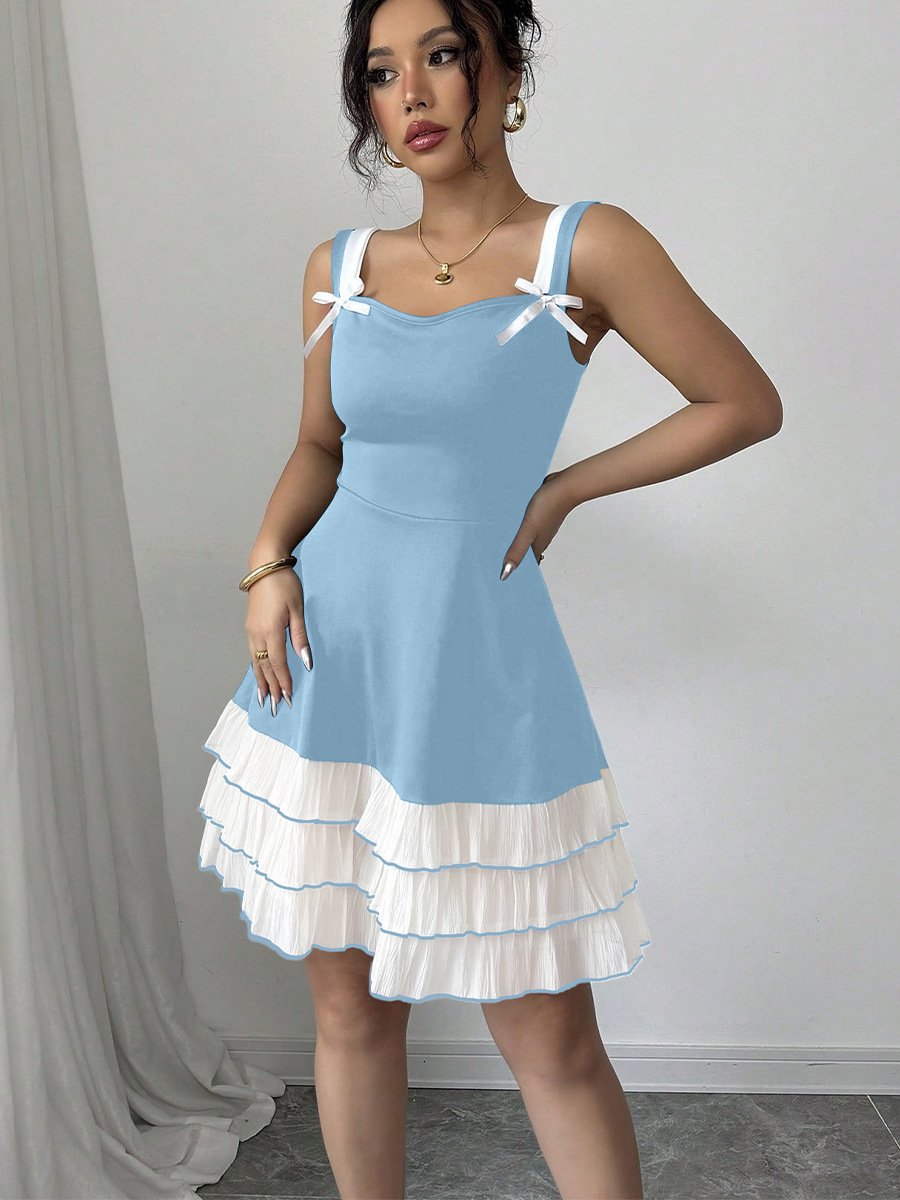
Midi and shorter formal dresses suit dinners, registry ceremonies, rehearsal events and less formal weddings, and they are easier to wear again than a full gown. That makes length the single most productive variable in a guest range.
The commercial case
A floor-length gown is bought for one event; a midi can be worn to a second and a third, and customers say so. From the range's side, a midi uses less fabric, is easier to press and pack, and sits at a lower price point without looking cheaper, which broadens the customer base the range can address. Across a season, the commercially strongest structure is usually a majority of cocktail-length styles with a smaller formal group above them, rather than a range weighted towards gowns because gowns are what occasionwear imagery shows.
The fabric decision that protects it
A shorter length reads as casual if the fabrication is casual, so the fabric carries the responsibility for formality. A midi in a polished satin, a structured crepe or a substantial jacquard reads as occasionwear; the same length in a soft jersey reads as daywear. This is the decision that most affects how a shorter group is received, and it is worth stating explicitly in the range plan rather than leaving to each style.
Layer and outerwear
A shorter dress invites a layer, and where a wedding falls in a cooler season the layer is part of what the customer is buying. A wrap, a short jacket or a coordinating outer piece extends the range's seasonal reach and gives the customer something to wear over a dress she already owns. It also creates a construction decision — a layer has to sit over the dress without changing its line — which is easiest to solve if it is designed alongside the dress rather than added afterwards.
Build the assortment by dress code
This is the practical conclusion of everything above. The range is built as four occasion groups, and the trend directions are distributed into them rather than collected on a mood board.
How many styles each group needs
A four-group structure fails if the groups are uneven in depth, because the range is then either short of the codes that carry volume or over-invested in the ones that do not. The shape that works is a broad cocktail group, a smaller formal group sufficient to satisfy the codes that require length, a small black-tie group positioned at the top of the price architecture, and a compact destination and daytime group offering lighter constructions and a shorter length. The proportion matters more than the total: the group a customer shops most often should be the group with the most choice in it.
| Group | Share of the range | What it has to contain | Where the saving is available |
|---|---|---|---|
| Cocktail | The largest group | Several silhouettes in the core shades, midi and shorter | Repeat styles across colours rather than more designs |
| Formal | A small but complete group | One or two long shapes per colour family | Fabric weight rather than surface work |
| Black tie | The smallest group, at the top of the price architecture | Restrained palette, substantial drape, clean construction | None — this is where the range demonstrates its level |
| Destination and daytime | A compact group | Lighter constructions, shorter lengths, a layer option | Simpler construction and matte finishes |
The dress code matrix
| Group | Length logic | Fabric logic | The direction it carries best |
|---|---|---|---|
| Cocktail | Midi, with a defined hem relationship | Polished satin, structured crepe, jacquard | High necklines with open backs; drop waists |
| Formal / black-tie optional | Floor-length or near-floor-length | Mid to heavier satin, substantial crepe, matte surfaces | Satin or silk-like surfaces; defined back interest |
| Black tie | Floor-length with a controlled sweep | Heavier weights with good drape, restrained palette | Satin in deeper shades; structural proportion over decoration |
| Destination / daytime | Midi or shorter, with a lighter construction | Lighter fabrics, breathable constructions, matte finishes | High necklines without back exposure; relaxed A-lines |
Colour across the groups
A guest range needs colour that transitions across seasons and across the four groups, because the same customer shops the whole range in one season. The useful structure is a small set of core shades that work in every group, a smaller set of seasonal shades that carry the imagery, and a continuity shade that is carried for reorders — the same role structure our colour planning report sets out for the category as a whole.
Explain the logic to buyers
A range organised by dress code is much easier to sell if the code is visible in the line sheet: the length logic, the fabric logic and the occasion each style is intended for, stated per style. That is not marketing copy; it is the information a wholesale buyer needs in order to place the range in her own store against her own customers' events, and its absence is one of the commonest reasons a good assortment underperforms.
Where this reading comes from
A trend report that does not say what it is based on is a mood board with a date on it, so the basis is set out here rather than left to a source list.
What was checked
The client's content document supplied two editorial references for this article. Both were checked before publication. Good Housekeeping's wedding guest dress coverage was located, and the directions it states — high necklines, satin and silk-like fabrics, drop-waist and Basque silhouettes, florals — match the directions in this article. That outlet is cited here as the retail-side basis, without a publication date, because the date given in the document could not be verified. The generic Vogue seasonal item could not be located in any form, so no Vogue citation appears in this article.
How the directions were corroborated
| Basis | What it tells you | How much weight it carries |
|---|---|---|
| The runway cycle | A direction appearing independently in several cities is the most reliable signal of a real movement | Strong for direction, weak for quantity |
| Retail and editorial coverage of the category | Closest to the customer, and the place where a direction is confirmed as shoppable | Confirms rather than directs, and is promotional in nature |
| Your own sell-through | The only basis for a quantity decision | Decisive, and the reason the same direction can be right at one brand and wrong at another |
How to keep the reading current
The show cycle runs twice a year, with Spring/Summer reported from September, and retail coverage of wedding guest dressing refreshes through the main wedding season. The practical rhythm is to review the direction list once per season against sell-through, and to treat a direction that has not moved any quantity after two seasons as a mood rather than a trend. Keeping the reading current costs a reading session; acting on a stale one costs a range.
Length, value and rewear
The commercial argument for cocktail length deserves its own numbers, because it is the decision that most changes what a guest range can do.
| Length | Fabric and construction | Occasions it covers | Replacement risk |
|---|---|---|---|
| Floor-length gown | Highest consumption, most pressing and packing volume | Formal and black tie | High — bought for one event, worn once, not re-bought |
| Ankle or near-floor | Lower consumption, easier packing | Formal and black-tie optional | Moderate — usable at a second event in a different season |
| Midi | Moderate consumption, and a fabric decision that protects formality | Cocktail, registry, rehearsal, dinners | Low — the length most often worn again |
| Shorter formal | Lowest consumption, and the length most dependent on fabrication | Cocktail and daytime | Low, but the dress reads as daywear if the fabric is soft |
Read together with the dress-code matrix, this says something specific about assortment structure: the floor-length group exists to satisfy the codes that demand it, and the midi group is where the range earns repeat purchase. A range with almost no midi is not a conservative range; it is a range whose customers buy once.
Practical buyer worksheet
Fill this in before the range is bought. For a guest range the sixth line is the one that decides everything downstream: a stated colour count is what makes a four-group structure affordable rather than four separate ranges.
- Target customer and use occasion
- Target retail and wholesale price
- Target ex-factory or landed cost
- Core fabric and backup fabric
- Size range and base fit size
- Colour count and continuity colours
- Critical construction risks
- Approval sample required
- Inspection checkpoints
- Latest acceptable delivery date
FAQ
What styles are appearing in current coverage?
High necklines paired with back interest, satin and silk-like surfaces, drop-waist and Basque-inspired proportions, and floral patterns at scales and in treatments that read as modern rather than traditional. What makes the list useful commercially is that none of those four is a single silhouette; each is a direction that can be carried in more than one dress code, which is what a guest range needs. Reading them as four products rather than four directions is the commonest way the list is misused.
Should brands focus on floor length?
Not exclusively. Floor length satisfies the codes that require it and it is where a range demonstrates its formality, but midi and shorter formal lengths cover more occasions and are significantly more likely to be worn again — which in a category where customers say they want rewear is a commercial argument rather than an aesthetic one. The structure that works in practice is a formal group that satisfies the codes and a cocktail-length group that carries the volume, with the fabric quality doing the work of keeping the shorter length formal.
Are florals still relevant?
Yes, and their relevance depends on scale, colour and surface rather than on the presence of a print. Contemporary guest dressing coverage places floral alongside satin and high necklines rather than instead of them, and the versions that read as current are the ones where the print is treated as a material — a large-scale placement, an embroidered motif, a muted palette — rather than as a small repeating pattern used to fill the whole dress. From a production point of view, print scale also drives consumption and seam matching, so the decision has a cost consequence worth considering early.
How should buyers plan the range?
Segment by dress code and season first, then build silhouettes and fabrics inside those groups. That order matters because the code decides the length and the level of formality, which are the two variables that cannot be changed later without making a different dress. A range planned as a group of trends will contain the right directions in the wrong proportions and will have to be rebalanced after the first season; a range planned as four occasion groups can be adjusted group by group as sell-through comes in, which is a far cheaper correction.
Next step
We develop and produce cocktail, guest and occasionwear at our production facilities in Guangzhou and Dongguan, including midi and floor-length groups in one palette, high-neck and open-back constructions with the support re-routed where the back is open, satin and crepe weights selected per dress code, and drop-waist patterns validated on a body. Send the codes you intend to cover and the price points they sit at, and we will come back with a range structure and a construction plan rather than a silhouette list. Request a quote, or see the constructions we run on our cocktail dress manufacturing page.
Our coverage construction guide covers the openings this direction depends on, and our colour planning report covers the palette structure a four-group range needs. Silhouettes already in production are on our style library and ready stock pages, and the wider category is on the women's dresses page.