On this page
- Country of origin is a trade statement, not a supply-chain map
- The tier model, described by activity rather than number
- What a traceability question actually asks
- The minimum record, per style and per colour
- Identity checks: legal name, site and trade name
- A supplier list is not traceability
- Substitution destroys the chain and restarts it
- Where the chain usually breaks
- Risk-based depth: which materials justify the deepest mapping
- What traceability feeds
- A dress, traced
- Traceability request template
- When an upstream supplier refuses disclosure
- Frequently asked questions
- Working With Luxudress
- Related pages

A garment’s country-of-origin label identifies where the substantial manufacturing transformation occurred under the applicable rule. It does not describe the whole supply chain. Fabric may be woven in one country from yarn spun in another, using fibre sourced elsewhere, then dyed and finished at another site before reaching the garment factory.
That gap between the label and the chain is where traceability lives. Traceability connects those stages to a specific product and production batch, so that a question about a garment can be answered with a record rather than an assurance. It is useful for forced-labour due diligence, material claims, certification, quality investigations and product-data requirements, and the same chain serves all five.
What follows is the working method: why the origin label cannot carry this load, how to describe the chain by activity rather than by tier number, what to hold per style and colour, and how to connect records to the order. The point is not to map everything to the farm. It is to know which source supplied this order, and to be able to prove it.
Country of origin is a trade statement, not a supply-chain map
The country-of-origin label answers one narrow question: where did the substantial transformation happen, under the rule that applies to that trade lane. It exists for customs and trade purposes. It is not a description of where the fibre came from, where the yarn was spun, or where the fabric was dyed, and treating it as one is the first mistake a traceability programme has to undo.
A concrete case makes it plain. A dress can be cut and sewn in one country from fabric woven in a second, from yarn spun in a third, from fibre grown in a fourth, with dyeing and finishing done at a fifth site along the way. The garment carries one origin. The chain has five addresses. If a buyer or a due-diligence obligation asks about the yarn or the dye house, the label will not answer, and no amount of care will make it.
This is not a technicality to be argued around. It is why a traceability file is built from records rather than read off a label, and why the first useful question to a supplier is not “where is it from” but “which site did which operation, on which material, for this order”.
None of this makes the label useless. It remains exactly what it is meant to be: a trade statement, and a perfectly good answer to the question it was designed for. The error is not in the label, it is in expecting a trade document to carry a supply-chain answer, which is a job it was never built to do.
The tier model, described by activity rather than number
The supply chain is usually described in tiers, and the numbers are a useful shorthand and a poor substitute for saying what actually happens. Tiers are counted differently by different organisations, so a “Tier 2” in one framework can mean something else in another. The stable way to describe a chain is by activity: which operation happened, at which site, on which material.
| Stage | Typical womenswear activity | Evidence to hold |
|---|---|---|
| Tier 1 | Pattern making, cutting, sewing, finishing, pressing, packing | Purchase order, production order, cutting and packing records, first-output approval |
| Tier 2 | Fabric formation (weaving or knitting) and wet processing (dyeing, printing, finishing) | Fabric article and invoice, mill declaration, dye or print lot record, finishing record |
| Tier 3 | Yarn spinning, and production of major trims such as lace or elastic | Yarn or trim invoice, supplier declaration, lot or shipment reference |
| Tier 4 | Fibre or feedstock origin, including farm, programme or recycler | Farm or programme data, recycler or feedstock record, certificate where a scheme applies |
There are two arguments for the activity route. The first is that it removes the ambiguity about what a tier number means. The second is that it matches the form in which the evidence actually exists: a dye lot record names a process and a site, not a tier. Ask a supplier for “Tier 2 information” and you will get an interpretation; ask for the dyeing lot for the shell of a named style and you will get a record.
On womenswear specifically, the wet-processing stage at Tier 2 is where much of the real complexity sits. Dyeing, printing and finishing are often at a different facility from the mill that wove the fabric, and that facility may change between colourways. A chain that stops at “the fabric supplier” has skipped the operation most likely to differ between two orders of the same dress.
What a traceability question actually asks
Traceability requests arrive as plain questions, and each one maps onto a specific record at a specific tier. Reading the question against the record is most of the skill, because a brand that answers the wrong one produces a file that looks complete and answers nothing.
| The question a buyer asks | The record that answers it |
|---|---|
| Where was this made? | The Tier 1 legal entity and site, not the origin label on the garment |
| Which fabric mill? | The fabric article code, the mill declaration, and the lot that went into this order |
| Where was it dyed? | The Tier 2 wet-processing site and the dye lot record for that colourway |
| Is the cotton traceable? | The certified input, the transaction link, and the batch connection to your order |
| What is the fibre origin? | Tier 3 and Tier 4 records, where the buyer requires that depth |
The trap is that several of these questions can be answered with a document that belongs to a different question. A certificate of origin answers the first one only, and partially. A mill’s scope certificate looks like an answer to the second but describes the mill rather than your lot. Matching the question to the tier, and then to a document with a batch on it, is what keeps the answers honest.
The minimum record, per style and per colour
The connective tissue of a traceability file is the style-and-colour record. Colour matters because dye lots, print runs and sometimes the dyed fabric itself change between colours, so two colourways of one style can have different chain facts. Style matters because the composition and the supplier set are defined there. Holding one record per style and colour is the smallest unit that stays useful when the chain changes.

For each style and colour, retain:
- purchase order and production order;
- Tier 1 legal entity and site;
- key subcontracted operations;
- shell and lining supplier and article codes;
- fabric batch or lot;
- dye or print lot where relevant;
- yarn or fibre information requested by the buyer;
- invoices and delivery records connecting suppliers;
- certificates and transaction documents;
- approved substitutions and dates.
That list is deliberately short, and its weakest item is the phrase “where relevant”. The relevance test should be written down in advance, because it is the field a reviewer quietly drops when a record is hard to obtain, and the drop is invisible until somebody asks for exactly that lot.
Identity checks: legal name, site and trade name
Names are where traceability quietly fails. A familiar English trade name may belong to a marketing office, while the goods are made by a related company or a separate contractor at another address. Trading companies buy from factories they do not own and sell the output under their own identity, so the supplier you deal with and the site that made the garment can be different legal persons.
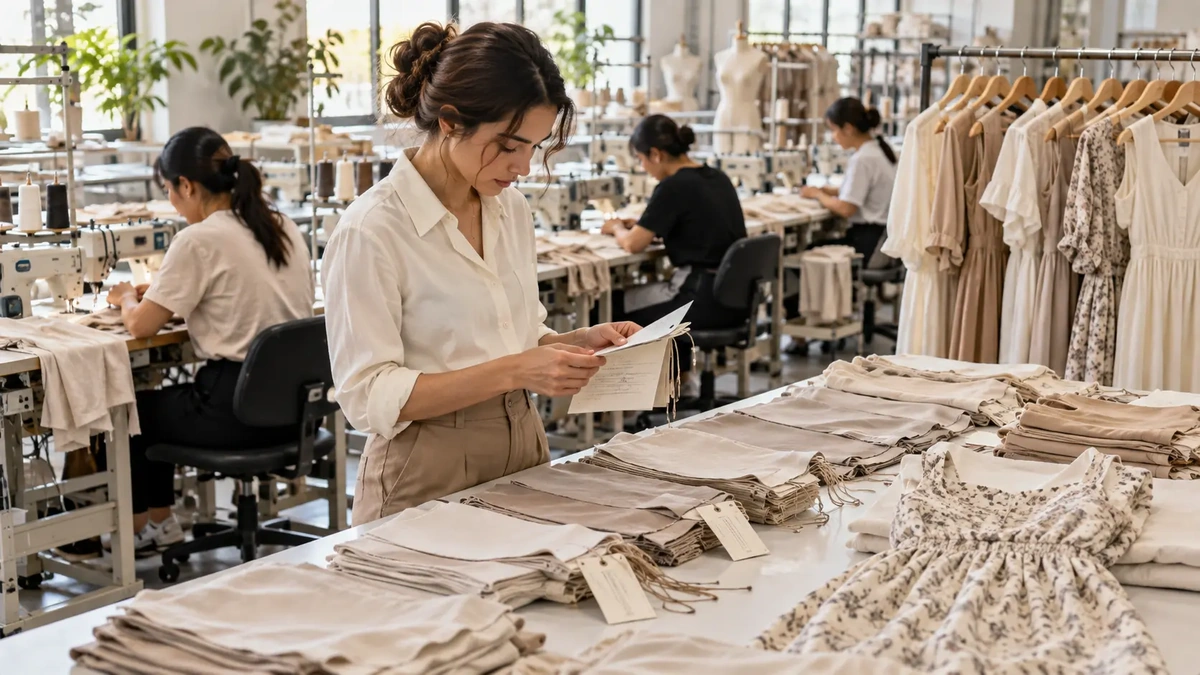
The fix is unglamorous and effective. Record the legal name, the site address, and a business identifier where one exists, and record them for every tier rather than only for the cut-and-sew house. A group with several legal entities needs the specific entity and the specific site, not the group. Where a name has changed, keep the previous name as an alias so older records can still be matched.
- Legal entity name as registered, not the trade or English brand name.
- Site address where the work was performed, not a head-office address.
- Business identifier where available, so two entities with similar names can be told apart.
- Known aliases, so records from before a rename still reconcile with the current file.
This is the part of traceability that looks like paperwork and behaves like control. An order traced to a trade name cannot be verified, because the name does not identify a site. The same order traced to a legal entity at a specific address can be checked, and the check is what turns a list of names into a chain.
A supplier list is not traceability
The most common false positive in a traceability programme is a long list of supplier names, arranged by tier, presented as the answer. A list shows the possible sources. Traceability is about the actual one: which source supplied this order, in which batch, into which shipment.
So the core of the discipline is batch connection, and it runs through a small set of documents. The purchase order identifies what was bought. The supplier’s invoice identifies who sold it. The delivery note or lot number identifies which physical quantity moved. The production date places the material in time. And the fabric lot or dye lot number is the link that lets you join a finished garment back to a specific input. Remove any one link and you have a plausible story rather than a traceable one.
Two things about that chain are worth saying out loud. The first is that it is not primarily a technology problem. A row in a spreadsheet with a lot number and an invoice reference will satisfy far more questions than an elaborate system with no batch link. The second is that the chain has to hold at the point of substitution, because that is where most chains break quietly.
Substitution destroys the chain and restarts it
When an approved fabric runs short, a replacement appears with the same composition and a similar hand. The commercial logic is obvious. The traceability consequence is that everything downstream of the material change is now a new chain: a different mill, possibly a different dye house, a different origin, a different certification status, and a different set of lots. The old evidence no longer describes the goods.
This is why approval of a substitute has to cover more than performance. An approval that checks only shade, weight and hand has left the traceability file describing a material that is no longer in the garment.
- Commercial and performance fit, as before: composition, weight, shade, hand and behaviour.
- Chain facts for the new material: mill, processing site, origin and dye house.
- Batch identifiers for the replacement lots, so the link is rebuilt from the substitution point forward.
- Certification and claim status, because a substitute may not carry the evidence the original claim depended on.
- Buyer approval, recorded with a date, so the change is visible in the file rather than implied by the goods.
The re-start is not a failure. It is the honest consequence of changing a material. What turns it into a failure is approving the substitute for appearance and carrying the old evidence forward as if nothing had changed.
Where the chain usually breaks
Most broken chains fail at one of a small number of predictable points, and naming them is how a brand stops rebuilding the same problem each season. None of these is exotic, which is exactly why they recur.
- The reorder. A repeat order is placed against the approved sample, but the fabric comes from a new mill run and the lot number in the file is the old one.
- The colour switch. Fabric is booked for the hero colour and re-dyed for the others; the dye house and dye lot change, but only one record is kept for the whole style.
- The unrecorded trim. A functional or decorative component is bought through a different route and never entered against the style, so it has no supplier, lot or specification.
- The trading company in the middle. The invoice comes from a trading company and the factory that made the goods is never named, so the Tier 1 site is missing.
- The rename. A supplier changes its trading name or restructures its legal entities, and older records no longer match the current file.
Every one of these is a batch or identity problem rather than a technology problem, and every one is cheaper to prevent at the order than to reconstruct afterwards. A brand that watches these five points will hold a chain that survives a season; one that does not will keep discovering gaps in the middle of a compliance request.
Risk-based depth: which materials justify the deepest mapping
Nobody maps every trim to the farm, and nobody should. Traceability is a risk-based activity, and the practical question is which parts of the chain justify the deepest effort and which can sit at the supplier-and-specification level.

- Map deepest: high-volume materials, because a small error is multiplied; cotton and other buyer-designated risk materials; anything carrying a certified or claimed content; components that affect safety or function; and materials routed through long or opaque chains.
- Hold at supplier level: low-volume trim with no claim attached, standard packaging, and components where the specification plus the direct supplier is enough to answer the question being asked.
- Always connect the batch, whatever the depth, because a record without a batch link cannot answer a question about your order.
The useful discipline is to write the depth rule before sourcing starts, so the file is defined by risk rather than by what happened to be obtainable. A brand that decides depth after the goods arrive has, in effect, let the suppliers set its traceability policy for it.
What traceability feeds
Traceability is not a standalone deliverable. It is the input to several obligations that otherwise look unrelated, which is why the same chain earns its cost more than once.
- Forced-labour due diligence: knowing the sites and the batch is a precondition for assessing risk at the places where the work actually happened.
- Material claims: a content claim needs the transaction link from certified material to your order, not just a supplier name.
- Certification: chain of custody depends on connecting certified inputs to the product, which is a batch question rather than a branding one.
- Quality investigations: when a fault appears, the lot number is what lets you isolate the affected goods and find the cause instead of guessing at the whole range.
- Product-data rules: emerging product-data and passport regimes ask for site, material and origin information at product level.
The efficiency argument is the same one that runs through most product-data work: build the chain once, in a form that answers the strictest question you expect, and the weaker questions answer themselves. A brand that builds a separate chain for each obligation will pay for the same facts several times and end up with several inconsistent versions of them.
Ownership is the missing piece in most programmes. A traceability file that belongs to a compliance team, while the purchase orders belong to merchandising and the material changes belong to production, will always lag reality. The record has to be owned where the order is placed, because that is the moment the chain facts are still knowable.
A dress, traced
It helps to follow one garment end to end rather than thinking in abstract tiers. Take a structured occasion dress in a satin shell with a contrast lining, dyed to two colourways, cut and sewn in one factory, with the fabric woven, dyed and finished upstream.
The chain starts with the purchase order, which names the style and the quantities. In the factory, cutting records tie the shell and lining to the lots being consumed, and the production record dates the run. The shell leads back to a fabric invoice that names the mill and the article, and the dye lot record for that colour names the wet-processing site. The lining leads back to a separate invoice and lot, because it is a different material and may come from a different supplier entirely. If the buyer requires fibre depth, the mill or a nominated supplier carries the yarn or fibre reference.
Now change one thing: the second colourway is dyed at a different facility because the first dye house cannot match the shade. Nothing about the garment changed, and yet the Tier 2 record for that colour is now a different site and a different lot. A file that held one chain for the whole style would be wrong for half the order, and the error would be invisible until somebody checked the dye house.
That single change is the argument for holding the record per style and colour, and for treating the batch link as the real unit of traceability. The garment is the same dress. The chain, honestly described, is two chains.
Traceability request template
Run the request as one row per material or operation, not one row per supplier, because a supplier can sit at several points in the chain and an operation can move between sites. Seven columns carry almost everything a reviewer needs.
| Material or operation | Supplier legal name | Site | Country | Batch or PO link | Evidence | Gap |
|---|---|---|---|---|---|---|
| Shell fabric | ___ | ___ | ___ | ___ | Invoice or lot | ___ |
| Dyeing | ___ | ___ | ___ | ___ | Batch record | ___ |
| Lining | ___ | ___ | ___ | ___ | Invoice | ___ |
| Embellishment | ___ | ___ | ___ | ___ | Work order | ___ |
| Cut and sew | ___ | ___ | ___ | ___ | Production record | ___ |
The last column is the one that makes the template honest. A completed row with an empty Gap cell claims a closed chain. A row that names the gap is a true record of what is known and what is not, and it is the only version worth keeping. The template should be filled in as the order runs, not reconstructed at the end, because reconstruction is where the invented details appear.
When an upstream supplier refuses disclosure
Refusal is common and not always sinister. A mill may treat its yarn sources as commercial information, or a supplier may simply not have visibility beyond its own purchase. The response should be proportionate, and it should never be to invent the missing fact.

- Try confidential disclosure. Some suppliers will share site-level information with a named party under an agreement rather than on a public document.
- Accept a verifier. A third-party audit or a certification scope may stand in for a direct declaration the supplier will not give you.
- Record the gap explicitly. Name the material, the missing tier, the date and the reason, so the file shows a known gap rather than an assumed fact.
- Price the risk. Decide whether the opacity is acceptable for the market and the claim, or whether the material should be sourced elsewhere.
The one move that is never acceptable is to leave the gap invisible. A traceability file that hides its holes is worse than one that names them, because the first invites a false conclusion and the second supports a real decision.
Frequently asked questions
Is a country-of-origin certificate full traceability?
No. It serves a defined trade purpose and records the recognised transformation, not every upstream material and processing site. If the question is about the yarn or the dye house, the certificate will not answer it.
Is a supplier declaration enough?
It can form part of the file, and its strength depends on scope, the issuer’s knowledge, the batch connection and the supporting records. A declaration that names a lot and a method is evidence; a generic one is a placeholder.
Should brands map every trim?
No. Set a risk-based scope in advance, then retain direct supplier and specification data for functional or claimed components even where the deepest mapping is not justified.
What if an upstream supplier refuses disclosure?
Record the gap, explore confidential or verified disclosure, assess the risk for the market and the claim, and decide whether a different source is needed. Do not fill the gap with an assumption.
How is traceability different from a supplier list?
A list shows the possible sources. Traceability shows which source supplied this order, in which batch, with records that connect the material to the garment. The batch link is the difference.
Does a material substitution break traceability?
It replaces the downstream chain from the substitution point onwards. The new material has its own mill, site, dye house, lots and certification status, and approval should capture all of them.
What single document matters most?
There is no single one. The chain runs through the purchase order, the invoice, the delivery note or lot number, and the production date. Each proves a different link, and the lot number is what joins the garment to its input.
Can one record cover every colourway?
Only where the chain facts are genuinely the same. Colour can change the dye lot and sometimes the dyed material, so hold the record per style and colour unless you have checked that the lots are shared.
Working With Luxudress
Luxudress is the factory-direct front end for womenswear production across production facilities in Guangzhou and Dongguan, covering development, sampling, material sourcing, manufacturing, inspection and export packing.
We can organise the Tier 1 records that sit with the cut-and-sew operation, and request the material and processing information our approved suppliers are able to share. We will tell you plainly which tier a document actually covers and where a gap remains, rather than presenting a supplier list as a chain.
If you are preparing a traceability policy, send the materials and operations you need mapped at the start of development, before material booking. You can also see how we source and document materials, use the supplier data checklist, or read about adding a second source.
Request a quote and we will return a plan that states which traceability fields we can supply, which require supplier confirmation, and which will remain open.