
Style library · LU024 · Button-front
Polka-Dot Knit Button-Front A-Line Mini Dress
Private-label polka-dot mini dress production with custom knit weight, print scale, button finish, skirt length, size grading and packaging.
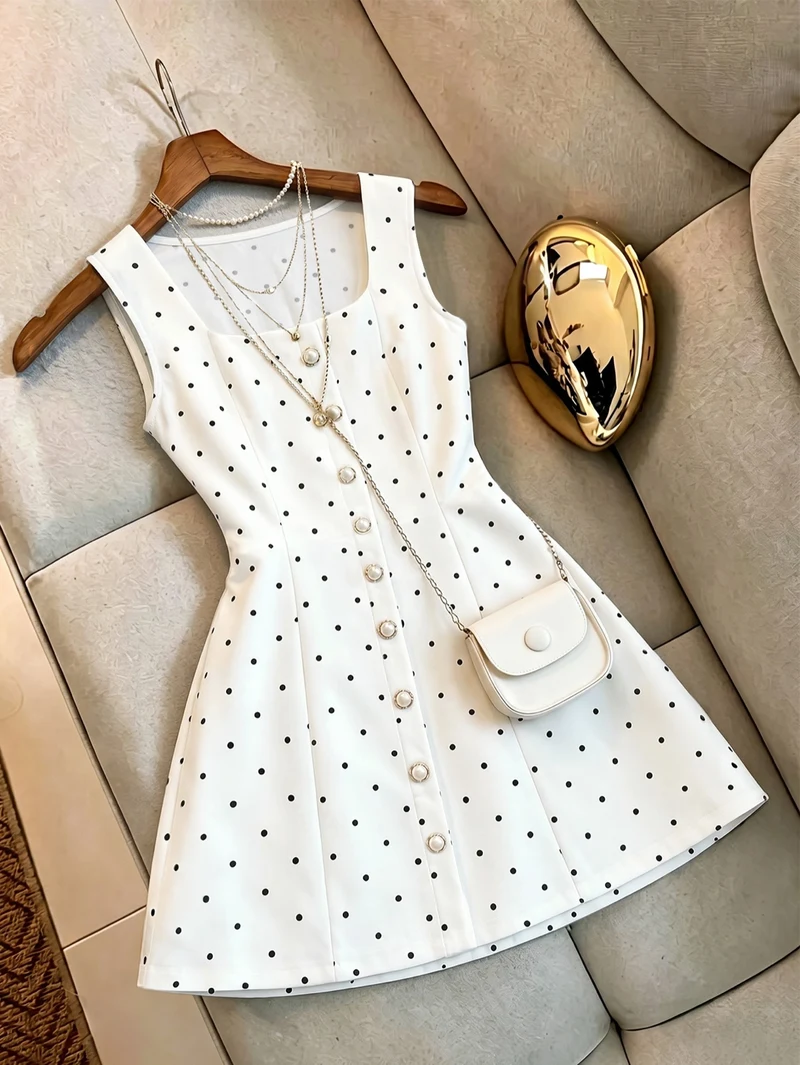
Style library · LU024
Construction at a glance
Polka-Dot Knit Button-Front A-Line Mini Dress — produced to order in the colourway shown, with fabric, colour, sizing and labelling developed to your specification.
- Polka-Dot Knit Button-Front A-Line Mini Dress
Wholesale & development
Construction
How it is made
What each element of this style involves in production, and which decisions have to be settled before the fabric is booked.
Construction
Cut and assembled to the approved sample, with the neckline, hem and closure recorded as the production standard rather than left as a sample-room judgement.
Fabric and colour
Produced in the cloth and colourway shown, or to your own substrate and colour reference, with the swatch approved before the fabric is booked.
Sampling and bulk
Developed through a sample round, then produced with checks at material, in-line and final inspection before packing.
Style notes
Design, fit and production notes
What is specific to this garment, rather than to the category it belongs to — the construction it turns on, where the fit risk sits, and how it is held to standard in a production run.
Design and construction notes
This dress is defined less by its silhouette than by the interaction between an a line and a mini, and that interaction is what the pattern has to protect once the style is graded.
Because the A-line gains width toward the hem, the hem circumference is the largest dimension on the garment and the one that most affects fabric consumption; it is worth confirming before the cloth is booked.
On a mini length the proportions are set by the hem rather than the waist, so the grade is checked for how the length moves across sizes.
Buttonholes are cut after the placket is stabilised, because a placket that stretches under the buttonhole is where a button-front fails first.
Dot prints are placed so the repeat does not distort across the dart or the seam; the placement is marked rather than left to the cutter.
Fit and grading
On a dress like this one the fitting agenda is short: the waist position and flare rate is measured, the silhouette through the body is judged on a body, and everything else is a finishing conversation.
The size chart is confirmed before the first sample, so the grade is tested on a body rather than corrected once the run has been cut.
Production and inspection
If you name one production stage on this dress, it is the placket and buttonhole alignment — that is where a run either holds its standard or drifts, and it is inspected in-line rather than at the end.
Final inspection for this dress puts the emphasis on the waist position and flare rate, because that is where a small error becomes a visible one to the customer.
Because the exterior of this dress is what the customer judges, the pressing and the edge finishing are treated as production steps with their own standard rather than as the last fifteen minutes of the day.
What can be changed
This dress is developed from a small test order upward, so the specification is settled on a real sample before the run is committed, and any element of the construction can be revisited at that point.
Where the construction depends on the cloth chosen, the method is settled at sampling rather than assumed before the fabric is booked.
Specification
Standard specification for this style. A fabric composition sheet and the graded measurement chart are available on request.
| Composition | Confirmed at quotation |
|---|---|
| Colour | As shown; any shade in the range can be dyed to order |
| Sizes | Graded to your target market |
| Typical sampling | Typically 7–10 days from tech pack approval on standard programs |
| Typical minimum — standard programs | Typically from 100 pieces per design, with 100–200 pieces per colour, on standard womenswear programs |
| Labels | Woven labels, care labels and hang tags to your artwork |
| Packing | Folded and bagged to your packing specification |
Sizing and grading
Graded to your target market. The chart is confirmed against your measurements before sampling, not after.
| Base sizes | S–XXL on the base chart |
|---|---|
| Outer sizes | Graded on request to your target measurements |
| Chart | Confirmed against your measurements before sampling |
| Fit check | Fit sample reviewed on a body, not only on a form |
Colourways
Made in your colourway
Shown here in one colourway. Colour is matched against your target shade and approved on a physical swatch before production, and any shade in the range can be dyed to order.
Custom colour matching
Send a target shade — a Pantone reference, a fabric swatch or a garment you already sell. We pull the nearest match from the fabric library, dye it, and send a physical swatch back for approval before any production fabric is booked. Screen colour is not a reference; the swatch is.
Customise this style
Most elements below can be adapted to your brand, starting from a small test order.
| Fabric | Substitute the base cloth, weight band or finish |
|---|---|
| Colour | Custom dyeing to a Pantone or physical reference |
| Sizing | Grading to your own measurement chart |
| Labels | Woven labels, care labels and hang tags |
| Branding | Private label and OEM/ODM development |
| Sampling | A sample round before bulk production |
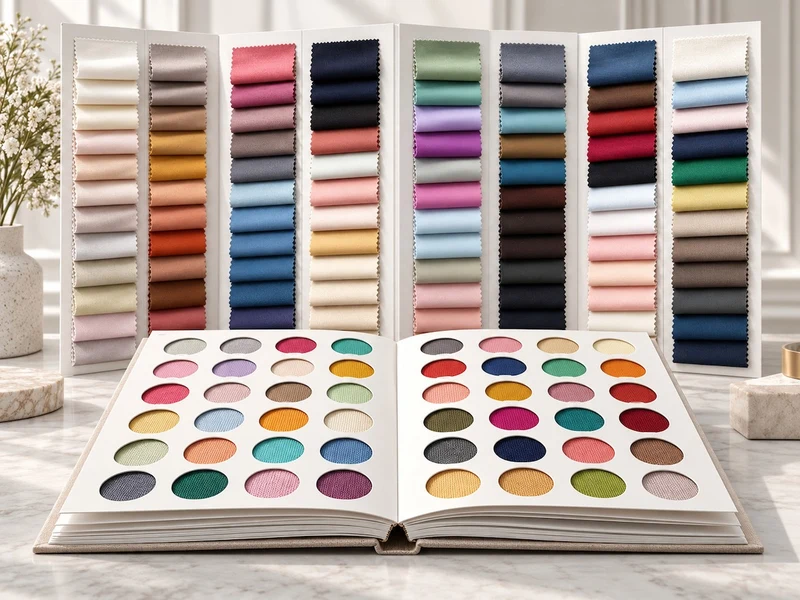
Fabric, colour and branding options
Print scale, base cloth, colourway and labelling are decided at development stage, so the cost of a change is known before the order is placed.
Questions
About this style
What is your minimum order quantity?
On our standard womenswear programs the typical minimum is 100 pieces per design, with a per-colour minimum of 100–200 pieces per colour. The per-colour figure is the one that usually binds — it is set by the mill's dye batch, which is why reducing colourways is often an easier lever than reducing pieces.
That is a standard-program reference, not a house rule. Luxudress works through several long-term factories and production routes, so the minimum that applies to your order depends on category, fabric, construction, customisation level and route — corsetry, hand beading, sequins and special dyeing each carry their own. Send the style and your target quantity and we will confirm the minimum that applies to it, including where a lower quantity is workable.
Can you do OEM or ODM for me?
Yes. OEM and ODM development is reviewed for each style. Send us your design and we will confirm feasibility, customisation options and sampling before we quote.
Do you provide a size chart?
Yes. We provide a size chart for every item you order, because pattern making is done in house by our own pattern designers.
What is the lead time for bulk orders?
On standard womenswear programs bulk production normally runs 20–25 days in high season and 15–20 days in low season. That is a typical range for that route, not a guarantee: the schedule is confirmed after sample approval and depends on order quantity, fabric availability, construction, finishing requirements and production capacity at the time.
Labour-intensive occasionwear — corsetry, hand beading, sequins, special dyeing — runs on its own window, which we confirm after reviewing the construction and the material. Ready-to-ship styles are a separate purchasing route and can ship within 7 days.
What is your monthly capacity?
The partner manufacturing facility runs 10 production lines with a nominal output of around 400,000 pieces a month. Actual scheduling is confirmed against your category, construction and order quantity.
How do you control quality?
An experienced QC team, in house.
Fabric and trims are tested before production starts — in house, or sent to a test house.
During production, QC on each line checks the quality as it runs.
Before packing there is a further check, and every piece goes through a metal detector.
How do you ship, and how do you charge?
We normally ship by DHL express, which takes around 5–7 days to arrive. The charge depends on the weight and volume of your goods and on the destination.
What are your payment terms?
Our payment terms are TT, Western Union and MoneyGram. We also accept Trade Assurance, and payment can be made through our Alibaba.
How about your after-sales service?
If there are any quality issues, let us know within 7 days and we will cover the rework costs or remake the pieces for you.
Related
Related styles, services and guides
Related styles
Manufacturing services
Related categories
Start a project
Develop this style for your range
Send your target fabric, colour and size range and we will come back with what is possible, what it costs and how long it takes.