
Style library · LU021 · Button-front
Cotton Wide-Leg Bib Overall Jumpsuit with Patch Pockets
Manufacturer of cotton wide-leg overall jumpsuits with custom fabric weight, strap length, pocket placement, inseam grading and private labels.

Style library · LU021
Construction at a glance
Cotton Wide-Leg Bib Overall Jumpsuit with Patch Pockets — produced to order in the colourway shown, with fabric, colour, sizing and labelling developed to your specification.
- Cotton Wide-Leg Bib Overall Jumpsuit
- Patch Pockets
Wholesale & development
Construction
How it is made
What each element of this style involves in production, and which decisions have to be settled before the fabric is booked.
Construction
Cut and assembled to the approved sample, with the neckline, hem and closure recorded as the production standard rather than left as a sample-room judgement.
Fabric and colour
Produced in the cloth and colourway shown, or to your own substrate and colour reference, with the swatch approved before the fabric is booked.
Sampling and bulk
Developed through a sample round, then produced with checks at material, in-line and final inspection before packing.
Style notes
Design, fit and production notes
What is specific to this garment, rather than to the category it belongs to — the construction it turns on, where the fit risk sits, and how it is held to standard in a production run.
Design and construction notes
This jumpsuit is defined less by its silhouette than by the interaction between a wide leg and a jumpsuit, and that interaction is what the pattern has to protect once the style is graded.
A wide leg is a volume decision taken at the hem, and because the leg does not taper, the hem circumference is a large measured dimension that also drives fabric consumption.
A jumpsuit is a bodice and a trouser graded as one garment, so the relationship between the two — the rise, the waist position and the total length — is what has to hold across the size run.
A pocket is a construction that has to sit flat and carry its own weight, so its position is measured and its bag is cut to the depth the style needs.
Fit and grading
On this jumpsuit most of the fit risk sits at the rise and hem length. A correction there is a pattern change; a correction anywhere else is usually an allowance.
The grade is set to your target market rather than to a house chart, and the chart is confirmed against your measurements before sampling rather than after.
Production and inspection
On this jumpsuit the visible quality of the run is decided at the pocket placement and attachment stage, so it is a named check in the production record rather than an operator judgement.
The measurement sheet for this jumpsuit names the rise and hem length as a critical dimension — the checks elsewhere are sampled, but this one is taken on every unit.
The finishing standard on this jumpsuit is part of the specification, because the difference between a considered finish and an ordinary one is visible at arm's length and cannot be corrected after the run.
What can be changed
A private-label version of this jumpsuit usually changes the cloth, the colour and the branding first, and the construction second — which is also the order in which the cost of a change goes up.
Any element not visible in the specification above is agreed at development stage, against the fabric actually selected.
Specification
Standard specification for this style. A fabric composition sheet and the graded measurement chart are available on request.
| Composition | Confirmed at quotation |
|---|---|
| Colour | As shown; any shade in the range can be dyed to order |
| Sizes | Graded to your target market |
| Typical sampling | Typically 7–10 days from tech pack approval on standard programs |
| Typical minimum — standard programs | Typically from 100 pieces per design, with 100–200 pieces per colour, on standard womenswear programs |
| Labels | Woven labels, care labels and hang tags to your artwork |
| Packing | Folded and bagged to your packing specification |
Sizing and grading
Graded to your target market. The chart is confirmed against your measurements before sampling, not after.
| Base sizes | S–XXL on the base chart |
|---|---|
| Outer sizes | Graded on request to your target measurements |
| Chart | Confirmed against your measurements before sampling |
| Fit check | Fit sample reviewed on a body, not only on a form |
Colourways
Made in your colourway
Shown here in one colourway. Colour is matched against your target shade and approved on a physical swatch before production, and any shade in the range can be dyed to order.
Custom colour matching
Send a target shade — a Pantone reference, a fabric swatch or a garment you already sell. We pull the nearest match from the fabric library, dye it, and send a physical swatch back for approval before any production fabric is booked. Screen colour is not a reference; the swatch is.
Customise this style
Most elements below can be adapted to your brand, starting from a small test order.
| Fabric | Substitute the base cloth, weight band or finish |
|---|---|
| Colour | Custom dyeing to a Pantone or physical reference |
| Sizing | Grading to your own measurement chart |
| Labels | Woven labels, care labels and hang tags |
| Branding | Private label and OEM/ODM development |
| Sampling | A sample round before bulk production |
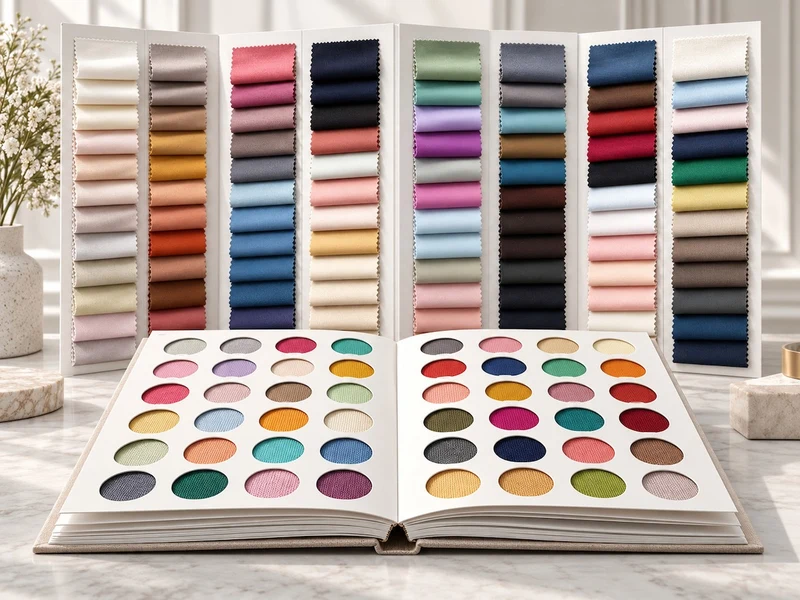
Fabric, colour and branding options
Print scale, base cloth, colourway and labelling are decided at development stage, so the cost of a change is known before the order is placed.
Questions
About this style
What is your minimum order quantity?
On our standard womenswear programs the typical minimum is 100 pieces per design, with a per-colour minimum of 100–200 pieces per colour. The per-colour figure is the one that usually binds — it is set by the mill's dye batch, which is why reducing colourways is often an easier lever than reducing pieces.
That is a standard-program reference, not a house rule. Luxudress works through several long-term factories and production routes, so the minimum that applies to your order depends on category, fabric, construction, customisation level and route — corsetry, hand beading, sequins and special dyeing each carry their own. Send the style and your target quantity and we will confirm the minimum that applies to it, including where a lower quantity is workable.
Can you do OEM or ODM for me?
Yes. OEM and ODM development is reviewed for each style. Send us your design and we will confirm feasibility, customisation options and sampling before we quote.
Do you provide a size chart?
Yes. We provide a size chart for every item you order, because pattern making is done in house by our own pattern designers.
What is the lead time for bulk orders?
On standard womenswear programs bulk production normally runs 20–25 days in high season and 15–20 days in low season. That is a typical range for that route, not a guarantee: the schedule is confirmed after sample approval and depends on order quantity, fabric availability, construction, finishing requirements and production capacity at the time.
Labour-intensive occasionwear — corsetry, hand beading, sequins, special dyeing — runs on its own window, which we confirm after reviewing the construction and the material. Ready-to-ship styles are a separate purchasing route and can ship within 7 days.
What is your monthly capacity?
The partner manufacturing facility runs 10 production lines with a nominal output of around 400,000 pieces a month. Actual scheduling is confirmed against your category, construction and order quantity.
How do you control quality?
An experienced QC team, in house.
Fabric and trims are tested before production starts — in house, or sent to a test house.
During production, QC on each line checks the quality as it runs.
Before packing there is a further check, and every piece goes through a metal detector.
How do you ship, and how do you charge?
We normally ship by DHL express, which takes around 5–7 days to arrive. The charge depends on the weight and volume of your goods and on the destination.
What are your payment terms?
Our payment terms are TT, Western Union and MoneyGram. We also accept Trade Assurance, and payment can be made through our Alibaba.
How about your after-sales service?
If there are any quality issues, let us know within 7 days and we will cover the rework costs or remake the pieces for you.
Related
Related styles, services and guides
Related styles
Manufacturing services
Related categories
Start a project
Develop this style for your range
Send your target fabric, colour and size range and we will come back with what is possible, what it costs and how long it takes.