On this page
- A Certificate Proves a Scope, Not a Factory
- The Four Things to Check on Any Certificate
- Quality Management, Product Safety and Social Audit Are Three Different Questions
- What OEKO-TEX STANDARD 100 Covers, and What It Does Not
- What a Social Audit Measures, and Why It Is Not a Quality Proof
- What an Inspection Report Covers, and Its Sampling Limit
- The Claims No Certificate Can Support
- How to Ask Without Damaging the Relationship
- A Due-Diligence Checklist Before the First Order
- How to Read an Audit Report
- Building a Compliance File That Survives Scrutiny
- The Questions a Retailer Will Ask You
- FAQ
- Working With Luxudress
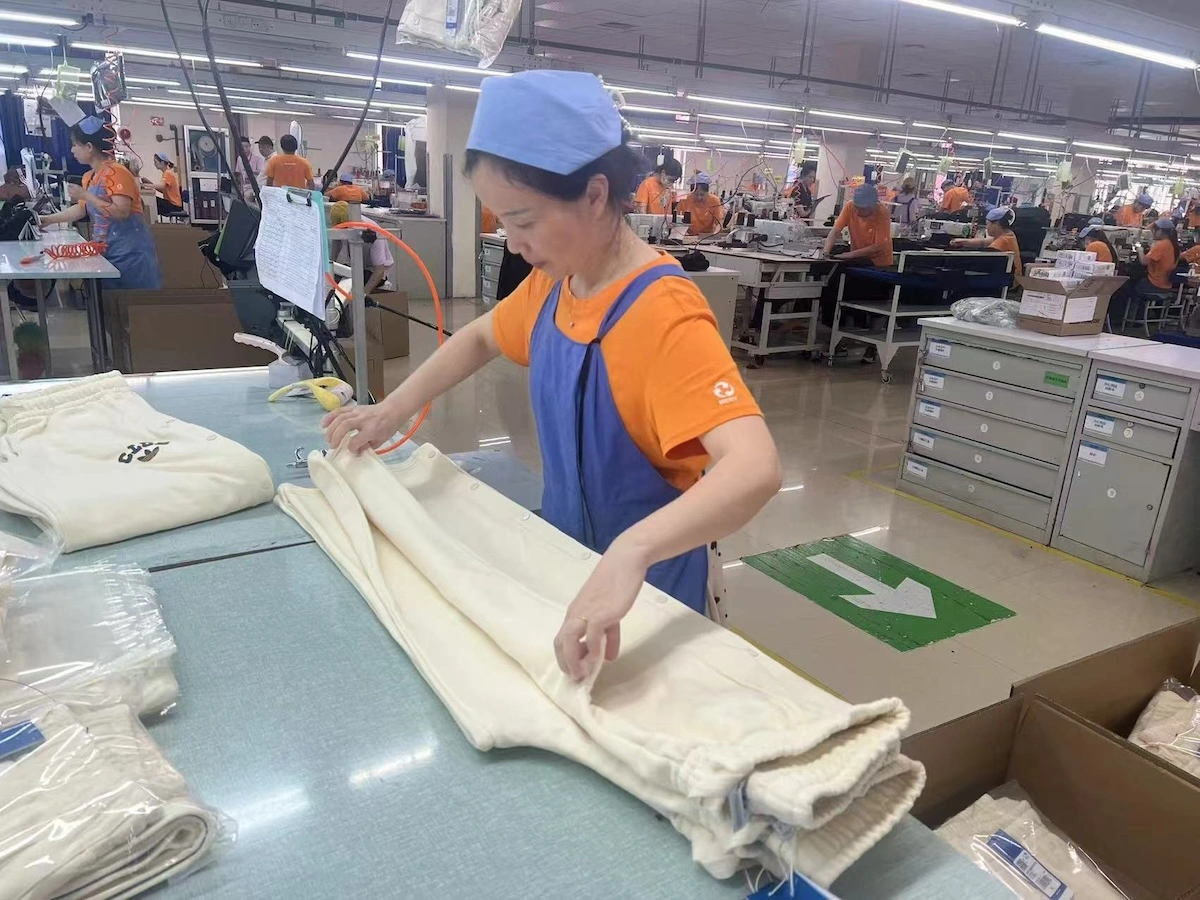
Every buyer asks some version of the compliance question, and the answers they receive range from documents to badges to a sentence in a brochure. The difficulty is that all three look similar from the outside and only one of them is checkable.
This is not a subject where scepticism is the right posture. Most certificates presented by manufacturers are genuine. But a certificate is a specific document about a specific legal entity, covering a specific scope, valid for a specific period — and a buyer who does not know which of those four to check is reading a logo rather than a document.
A Certificate Proves a Scope, Not a Factory
The single most useful idea in this article: a certificate does not describe a building. It describes a scope of activity, carried out by a named legal entity, assessed at a point in time.
That distinction explains most of the confusion in this area. A group of factories may share a management system, so a certificate held by one entity may or may not cover the site that will actually make your garments. A product certificate may cover a specific fabric rather than everything the factory handles. An audit report may describe a building on the day of the visit and say nothing about next season.
None of that is a loophole being exploited. It is simply how certification works, and a buyer who understands it asks better questions immediately — starting with which entity, which site and which product.
The Four Things to Check on Any Certificate
- The certificate number or reference. Every legitimate scheme issues one. It exists so that a third party can confirm the document independently, which is the whole point. If there is no number, there is nothing to verify.
- The legal entity named on it. Not the trading name, not the brand, not the group. The entity. Then check that this is the entity you are contracting with — and if it is not, ask how the relationship works.
- The scope. What activity the certificate covers, and against what standard. A scope statement is usually a precise sentence, and it is worth reading rather than skimming. A certificate covering the finishing of knitted garments is not a certificate covering cutting and sewing of woven dresses.
- The validity period and the current standing. Certificates expire, and some can be suspended. A document that was valid two years ago may be an honest copy of an expired certificate, in which case the useful question is what the current position is.
Quality Management, Product Safety and Social Audit Are Three Different Questions
Buyers frequently treat all certification as one thing. It is at least three, answering three separate questions, and a factory can be strong on one and weak on another.
| Category | The question it answers | What it does not tell you |
|---|---|---|
| Quality management system | Does the business run documented, repeatable processes? | That your specific garment will be well made |
| Product or material certification | Has this material or product met a defined standard? | Anything about the factory's other products or processes |
| Social compliance audit | How does the site treat its workforce, assessed on a given date? | Product quality, or anything about a different site |
| Inspection and testing | Did this consignment, or this sample, meet a stated criteria? | Anything about consignments that were not inspected |
The practical consequence is that a buyer needs the certificate that matches the risk they are actually worried about. A brand concerned about a worker-safety story in its supply chain needs a social audit. A brand concerned that its dresses will not fit the same twice needs a quality system and an inspection regime. Presenting one as though it answers the other is the most common form of overreach in this area, and it usually happens through imprecision rather than intent.
What OEKO-TEX STANDARD 100 Covers, and What It Does Not
Among material certifications, OEKO-TEX STANDARD 100 is the one womenswear buyers meet most often, and it is worth understanding precisely because it is narrow.
- It applies to articles and materials — a fabric, a trim, a finished component — rather than certifying a factory's entire operation.
- It concerns substances — testing for harmful substances against defined limits — rather than the environmental footprint of producing the material, or the working conditions in the building.
- It is assessed against product classes which reflect how close the article sits to skin, so a certificate's class is part of reading it correctly.
- A supplier's own certificate does not automatically cover every fabric it buys. Where a buyer needs the certification to travel with the material, the mill or supplier of that material is the relevant party.
The general lesson generalises beyond this one scheme: material certification tells you about the material, and buyers who need it to cover the product should confirm how it is transferred down the chain rather than assuming it does.
What a Social Audit Measures, and Why It Is Not a Quality Proof
Social compliance audits — of which amfori BSCI is the format most womenswear buyers encounter — assess working conditions at a site: hours, wages, health and safety, freedom of association, and the systems a business uses to manage them.
What they are is a structured, third-party assessment of a workplace, repeated on a cycle, with findings graded and corrective actions required. In a supply chain where a buyer may never visit the site, they are the most practical assurance available about conditions at the factory.
What they are not is an indicator of product quality. A site can be audited and rated well and still produce a garment with an uneven hem. The two subjects are genuinely separate, and a supplier who offers social audit documentation in answer to a question about stitching consistency has either misunderstood the question or is changing the subject.
- Audits are point-in-time. An audit describes conditions observed on a date, and every scheme handles this with a re-audit cycle rather than continuous monitoring.
- The audited site may not be the whole supply chain. A garment may involve processes elsewhere that the audit does not reach.
- Grading is a scale, not a pass mark. A result with findings and corrective actions can be a normal, working outcome — what matters is whether the findings are being closed.
What an Inspection Report Covers, and Its Sampling Limit
Inspection reports are the documents buyers read most closely and understand best, and they have one inherent limitation worth stating plainly: an inspection examines a sample of a consignment, not every garment.
A defined sampling plan, with defined acceptance levels, is what makes inspection meaningful — and it is also what makes it a statistical statement rather than a guarantee. If the plan draws a certain number of pieces from a certain number of cartons, a clean report means the consignment was within acceptance at that sample size. It does not mean no garment is defective.
- Read the sampling plan, not just the result. How many pieces, from how many cartons, and against what acceptance level. A report without those details is not very informative.
- Check which criteria were inspected. Measurement, workmanship, packing and labelling are separate blocks, and a report may cover some and not others.
- Note when the inspection happened. Inline checks catch problems that final inspection finds too late to prevent — see inline versus final inspection.
- Distinguish the report from the remedy. A report tells you what was found. What happens to a finding is a separate, and more important, process.
The Claims No Certificate Can Support
This is the section worth reading twice, because it covers the point at which a document is being asked to do more than documents do. Each of the following is a real claim buyers encounter, and none of them follows from the certification that is offered in support.
- “We are certified, so your garment will be consistent.” A management system is evidence of process, not of your specific product.
- “Our certificate covers the whole supply chain.” Certification travels as far as its scope, and material certifications in particular travel with the material, not with the factory.
- “Our audit result means our wages are fair.” An audit assesses compliance with defined criteria, which is not the same as an assessment of fairness, and it is one measurement on one day.
- “The material is certified, therefore the garment is.” Only if the certification applies to the finished article and how it was assembled. A certified fabric with uncertified trims, lining or interlining is a more complicated answer than a badge suggests.
- “We have been certified for years, so the current position is the same.” Certificates are issued with validity periods and require renewal. The current certificate is the one that counts.
- “Our certificate means the product is safe in every market.” Product requirements are set market by market, and a material certification is not a market-conformity statement.
How to Ask Without Damaging the Relationship
Buyers sometimes avoid the verification conversation because it feels like an accusation. It does not have to be one, and the framing that works is procedural rather than suspicious.
- State the purpose. "Our retailer requires that we hold current documentation on file" is a factual statement about your obligation. It is not about their honesty, and it removes the implication entirely.
- Ask for the register, not the PDF. A request to check a number online is a normal due-diligence step and takes the supplier two minutes to satisfy.
- Ask which entity and which site. A question about the scope of coverage is a technical question, and a supplier with nothing to hide answers it precisely.
- Be specific about what you need. "We need a current social audit for the site producing our order" is easier to answer than "send us your certifications", which invites a bundle of everything.
- Say when you need it. Documentation gathered at order placement is part of the process; documentation requested two days before shipment is pressure.
There is one further consideration that cuts the other way. Suppliers are asked for certification constantly, often by buyers who then take the documents and never look at them. Explaining why a specific document is needed, and what you will do with it, tends to produce better documents — and it distinguishes you from the buyers who are collecting paperwork for a file.
A Due-Diligence Checklist Before the First Order
- The legal entity you are contracting with, and the address of the site that will produce your order.
- Which certificate applies to that site, and whether the scope sentence covers your product type.
- The certificate number and the issuing body, looked up on the issuer's own register.
- The validity dates, and the date of the last re-audit where a scheme operates on a cycle.
- For material certifications: which party holds them, and how they apply to the material in your garment.
- The inspection arrangement for your order — who inspects, at what stage, on what sampling plan.
- The process for closing a finding, whichever category of audit produced it.
- A named contact responsible for compliance questions, so the answer does not depend on who you happen to email.
How to Read an Audit Report
One caution before reading too much into a report: the assessor visited on a day the scheme chose, and the records examined are a sample. That does not make it unreliable — it makes it one measurement. Where a relationship is long-running, the pattern across successive cycles is more informative than any single result, which is another reason to ask for the corrective-action history rather than the latest report alone.
An audit report is longer than a certificate and contains more useful information, which is also why it is read less. Four things are worth finding in any of them.
- The site and the date. Which building was visited, and when. A report about a different site, or from several seasons ago, is background rather than assurance.
- The methodology and the scale. What was assessed, how the assessor gathered evidence, and what grading scale was used. A rating without a scale is a word.
- The findings, and their severity. Most reports contain findings. What distinguishes a functioning site is not the absence of findings but whether the serious ones are few, specific and being addressed.
- The corrective-action status. The most important section and the most frequently skipped: what was required, by when, and whether it was closed. A finding open for three consecutive cycles is a pattern, not an incident.
One habit makes reading these reports much easier: read the findings before the overall rating. A strong rating with several unresolved findings reads differently from a moderate rating with everything closed, and only one of those describes a site that is improving.
Building a Compliance File That Survives Scrutiny
Buyers increasingly need documentation not for their own confidence but for a retailer, a marketplace or a marketplace's audit. The file that survives that scrutiny is organised rather than assembled at the point of request.
- Map it to the site, not to the company. Every document in the file should say which site it covers, and the file should be organised so that a reader can match the producing site to its documents without asking you.
- Keep current versions only, with the date visible. Expired certificates alongside current ones do not demonstrate diligence; they create a question. Archive the old ones elsewhere and keep the file clean.
- Record where each document came from. A certificate from a mill, a test report from a lab, an audit from a scheme: naming the holder and the issuer is what makes a file traceable.
- Match certifications to products. Where a claim is made about a material, the file should show which material and which certificate supports it, so a claim never travels further than its evidence.
- Keep the test reports that underlie your care labelling. A care instruction written from a test is defensible; the same instruction with no document behind it is an assertion.
- Note what is missing, deliberately. A file that states plainly which requirements are not yet met is more credible than one that is silent, and it gives you something to report progress against.
The reason this is worth doing properly rather than reactively is that the requests are increasing and becoming more specific. A brand that can answer a retailer's documentation request in an afternoon has an advantage over one that spends three weeks collecting PDFs, and the difference is organisational rather than financial. A brand that can answer a retailer's documentation request in an afternoon has an advantage over one that spends three weeks collecting PDFs — and the difference is organisational rather than financial.
The habits that make this easy are the same habits that make any supplier relationship easier: keep a versioned folder rather than a pile of attachments, name documents by the site they cover, and record the date something was received. None of that is compliance work. It is simply filing, and it is the difference between being able to answer a question in an afternoon and being unable to answer it at all.
It is also worth saying what this article is not. It is not a suggestion that certificates are usually misleading, because they are usually not. It is not a reason to distrust a supplier who presents documentation, because presenting it is a good sign. And it is not a substitute for your own due diligence on the things documents do not cover — the quality of the construction, the reliability of the correspondence, whether the first samples arrive when promised. Certification answers a specific set of questions well; a buyer still needs other evidence for the rest.
The Questions a Retailer Will Ask You
A brand selling into a retailer or a marketplace usually inherits that channel's compliance questions, and it is worth knowing the shape of them before they arrive, because they are more specific than most first-time sellers expect.
- Which site made the goods? Not the supplier group, not the trading name — the site. This is the first question because every subsequent document is attached to an answer.
- What documentation covers that site? Social compliance, quality management, or both, depending on the channel and the product risk.
- What documentation covers the materials? Fibre composition, any material certification the product claims, and the test reports behind the care instruction.
- Who inspected the consignment, when, and against what plan? An inspection report with a sampling plan is a document; a photograph of some garments is not.
- How do you handle a finding? The channel is asking about your process rather than your record, because a process is what will still be operating next season.
- What is not yet in place? Increasingly asked directly. An honest gap with a plan reads better than a claim discovered to be unsupported.
The reason these questions are worth preparing for is that they tend to arrive with a deadline. A brand that has built the file as it went can answer in an afternoon; a brand that has not spends weeks collecting documents from parties who are busy producing goods. The work is the same either way — the only difference is whether it was done under pressure.
FAQ
How do I verify a certificate is genuine?
Ask for the certificate number and the issuing body, then check the body's own register. That is what the number exists for. Then read the scope sentence and the validity dates, and confirm the entity named is the entity you are dealing with.
The certificate says the group name, not the site. Is that a problem?
It depends on the scope sentence, which usually says whether sites are covered. If it does not cover the site producing your order, ask which document does. This is one of the most common and most answerable questions in the whole subject.
The certificate expired last year. What does that mean?
That the document describes a state of affairs from before the expiry date. It may have been renewed; renewal documentation is simply the current certificate. Ask for the current one, and treat the expired copy as background rather than as evidence.
Which certification should I care about most?
Whichever matches your actual risk. If your exposure is a labour-standards story, social audit documentation matters most. If it is a claim about the material, material certification matters. If it is consistency of construction, a quality system and an inspection regime matter. No single document covers all three.
Can I say my product is certified because my fabric is?
Only if that certification applies to the finished article as sold, including how it was assembled. A certified fabric combined with uncertified components usually means the claim does not extend to the product. Check the scope before any claim reaches a website or a label.
What about organic and recycled fibre claims?
These are material claims, and they require traceability through the chain rather than a single document — from fibre source to the finished article. They are among the most frequently overstated claims in retail, and the ones most likely to attract scrutiny. Ask how the chain of custody works, not just whether a certificate exists.
The audit report shows findings. Should I walk away?
Not on that basis alone. Findings are normal, and a report with findings and a corrective-action process can indicate a functioning system. The question worth asking is what the findings were and whether they were closed — a site with repeated unresolved findings is a different proposition from one with a short list and a closure record.
Working With Luxudress
Luxudress is the factory-direct front end for womenswear production across production facilities in Guangzhou and Dongguan, covering development, sampling, material sourcing, manufacturing, inspection and export packing.
We will tell you exactly which documentation we hold, for which entity and which scope, and give you the certificate numbers so you can check them yourself rather than taking our word for it. We will also be precise about what each document does not cover — because a buyer who has been given an imprecise answer once and discovered it later will not trust the next answer either.
If compliance documentation is part of your onboarding requirement, send the list your retailer or marketplace needs and we will tell you what we can provide and what sits with a mill or a testing body rather than with us. You can also browse the style library to see what is already developed, or order from ready stock if you would rather begin with a low-commitment order.
Request a quote and we will return a costed plan along with the documentation it can be supported by.